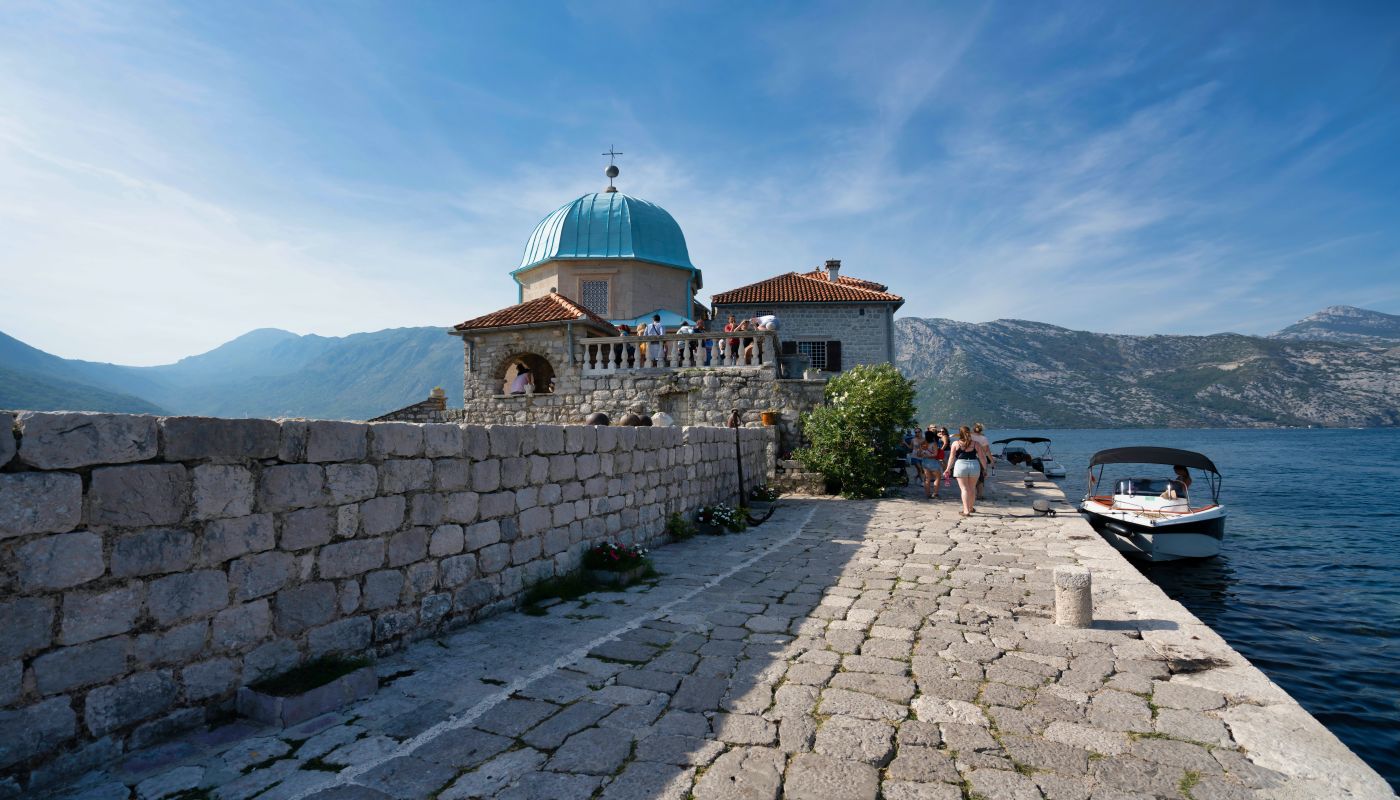
Landscape of Montenegro
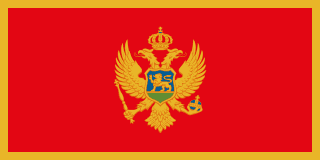
Flag of Montenegro

Montenegro

Europe

Montenegro is located on the coast of the Adriatic Sea. The country did not formally gain independence from Serbia until 2006. The government is in a mode of transition as they continue to modify their economic policy. Main social problems include child trafficking and suppression of freedom of expression. The industrial country has a mainly Orthodox population.1 https://www.cia.gov/library/publications/the-world-factbook/geos/mj.html

What would you like to learn about in Montenegro?

Select a section to explore the country where nonprofits are creating positive change.

About Montenegro

The use of the name Crna Gora (Montenegro) began in the 13th century in reference to a highland region in the Serbian province of Zeta. The later medieval state of Zeta maintained its existence until 1496 when Montenegro finally fell under Ottoman rule. Over subsequent centuries, Montenegro, while a part of the Ottoman Empire, was able to maintain a level of autonomy. From the 16th to 19th centuries, Montenegro was a theocracy ruled by a series of bishop princes; in 1852, it was transformed into a secular principality. Montenegro was recognized as an independent sovereign principality at the Congress of Berlin in 1878. After World War I, during which Montenegro fought on the side of the Allies, Montenegro was absorbed by the Kingdom of Serbs, Croats, and Slovenes, which became the Kingdom of Yugoslavia in 1929; at the conclusion of World War II, it became a constituent republic of the Socialist Federal Republic of Yugoslavia. When the latter dissolved in 1992, Montenegro federated with Serbia, first as the Federal Republic of Yugoslavia and, after 2003, in a looser State Union of Serbia and Montenegro. In May 2006, Montenegro invoked its right under the Constitutional Charter of Serbia and Montenegro to hold a referendum on independence from the state union. The vote for severing ties with Serbia barely exceeded 55% - the threshold set by the EU - allowing Montenegro to formally restore its independence on 3 June 2006.

Quick Facts

Population
653,474 (July 2013 est.)
Area
13,812 sq km
ISO Code
ME
Continent
Europe
Government
republic
Active Causes
12
View all countries in Europe

Geography & Environment

Climate

Mediterranean climate, hot dry summers and autumns and relatively cold winters with heavy snowfalls inland

Terrain

highly indented coastline with narrow coastal plain backed by rugged high limestone mountains and plateaus

Natural Resources

bauxite, hydroelectricity

Environmental Issues

pollution of coastal waters from sewage outlets, especially in tourist-related areas such as Kotor

People & Society

98.5%
Literacy Rate
61% of total population (2010)
Total Urban Population

Languages

Serbian 63.6%, Montenegrin (official) 22%, Bosnian 5.5%, Albanian 5.3%, unspecified (includes Croatian) 3.7% (2003 census)

Religions

Orthodox 74.2%, Muslim 17.7%, Catholic 3.5%, other 0.6%, unspecified 3%, atheist 1% (2003 census)

Health Expenditure

9.1% of GDP (2010) of GDP

Education Expenditure

NA of GDP

Economy

$12,000
GDP per Capita (PPP)
19.1%
Unemployment Rate
6.6% (2010 est.)
Below Poverty Line

Economic Overview

Montenegro's economy is transitioning to a market system, but the state sector remains large and additional institutional changes are needed. The economy relies heavily on tourism and the export of refined metals. Unprofitable state-owned enterprises weigh on public finances. Montenegro severed its economy from federal control and from Serbia during the MILOSEVIC era and maintained its own central bank, adopted the deutsch mark, then the euro - rather than the Yugoslav dinar - as official currency, collected customs tariffs, and managed its own budget. The dissolution of the loose political un...

Causes in Montenegro

Environment

One of the main environmental concerns in Montenegro is the amount of air pollution. Montenegro’s particulate matter ratio is far above the standards created by the World Health Organization and the European Union. Montenegro has agreed to work with these organizations but has yet to make significant progress in improving the air quality.1 Much of Montenegro’s economy comes from its steelmaking sector, which is greatly affected by any possible environmental regulations that may stem production.2

Family

Domestic violence is a prevalent problem in Montenegro. A study done in 2012 suggested that at least 13% of the population were victims of family violence, with 64% of violence against women perpetrated by a husband or partner. Domestic and sexual violence are both condemned under the Criminal Code of Montenegro.1 Women were historically suppressed, and are still expected to complete most of the domestic work. It was not generally acceptable for women to enter the workforce until the emergence of Communism in 1948.2

Human Rights

Suppression of the right to peaceful protest is the leading social problem in Montenegro currently, especially in relation to LGBT Pride marches. Additionally, many journalists reported being threatened or getting their offices vandalized.1 Many Roma people live in deplorable conditions, including camps outside major urban areas.2 They are constantly at risk of being evicted and stripped of their basic rights, and many Roma children are bullied and discriminated against in schools.3

Education

The primary school completion rate in Montenegro is 91.1%,1 and the literacy rate is 98%.2 However, among Montenegro’s Roma population, a traditionally nomadic group, the primary school enrollment rate is much lower, with 29% of children attending primary school and only 5% moving on to secondary school.3 Violence and bullying in schools is also a significant problem, with nearly half of students report experiencing violence in an educational context.4

Poverty

The poverty rate in Montenegro is at 8.6% and the unemployment rate for citizens between the ages of 15 and 24 is 37.7%.1 Among the Roma population, the unemployment rate is even higher at over 80%.2 Although the country struggles with poverty among rural populations and minorities, the poverty levels have significantly dropped in recent years.

Religion

Approximately 72% of Montenegro’s population identifies as Orthodox, 19% as Muslim, and 3.4% as Catholic. The other 5% are either atheist, nonreligious, or unspecified.1 Montenegro’s constitution provides for freedom of religion, and this is generally well respected and enforced by the government. Additionally, the intersection of ethnicity and religion within Montenegro makes it difficult to differentiate between religious and racial discrimination.2

Clean Water

Approximately 98% of the population has access to clean drinking water, and 90% of the population has access to improved sanitation infrastructure.1 Tap water is drinkable in Montenegro, but experts recommend drinking bottled water due to the variability of the cleanliness of the water based on location.2

Economy

Montenegro’s economy is undergoing a transition into a market system. As of 2015, industries such as banking, telecommunications, and oil distribution had been completely privatized. Key economic struggles include an extremely high unemployment rate and regional disparities. Montenegro is looking to become a net energy exporter using a pipeline to Italy that will be completed by 2018.1 The economic improvements made by new policies have helped grow the economy, but the core of the system is weakened by the government’s lack of desire to take steps to protect individual and property rights.2 Additionally, the unemployment rate in Montenegro is 17% and the poverty rate is at 8.6%.3

Government

Montenegro is a former member of both the Socialist Federal Republic of Yugoslavia and the State Union of Serbia and Montenegro, but in 2006 a referendum was passed that granted the Republic of Montenegro their independence. The government is structured as a parliamentary republic.1 The largest issue facing the Montenegrin government is the corruption and graft that is present in both the executive and judicial branches. The judicial branch is very inefficient and is easily swayed by political influences.2 Transparency International ranks Montenegro 64 out of 176 on the Corruption Perceptions Index, and the public places the government at 45 out of 100 for perceived corruption.3

Health

In Montenegro, cardiovascular and malignant diseases such as cancer claim the most lives, while self-harm is the leading non-disease-related killer. In areas such as infant vaccinations and contraceptive aid, the World Health Organization has been able to assist significantly. Main risk factors for the Montenegrin population are smoking and alcohol abuse.1 The average life expectancy in Montenegro is 77 years of age.2

Children

Montenegro is a prevalent spot for child sex trafficking and forced labor of children. The government has made efforts to curtail child trafficking by funding victim protection programs and increasing prosecution of perpetrators, although the country has not yet fulfilled most international mandates. One continuing source of difficulty is the fact that the government only recognizes victims who are willing to participate in court trials.1 Approximately 30% of Montenegro’s children grow up near or below the poverty line. Additionally, a survey revealed that 48% of children have experienced violence at school.2

Animals

The mountainous, forested landscape of Montenegro is home to many endangered species. This zone contains Important Bird Areas (IBAs) and Species of European Concern (SPECs). Montenegro also has brown bears, lynx, and roe deer. These species are endangered by the rapid logging and pollution that took place as a result of the Balkan conflicts.1 Additionally, there are many species of endangered fish off the coast of Montenegro, like the Adriatic Salmon and Adriatic Sturgeon.2

Nonprofits Working in Montenegro

Discover organizations making a difference in Montenegro

Make Your Impact Today

Discover causes you care about and support the nonprofits making a difference in communities around the world.

Are you a nonprofit? Join Project World Impact for free

Join Us Free