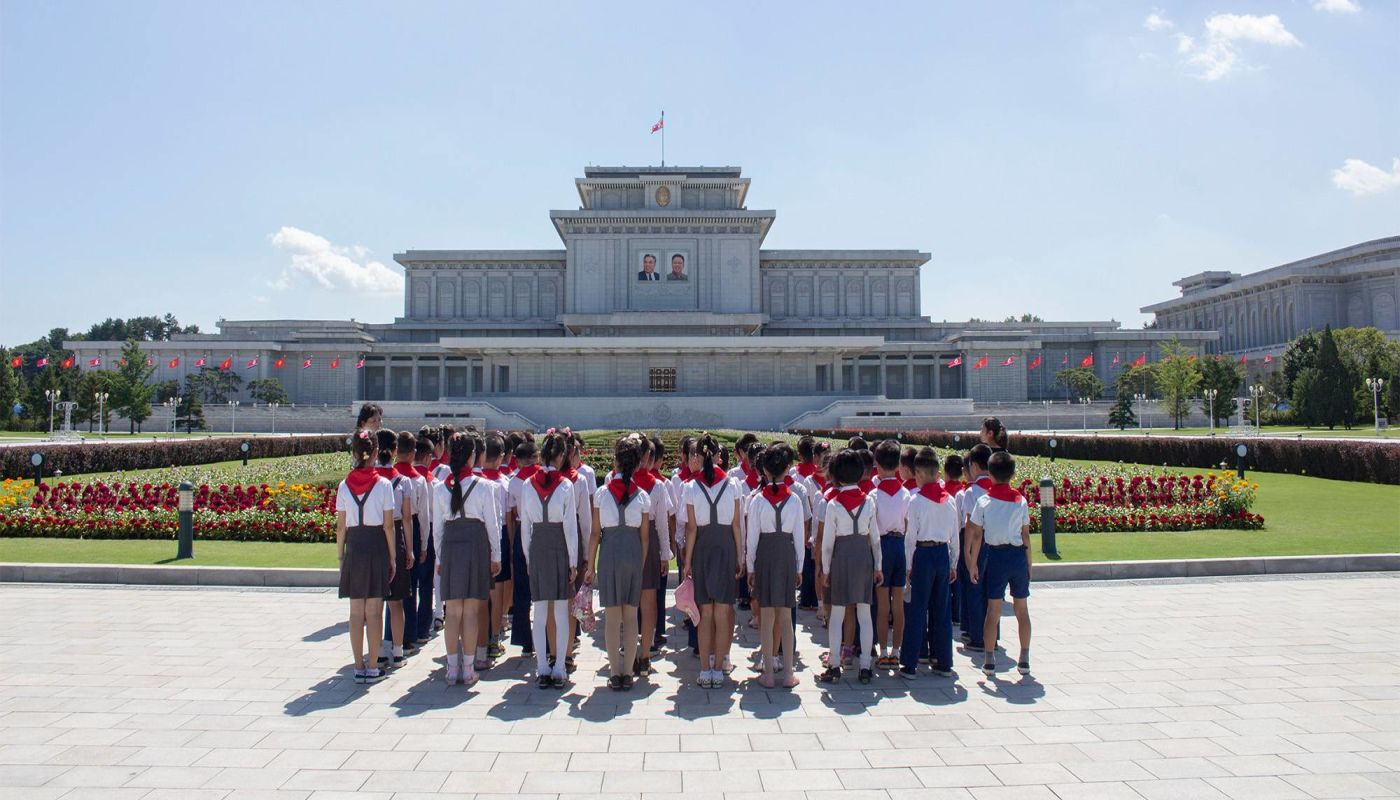
Landscape of North Korea
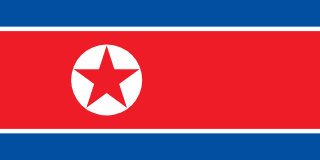
Flag of North Korea

North Korea

Asia

Due to the authoritarian rule of North Korea’s socialist dictatorship, it is one of the most corrupt and internationally isolated nations in the world. The majority of its citizens live in poverty and lack basic necessities, while a few wealthy elite have luxuries.1 The government restricts almost every area of society, including education, humanitarian aid, and freedom of expression.2 1 http://www.cnn.com/2017/07/17/asia/north-korea-luxury-goods/index.html 2 https://www.hrw.org/world-report/2017/country-chapters/north-korea

What would you like to learn about in North Korea?

Select a section to explore the country where nonprofits are creating positive change.

About North Korea

An independent kingdom for much of its long history, Korea was occupied by Japan beginning in 1905 following the Russo-Japanese War. Five years later, Japan formally annexed the entire peninsula. Following World War II, Korea was split with the northern half coming under Soviet-sponsored communist control. After failing in the Korean War (1950-53) to conquer the US-backed Republic of Korea (ROK) in the southern portion by force, North Korea (DPRK), under its founder President KIM Il Sung, adopted a policy of ostensible diplomatic and economic "self-reliance" as a check against outside influence. The DPRK demonized the US as the ultimate threat to its social system through state-funded propaganda, and molded political, economic, and military policies around the core ideological objective of eventual unification of Korea under Pyongyang's control. KIM Il Sung's son, KIM Jong Il, was officially designated as his father's successor in 1980, assuming a growing political and managerial role until the elder KIM's death in 1994. KIM Jong Un was publicly unveiled as his father's successor in September 2010. Following KIM Jong Il's death in December 2011, the regime began to take actions to transfer power to KIM Jong Un and KIM has now assumed many his father's former titles and duties. After decades of economic mismanagement and resource misallocation, the DPRK since the mid-1990s has relied heavily on international aid to feed its population. The DPRK began to ease restrictions to allow semi-private markets, starting in 2002, but then sought to roll back the scale of economic reforms in 2005 and 2009. North Korea's history of regional military provocations; proliferation of military-related items; long-range missile development; WMD programs including tests of nuclear devices in 2006, 2009, and 2013; and massive conventional armed forces are of major concern to the international community.

Quick Facts

Population
24,720,407 (July 2013 est.)
Area
120,538 sq km
ISO Code
KP
Continent
Asia
Government
Communist state one-man dictatorship
Active Causes
12
View all countries in Asia

Geography & Environment

Climate

temperate with rainfall concentrated in summer

Terrain

mostly hills and mountains separated by deep, narrow valleys; coastal plains wide in west, discontinuous in east

Natural Resources

coal, lead, tungsten, zinc, graphite, magnesite, iron ore, copper, gold, pyrites, salt, fluorspar, hydropower

Environmental Issues

water pollution; inadequate supplies of potable water; waterborne disease; deforestation; soil erosion and degradation

People & Society

69.51 years
Avg. Life Expectancy
100%
Literacy Rate
60.3% of total population (2011)
Total Urban Population

Languages

Korean

Religions

traditionally Buddhist and Confucianist, some Christian and syncretic Chondogyo (Religion of the Heavenly Way)

Health Expenditure

2% of GDP (2009) of GDP

Education Expenditure

NA of GDP

Economy

$1,800
GDP per Capita (PPP)
NA%
Unemployment Rate
NA%
Below Poverty Line

Economic Overview

North Korea, one of the world's most centrally directed and least open economies, faces chronic economic problems. Industrial capital stock is nearly beyond repair as a result of years of underinvestment, shortages of spare parts, and poor maintenance. Large-scale military spending draws off resources needed for investment and civilian consumption. Industrial and power output have stagnated for years at a fraction of pre-1990 levels. Frequent weather-related crop failures aggravated chronic food shortages caused by on-going systemic problems, including a lack of arable land, collective farming...

Causes in North Korea

Environment

Environmental reform is one of the few areas in which North Korea complies with international agreements. It has worked to combat negative effects of climate change, such as environmental degradation, deforestation, and agricultural decline. Its interest in climate change stems from its economy depending heavily on the agricultural sector, so its preservation is needed to ensure the country’s stability.1 North Korea’s forests have been reduced in recent years by at least 17%.2

Family

Domestic abuse and violence against women are rampant in North Korea. This is rooted in the society’s patriarchal traditions that intimidate women and prevent them from speaking out when they are abused.1 Some attribute this rise in domestic violence to the fact that women are increasingly becoming the breadwinners in their households, thus upsetting the gender status quo and angering their husbands. As many as 80% of Korean households now have women has the primary breadwinners.2

Human Rights

North Korea has a long history of egregious human rights violations. The country outlaws and suppresses freedom of expression, religious freedom, free media, and political opposition. Those who exhibit any opposition to the government are subject to placement in detainment camps or execution. All adult workers are assigned different industries for work, and students are required to work certain periods of time every year to maintain government properties and pay for their school facilities. Though these workers are promised pay, they often never receive it.1

Education

Education in North Korea is universal and state funded, although children are forced to engage in productive labor along with their studies.1 Children are assigned to certain schools depending on their social status and then forced to memorize information and phrases that support the government. Textbooks are poorly written and filled with mistakes.2

Poverty

As many as 12 million people in North Korea live in poverty. Although it is difficult to obtain statistics on North Korea, it has been estimated that the GDP per capita is only $1,800, one of the lowest in the world. The majority of workers in North Korea only earn $3 per month from the government.1 North Koreans are at a constant risk of starvation because the country has had intense food shortages for decades. Because of international sanctions and government corruption, needy citizens never receive the help that humanitarian organizations offer.3

Religion

North Koreans traditionally practiced Buddhism and Confucianism, although the state restricts almost all autonomous religious practice today. Government-sponsored religious groups exist only to provide an illusion of religious freedom.1

Clean Water

99% of North Koreans have access to safe drinking water.1 However, problems arise when there are not timely or effective disaster response initiatives to natural disasters that affect access to clean water.1 Floods and droughts leave tens of thousands of citizens without clean drinking water, which leads to consumption of contaminated well water and a vast increase in waterborne diseases. Poor sanitation practices also lead to preventable diseases.2

Economy

North Korea is one of the world’s poorest and most restrictive economies. The dictator refuses to reform the economy, and the state remains closed to private industry. The Communist Party exercises tight regulations and control over the country’s economic processes and foreign trade is limited to only China and South Korea.1 There is a large gap in wealth distribution between the minority elite and the rest of the country. There are no official figures on the percentage of the population living in poverty, but the majority of citizens in rural areas lack enough money to provide even basic necessities. In the capital city of Pyongyang, wealthy citizens can shop for luxuries in cash-only department stores. It is suspected that the profits from these stores fund North Korean nuclear programs.2

Government

North Korea is ruled as a totalitarian family dictatorship. North Korea also operates under a Songun policy, which grants the military a primary position within the government structure. The military is essential in formulating domestic policy and regulating international interactions.1 Dictator Kim Jong-un uses fear to force citizens into obedience and limits their knowledge of what really goes on in the country. North Korea’s affairs, including nuclear missile testing, are secretive and relatively unknown to other nations.2 Corruption is rampant at every level of the state, including the judiciary system.3

Health

In North Korea, all medical care is free and provided by the state. However, the government only spends 6% of its GDP on healthcare, and there is a shortage of medical professionals, equipment, and medications. Widespread food scarcities and incidences of malnutrition lead to declining health for North Koreans, as well as poor sanitation and lack of quality pharmaceuticals. Due to the inefficacy of the healthcare system, many people turn to methamphetamines as a form of self-medication. Some also use methamphetamines for the drug’s appetite-suppressing side effects to help them cope with food shortages.1 Additionally, the infant mortality rate and child malnutrition rates are much higher than those in neighboring nations.2

Children

North Korean children are considered among the world’s most endangered children because of the oppressive political state of their country.1 Parents are required to register their children with the government at birth, and they are immediately assigned a social class that will determine where they live and attend school. Starting at a young age, North Korean children are indoctrinated to worship the ruling Kim family. They are forced to work in strenuous labor conditions and are subject to imprisonment if they refuse.2 Children also face dangerous conditions in their travel to and from school and are discriminated against based on their performance in the classroom.3

Animals

Due to deforestation and other human activity, most of North Korea’s native species have been wiped out. Only a few species of birds remain in populated areas. There is an abundance of wildlife in the demilitarized zone that lies between North and South Korea because they are safe from human interference.1 Zoo animals are treated poorly and are not given proper habitats.2

Nonprofits Working in North Korea

Discover organizations making a difference in North Korea

Make Your Impact Today

Discover causes you care about and support the nonprofits making a difference in communities around the world.

Are you a nonprofit? Join Project World Impact for free

Join Us Free