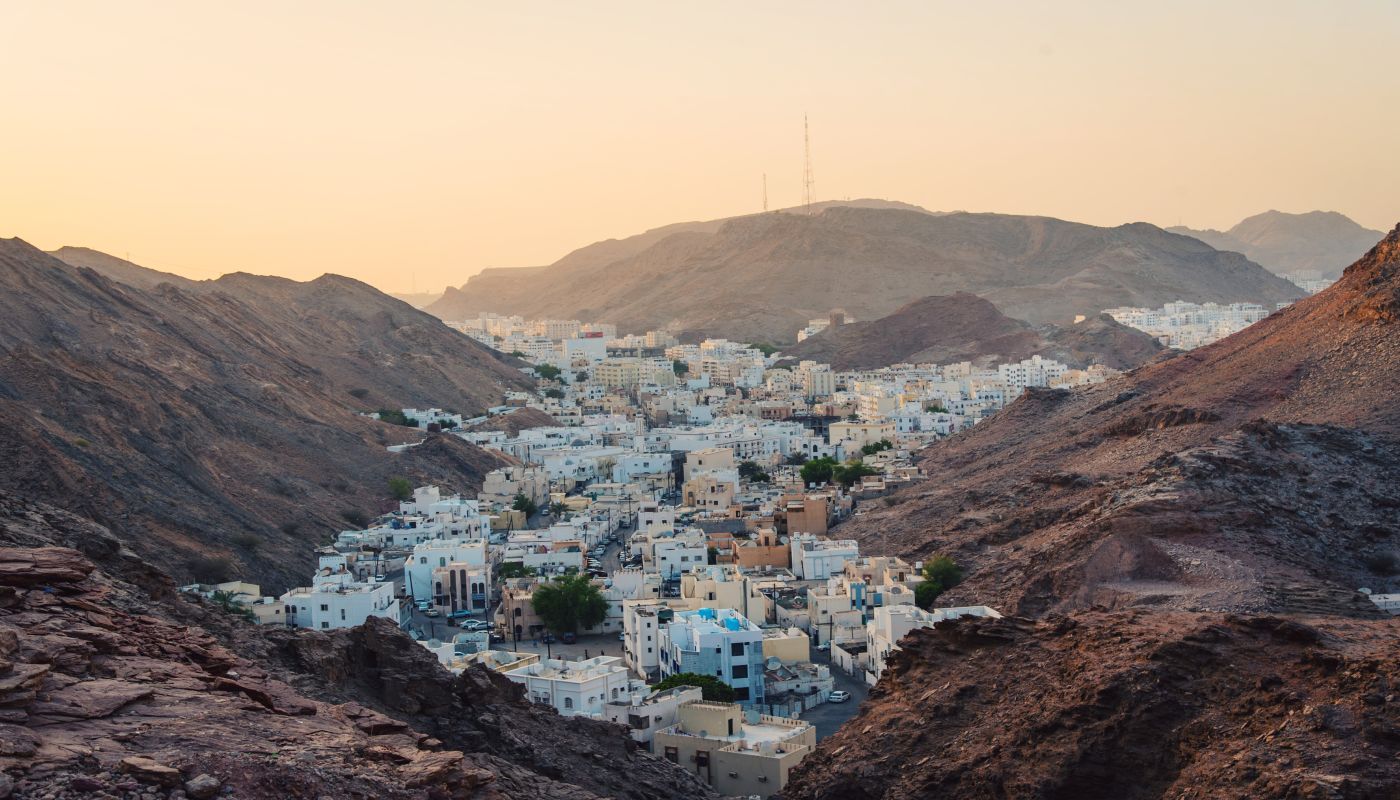
Landscape of Oman
Flag of Oman

Oman

Asia

Oman is the oldest independent state in the Arab world.1 It operates under an absolute monarchy and Sharia law, and it has been known to suppress its citizens’ rights to free speech and assembly. However, it has remained relatively free of the religious violence that has plagued many other Muslim nations.2 In addition, women and men are not treated equally under law, and there are no laws in place to discourage domestic violence or marital rape.3 1 https://www.cia.gov/library/publications/the-world-factbook/geos/mu.html 2 http://www.heritage.org/index/country/oman 3 https://www.hrw.org/world-report/2017/country-chapters/oman

What would you like to learn about in Oman?

Select a section to explore the country where nonprofits are creating positive change.

About Oman

The inhabitants of the area of Oman have long prospered on Indian Ocean trade. In the late 18th century, a newly established sultanate in Muscat signed the first in a series of friendship treaties with Britain. Over time, Oman's dependence on British political and military advisors increased, but it never became a British colony. In 1970, QABOOS bin Said Al-Said overthrew his father, and he has since ruled as sultan. His extensive modernization program has opened the country to the outside world while preserving the longstanding close ties with the UK. Oman's moderate, independent foreign policy has sought to maintain good relations with all Middle Eastern countries. Inspired by the popular uprisings that swept the Middle East and North Africa beginning in January 2011, Omanis began staging marches and demonstrations to demand economic benefits, an end to corruption, and greater political rights. In response to protester demands, QABOOS in 2011 pledged to implement economic and political reforms, such as granting legislative and regulatory powers to the Majlis al-Shura and introducing unemployment benefits. In August 2012, the Sultan announced a royal directive mandating the speedy implementation of a national job creation plan for thousands of public and private sector jobs. As part of the government's efforts to decentralize authority and allow greater citizen participation in local governance, Oman successfully conducted its first municipal council elections in December 2012. Announced by the Sultan in 2011, the municipal councils will have the power to advise the Royal Court on the needs of local districts across Oman's 11 governorates.

Quick Facts

Population
3,154,134 (July 2013 est.)
Area
309,500 sq km
ISO Code
OM
Continent
Asia
Government
monarchy
Active Causes
12
View all countries in Asia

Geography & Environment

Climate

dry desert; hot, humid along coast; hot, dry interior; strong southwest summer monsoon (May to September) in far south

Terrain

central desert plain, rugged mountains in north and south

Natural Resources

petroleum, copper, asbestos, some marble, limestone, chromium, gypsum, natural gas

Environmental Issues

rising soil salinity; beach pollution from oil spills; limited natural freshwater resources

People & Society

74.72 years
Avg. Life Expectancy
86.9%
Literacy Rate
73.4% of total population (2011)
Total Urban Population

Languages

Arabic (official), English, Baluchi, Urdu, Indian dialects

Religions

Ibadhi Muslim (official) 75%, other (includes Sunni Muslim, Shia Muslim, Hindu) 25%

Health Expenditure

2.8% of GDP (2010) of GDP

Education Expenditure

4.3% of GDP (2009) of GDP

Economy

$29,600
GDP per Capita (PPP)
15%
Unemployment Rate
NA%
Below Poverty Line

Economic Overview

Oman is a middle-income economy that is heavily dependent on dwindling oil resources. Because of declining reserves and a rapidly growing labor force, Muscat has actively pursued a development plan that focuses on diversification, industrialization, and privatization, with the objective of reducing the oil sector's contribution to GDP to 9% by 2020 and creating more jobs to employ the rising numbers of Omanis entering the workforce. Tourism and gas-based industries are key components of the government's diversification strategy. However, increases in social welfare benefits, particularly since...

Causes in Oman

Environment

Oman periodically submits reports on its climate change adaptations as a requirement for its participation in the United Nations Framework Convention on Climate Change.1 Oman is vulnerable to climate change, and one of the results of the changing temperatures has been an increase in the frequency of tropical cyclones. Climate change negatively affects livestock and fishing revenues, water supply, and biodiversity.2 Air quality is negatively affected by pollutants from crude oil production and industrial plants.3

Family

As a predominantly Muslim country, Oman’s legal system is based on Sharia law, which often denies women the same rights as men. There is no law against domestic violence, despite the country’s ratification on the Convention on the Elimination of All Forms of Discrimination against Women.1 Under Omani interpretation of Sharia law, men are permitted to divorce their wives for any reason and without any provocation. They are also allowed to take a second wife without their first wife’s permission, as long as they treat both wives equally.2 Women have secondary rights when it comes to inheritance and legal guardianship of children.3

Human Rights

Omani authorities severely restrict citizens’ freedom of expression and assembly. Insulting the Sultan and undermining the state are near criminal offenses, and those whose speech violates those categories are harassed and prosecuted. Broadcast media and social media channels are monitored and restricted by the Internal Security Service, and those who are suspected of assembling to protest the government are subject to arrest. Women and girls are often discriminated against by the rule of law and Sharia customs.1

Education

Oman’s education system is still in need of reforms to bring it up to date. The government focuses its reforms on the themes of strengthening the national identity and pride of the Omani people, as well as on enhancing the development of global citizenship.1 Oman has also taken steps in recent years to improve teacher training, school resources, and availability of schools to children in rural areas.2 The adult literacy rate is 91%, although there is a 10% discrepancy between males and females.3

Poverty

Oman has a relatively high unemployment rate at 15% of the population, which is likely due to the lack of economic diversification.1 The government has taken steps to reduce unemployment by replacing foreign workers with local staff in order to boost job creation.2 Job creation, along with improved access to education and health care, has helped decrease the rate of extreme poverty to 0% in 2016.3

Religion

Oman is a majority Muslim nation, with 85% of its population following mainly Ibadhi and Sunni sects of Islam. The remaining percentage ascribe to Christianity, Hinduism, and Buddhism.1 Islamic teachings are required in all public schools, and it is a criminal offense to publicly defame any faith. Since Islam is the majority and state religion of Oman, all other religious organizations must register with the government.2

Clean Water

93% of Oman’s population has access to clean drinking water, and 97% has access to improved sanitation.1 Water is mainly supplied through desalination plants, and wells act as water reserves.2

Economy

Oman’s economy is heavily dependent on oil resources. Consequently, low global oil prices in 2016 drastically increased government budget deficit. The government is working to diversify the economy through expanding tourism and gas-based industries so the country is not as dependent on the oil sector.1 Government spending remains a large part of the economy through social welfare programs and state run institutions.2

Government

The Sultanate of Oman is an absolute monarchy and the oldest independent state in the Arab world. It is ruled by a sultan who is both the chief of state and head of government.1 Under the current sultan, Oman experienced many positive changes in economic reforms, health care spending, and education.The country experienced its first real outbreak of political dissent in 2011 when activists demanded jobs and political reform. The sultan promised jobs and benefits to quiet protesters, and many were taken into custody for speaking out against the government.2 Under Sharia law, human rights are often restricted and the judiciary is not independent.3

Health

By allocating more government spending to health care in recent years, Oman has been able to provide free basic health care for all citizens.1 Lifestyle choices such as a lack of physical activity, unhealthy diet choices, and substance abuse of alcohol and tobacco have led to a rise in the rate of noncommunicable diseases (NCDs). In 2016, NCDs caused 68% of deaths.2 Oman has also gained distinction as one of the lowest child mortality rates in the eastern Mediterranean region.3

Children

The country of Oman is both a destination and a transit country for trafficked men, women, and children from India, Pakistan, Bangladesh, and Sri Lanka.1 Trafficked children usually either face forced agricultural labor or prostitution and forced marriage.2 10% of children in Oman suffer from malnutrition and are either underweight or stunted.3 Despite the presence of human trafficking and child malnutrition, Oman has shown the fastest progress of any country on the Human Development Index in the past 40 years.4

Animals

Oman’s biodiversity is not immediately perceptible because many of its desert animals only come out at night. The government has placed a hunting ban on some its rarest species, such as the Arabian oryx and loggerhead turtle. There are also multiple wildlife sanctuaries to protect endangered species.1

Nonprofits Working in Oman

Discover organizations making a difference in Oman

Make Your Impact Today

Discover causes you care about and support the nonprofits making a difference in communities around the world.

Are you a nonprofit? Join Project World Impact for free

Join Us Free