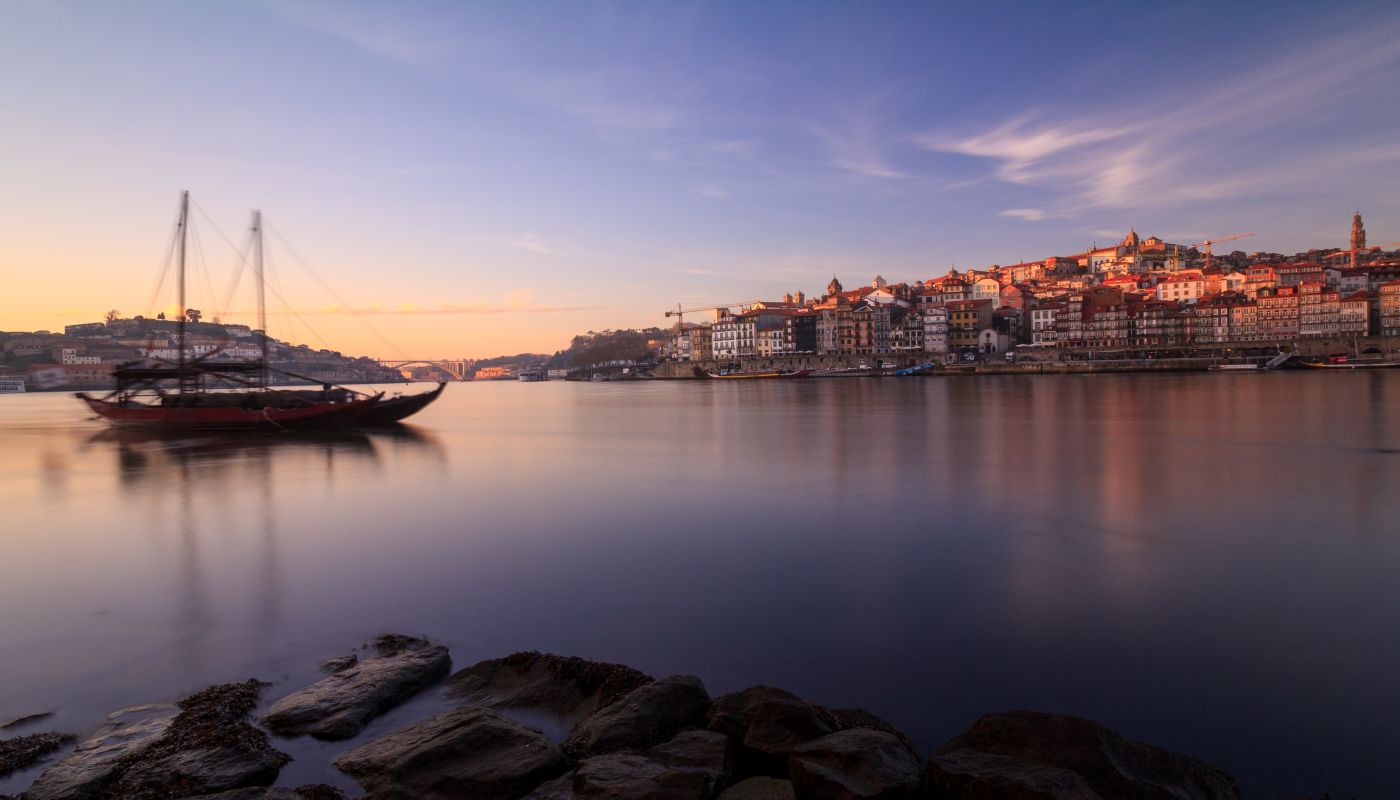
Landscape of Portugal
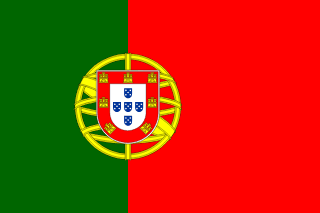
Flag of Portugal

Portugal

Europe

After years of recession and debt, Portugal emerged from economic crisis in 2017. This was largely due to increased revenue from new businesses and tourism, although an inefficient public sector still hinders economic growth.1 Portugal leads the way in climate action as it continues to increase its usage of renewable energy and cut back on greenhouse gas emissions.2 It was also one of the first nations in Europe to open its borders to refugees seeking asylum, but its prosecution rate for human traffickers is not satisfactory.3 Finally, a significant disparity in wealth distribution contributes to unequal allocation of government positions, but 50% of Portuguese do not believe that they have the freedom to report this kind of injustice without consequence.4 1 http://www.npr.org/sections/parallels/2017/04/26/524681297/portugal-basks-in-post-bailout-economic-revival 2 http://theportugalnews.com/news/portugals-7bn-climate-change-bill/40860 3 http://www.state.gov/documents/organization/210741.pdf 4 https://www.transparency.org/news/pressrelease/governments_are_doing_a_poor_job_at_fighting_corruption_across_europe_and_c

What would you like to learn about in Portugal?

Select a section to explore the country where nonprofits are creating positive change.

About Portugal

Following its heyday as a global maritime power during the 15th and 16th centuries, Portugal lost much of its wealth and status with the destruction of Lisbon in a 1755 earthquake, occupation during the Napoleonic Wars, and the independence of its wealthiest colony of Brazil in 1822. A 1910 revolution deposed the monarchy; for most of the next six decades, repressive governments ran the country. In 1974, a left-wing military coup installed broad democratic reforms. The following year, Portugal granted independence to all of its African colonies. Portugal is a founding member of NATO and entered the EC (now the EU) in 1986.

Quick Facts

Population
10,799,270 (July 2013 est.)
Area
92,090 sq km
ISO Code
PT
Continent
Europe
Government
republic; parliamentary democracy
Active Causes
12
View all countries in Europe

Geography & Environment

Climate

maritime temperate; cool and rainy in north, warmer and drier in south

Terrain

mountainous north of the Tagus River, rolling plains in south

Natural Resources

fish, forests (cork), iron ore, copper, zinc, tin, tungsten, silver, gold, uranium, marble, clay, gypsum, salt, arable land, hydropower

Environmental Issues

soil erosion; air pollution caused by industrial and vehicle emissions; water pollution, especially in coastal areas

People & Society

78.85 years
Avg. Life Expectancy
95.4%
Literacy Rate
61% of total population (2010)
Total Urban Population

Languages

Portuguese (official), Mirandese (official, but locally used)

Religions

Roman Catholic 84.5%, other Christian 2.2%, other 0.3%, unknown 9%, none 3.9% (2001 census)

Health Expenditure

11% of GDP (2010) of GDP

Education Expenditure

5.8% of GDP (2009) of GDP

Economy

$23,800
GDP per Capita (PPP)
15.7%
Unemployment Rate
18% (2006)
Below Poverty Line

Economic Overview

Portugal has become a diversified and increasingly service-based economy since joining the European Community - the EU's predecessor - in 1986. Over the following two decades, successive governments privatized many state-controlled firms and liberalized key areas of the economy, including the financial and telecommunications sectors. The country qualified for the Economic and Monetary Union (EMU) in 1998 and began circulating the euro on 1 January 2002 along with 11 other EU members. The economy grew by more than the EU average for much of the 1990s, but the rate of growth slowed in 2001-08. T...

Causes in Portugal

Environment

Air and water pollution remain the greatest threats to Portugal’s environment. These problems are particularly pressing in urban centers where the concentration of industrial pollutants like carbon dioxide, nitrous oxides, and sulfur dioxide is higher.1 Climate change has also negatively impacted the environment and cost the government millions of euros in damages. Increased temperatures, accompanied by less rainfall, have triggered droughts and wildfires in the country.2 Portugal is taking significant measures to reduce the effects of climate change and is considered a leader in renewable energy.3 In 2016, the country ran entirely on renewable energy for four straight days as a demonstration of their capabilities to cut back on greenhouse gas emissions.4

Family

Portugal is a family-centric culture, and it is common to find multiple family generations in the same household.1 One major threat to Portuguese family life is domestic abuse. In 2015, 2,700 cases of domestic abuse were reported to police, but only 240 of the cases resulted in charges being brought against the accused parties.2 Another threat to the unity of the family is divorce. Recent statistics indicate that 70% of Portuguese marriages end in divorce, the highest rate in Europe, and 49% of children are born out of wedlock.3

Human Rights

Portugal publicly advocates for and advances laws concerning human rights. In 2016, it became one of the first nations in the European Union to open its borders to limited amounts of asylum seekers in an attempt to stop the European refugee crisis.1 Domestic violence and discrimination against the disabled are among the most prevalent human rights violations in Portugal. There have also been reports of torture and lack of hygienic conditions in prisons.2 Additionally, Portugal has been identified as a source, destination, and transit country for human trafficking. They do not meet the minimum standards for convicting offenders but are working to improve compensation and protection for victims.3

Education

The Portuguese educational system provides nine years of free and compulsory education.1 Portugal has an overall 95% literacy rate. Men have higher literacy rates of 97%, while females have lower literacy rates of 94%.2 Language acquisition and instruction is crucial to the education system in Portugal. In secondary school, learning a foreign language becomes a key component of their education. Towards the end of their secondary schooling, some students even study a second foreign language.1 Estimates from the Organization for Economic Cooperation and Development (OECD) state that, while the educational system is commendable in Portugal, only 43% of 25-34 year olds in Portugal had attained an upper secondary education.3

Poverty

Despite experiencing a low unemployment rate compared to previous years, Portugal still has a significant number of citizens below the poverty line.1 It has one of the highest wealth inequalities in the European Union, with the wealthy minority maintaining a high percentage of the country’s income.2 Middle class individuals will often work 2-3 jobs, and may even attempt to grow their own food in efforts to save money.3 Around 20% of the population lives below the poverty line, and one-quarter of these are children.4

Religion

Over 80% of the population in Portugal is Roman Catholic, 3.3% are other Christian, 6.8% are nonreligious, and the remaining number include Judaism, Protestantism, Muslims, Buddhists. The government protects religious freedom, and there have not been notable reports of abuses of religious freedom.The government has been very respectful of the citizens right to freedom of religion.1

Clean Water

99.7% of the population in Portugal has sustained access to improved water sources and 100% of the population has access to sanitation facilities.1 In Portugal, everyone has access to water through both public and private sources.2 Although almost all Portuguese can access clean water, they often pay for more than they receive. Due to damaged infrastructure, millions of liters of water leak out of the pipe systems before they reach they reach their destination, and people still pay for the lost water.3

Economy

Portugal finally showed signs of emerging from an economic recession starting in 2015 under the government of a ruling Socialist party. In spite of refusing to cut government spending, the country is reaping the benefits of fresh entrepreneurship and increased tourism that have finally helped cut down public debt. In 2017, public debt only amounted to 2% of the GDP and the unemployment rate was down to 10%, the lowest it had been in years.1 Still, economic growth is hindered by an inefficient public sector and banking system, which required a multi-billion dollar bailout.2

Government

The government of Portugal is centered on a system of parliamentary democracy.1 Staff shortages and inefficiency have contributed to a slow and unproductive judicial system.2 Corruption is reported by Portuguese citizens as being especially present in an unbalanced allocation of government positions to the wealthy. Although 80% of citizens believe this to be a problem, 50% are afraid of the consequences that would occur if they were to speak up about it.3

Health

Portugal has both public and private health care available to citizens. Universal healthcare access is available through the National Health Service (NHS).1 Health care spending accounts for 10% of the country’s GDP, and the average life expectancy is 79 years.2 Obesity is an increasing health problem in Portugal due to inactivity and increased saturated fat intake. The World Health Organization estimates that over 20% of the population could be obese by 2030.3 Noncommunicable diseases have become the leading cause of death among both adults and children.4 The drug-induced death rate has decreased since 2001, when a new law decriminalized drug abuse and mandated health care instead of jail time for anyone found in possession of less than a ten-day supply of drugs.5

Children

Child abuse is a consistent problem in Portugal. In one year, nearly 1,000 cases were reported. Abuse ranges from physical and sexual violence to forcing children to beg on the streets. In 2014, the government started several campaigns to raise awareness about child abuse and sexual exploitation and created a database to register sex offenders. There are laws in place to prosecute child abusers and those who participate in child pornography. However, laws against forced child labor are not often enforced.1 A third of all children are below the median income poverty level, and families with more children are most at risk for poverty and food shortages.2

Animals

Portugal is home to a variety of animals in its diverse landscape. Wild pigs, foxes, deer, and goats are the most common species, although deforestation has taken away the natural habitats of many creatures. The Desertas Islands are a designated nature preserve and are home to an endangered seal species as well as many species of birds and fish.1

Nonprofits Working in Portugal

Discover organizations making a difference in Portugal

Make Your Impact Today

Discover causes you care about and support the nonprofits making a difference in communities around the world.

Are you a nonprofit? Join Project World Impact for free

Join Us Free