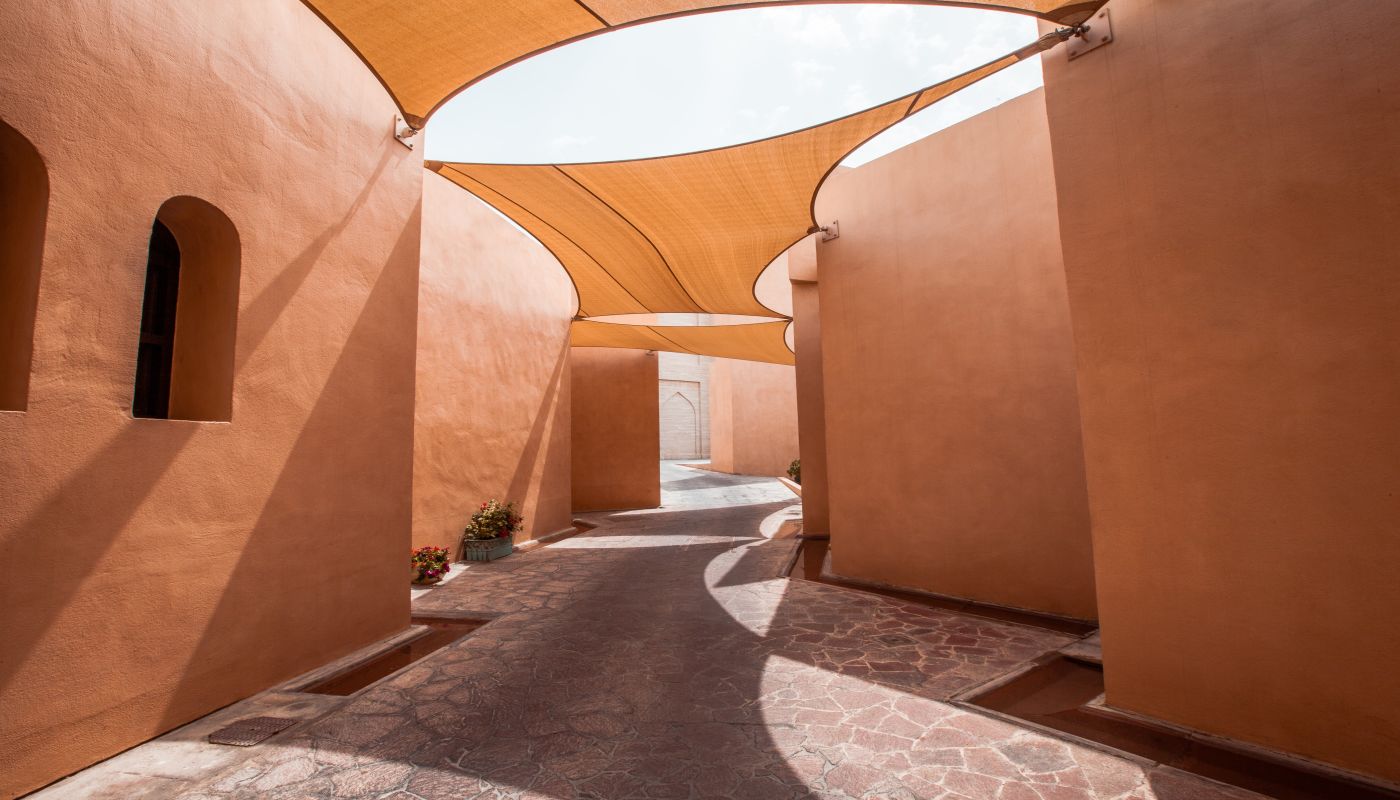

Landscape of Qatar
Flag of Qatar

Qatar

Asia

Qatar has been controlled by the same family for over one hundred years, and has been spared from the effects of much of the regional unrest and violence that has plagued the Middle East. However, because of Qatar’s affiliation with extremist groups, other nations placed sanctions on the nation in 2017 in order to punish their political alignments, which have damaged the economy.1 Because of its oil wealth, Qatari citizens enjoy a high quality of life and many social services. However, there are major human rights abuses carried out on migrant workers, and women are still treated as a lesser class with few legal rights.2 1 https://www.cia.gov/library/publications/the-world-factbook/geos/qa.html
2 https://www.britannica.com/place/Qatar#toc485603main

What would you like to learn about in Qatar?

Select a section to explore the country where nonprofits are creating positive change.

About Qatar

Ruled by the Al Thani family since the mid-1800s, Qatar transformed itself from a poor British protectorate noted mainly for pearling into an independent state with significant oil and natural gas revenues. During the late 1980s and early 1990s, the Qatari economy was crippled by a continuous siphoning off of petroleum revenues by the Amir, who had ruled the country since 1972. His son, the current Amir HAMAD bin Khalifa Al Thani, overthrew the father in a bloodless coup in 1995. In 2001, Qatar resolved its longstanding border disputes with both Bahrain and Saudi Arabia. As of 2007, oil and natural gas revenues had enabled Qatar to attain the highest per capita income in the world. Qatar has not experienced the level of unrest or violence seen in other Near Eastern and North African countries in 2010-11, due in part to its immense wealth. Qatar's international image is bolstered in part by the Doha-based Al Jazeera news network, which has provided comprehensive coverage of the Near East and North African Arab revolutions. Additionally, Qatar played a significant role in the Libyan revolution by pressing the Gulf Cooperation Council and the Arab League to assist the Libyan rebel movement.

Quick Facts

Population
2,042,444 (July 2013 est.)
Area
11,586 sq km
ISO Code
QA
Continent
Asia
Government
emirate
Active Causes
12
View all countries in Asia

Geography & Environment

Climate

arid; mild, pleasant winters; very hot, humid summers

Terrain

mostly flat and barren desert covered with loose sand and gravel

Natural Resources

petroleum, natural gas, fish

Environmental Issues

limited natural freshwater resources are increasing dependence on large-scale desalination facilities

People & Society

78.24 years
Avg. Life Expectancy
96.3%
Literacy Rate
98.8% of total population (2011)
Total Urban Population

Languages

Arabic (official), English commonly used as a second language

Religions

Muslim 77.5%, Christian 8.5%, other 14% (2004 census)

Health Expenditure

1.8% of GDP (2010) of GDP

Education Expenditure

2.5% of GDP (2008) of GDP

Economy

$103,900
GDP per Capita (PPP)
0.5%
Unemployment Rate
NA%
Below Poverty Line

Economic Overview

Qatar has prospered in the last several years with continued high real GDP growth. Throughout the financial crisis Qatari authorities sought to protect the local banking sector with direct investments into domestic banks. GDP grew sharply in 2010 largely due to the increase in oil prices, and 2011's growth was supported by Qatar's investment in expanding its gas sector. GDP slowed to 6.6% in 2012 as Qatar''s gas sector expansion moved toward completion. Economic policy is focused on developing Qatar''s nonassociated natural gas reserves and increasing private and foreign investment in non-ener...

Causes in Qatar

Environment

The rising sea level caused by an increase in global temperatures is a concern for the future of Qatar. As a low-lying coastal zone with most of the population living near the coast, rising sea levels have hindered economic development and made it difficult to plan future infrastructure. Despite the challenges it is facing, Qatar has been a leader in the international community for creating climate change mitigation groups and research centers.1 Qatar has also made strides in becoming food secure, and it is a leader in innovating ways to produce food in arid regions.2

Family

The divorce rate, while still under 1,000 divorces each year, is steadily rising as the nation modernizes and grows increasingly secular.1 In Qatar, there is no law that criminalizes domestic violence, and women are required by law to obey their husbands. Domestic abuse and marital rape are not illegal.2

Human Rights

Qatar is unique because of its high number of migrant workers who outnumber the native Qataris. This has created a challenge for the country in upholding human rights. The government and labor unions recruit foreign workers who have to pay an enormous fee, and this causes workers to have high levels of debt and become vulnerable to exploitation. Freedom of expression is repressed, and those who express controversial or oppositional beliefs could be detained or arrested.1

Education

Qatar has one of the most advanced education systems in the Arab world. Their government spending has developed their school system to be inclusive and internationally competitive. Because of their relatively advanced system, the country has enjoyed foreign investment in its education sector.1 There are numerous opportunities for foreign teachers and students, and the literacy rate is 97%.2

Poverty

Among native Qataris, poverty is nearly non-existent; the nation is very prosperous and almost all of its native citizens have greatly benefited from the wealth. The level of unemployment among Qataris is less than 1%.1 The level of poverty among the migrant workers, however, is extremely high. These workers often suffer continual abuse and are not afforded the same human rights as natural born citizens. Migrant workers are often not paid for several months, and when they are paid, their wages are usually less than promised.2

Religion

Around 77.5% of all people who live in Qatar practice Islam, 8.5% follow Christianity, and 14% adhere to other religions.1 Despite their liberal interpretations of Islam and religious tolerance, the government has received criticism for providing support to radical Islamist groups in other countries in the region. Qatar does not readily adopt counterterrorism efforts to extinguish these groups from its borders.1 Additionally, Qataris often discriminate against non-Muslims, and those who convert to Christianity from Islam receive the most abuse.2

Clean Water

Qatar has provided all of its citizens with clean water access, and the water situation is very secure because of desalination engineering.1 There is an efficient wastewater treatment system where the water is treated and subsequently recycled for irrigation in agricultural fields and landscapes. Because of Qatar’s location in the desert surrounded by the Arabian Sea, it is necessary to reuse fresh water, and they have been able to use this system because there are numerous advanced water treatment plants across the country.2

Economy

Qatar has a history of being a prosperous nation, mostly due to the oil industry. The GDP continues to grow each year, and the majority of the economy is centered on oil and energy. These two industries make up 50% of the GDP, 50% of government revenues, and 85% of the export earnings. The oil reserves in Qatar are the third largest in the world, making up 13% of all total reserves.1 Reforms are needed in order to increase the public’s confidence in the government to promote economic transparency, but the Qatari economy is one of the most transparent and private in the Middle East.The unemployment rate in Qatar is very low at under 1%.2

Government

Qatar is an emirate style government, meaning it is ruled by a dynastic Arab monarch or emir. There is also a prime minister as the head of government, but the chief of state is Emir Tamim bin Hamad Al Thani. Because of low poverty rates, one of the world’s highest rates of income per capita, and strict government rules on protests, the current political dynasty has enjoyed stability and did not experience an Arab Spring uprising like many of its neighbors. There are stringent anti-corruption measures and laws in place, and these laws have earned Qatar its status as one of the least corrupt countries in the Middle East.2

Health

In Qatar, 1 in 5 people will be affected by mental illness and 3 of the 5 top causes of disability in the country are caused by mental illnesses. Due to the stigmas surrounding mental illness, this percentage of the population suffering from mental health issues is not actively seeking treatment.1 The life expectancy is 80, and the two top causes of death are heart disease and diabetes.2

Children

1 in every 5 Qatar children is subject to abuse in the home or at school during their childhood. 22% of all at home abuses occur against children, with the highest percentage of perpetrators being the mother. 38% of children have reported that they have been abused or bullied at school.1

Animals

Gazelle, oryx, sand cats, and honey badgers are plentiful in the deserts of Qatar, and the government has implemented programs aimed at keeping these animals safe.1 Because of the harsh climate, most wildlife comes out at night, but some of the habitat these creatures used to roam in is now being urbanized and destroyed.2

Nonprofits Working in Qatar

Discover organizations making a difference in Qatar

Polaris

Modern slavery is a multi-billion dollar criminal industry that denies freedom to 20.9 million people around the world. And no matter where you live, chances are it’s happening right down the street. From the girl forced into prostitution at a truck stop, to the man discovered in a restaurant kitchen, stripped of his passport and held against his will. Polaris, named after the North Star that guided slaves to freedom in the U.S., disrupts the conditions that allow human trafficking to thrive in our society. From working with government leaders to protect victims’ rights, to building partnerships with the world’s leading technology corporations, we spark long-term change that focuses communities on identifying, reporting and eliminating trafficking networks. Our comprehensive model puts victims at the center of all that we do -- helping survivors restore their freedom, preventing more victims, and gathering the data to pursue traffickers wherever they operate. Unparalleled expertise. Relentlessness. And an innovative spirit. This is how Polaris eradicates the slavery networks that rob human beings of their lives and their independence. Freedom happens now.

Washington, District Of Columbia

Make Your Impact Today

Discover causes you care about and support the nonprofits making a difference in communities around the world.

Are you a nonprofit? Join Project World Impact for free

Join Us Free