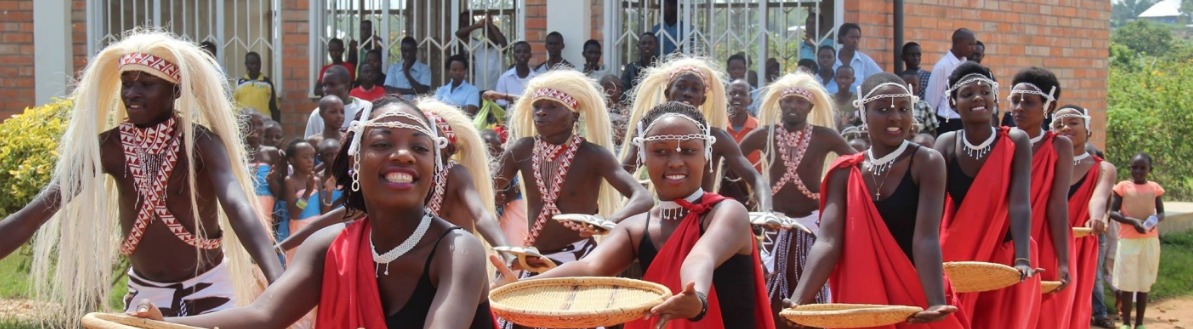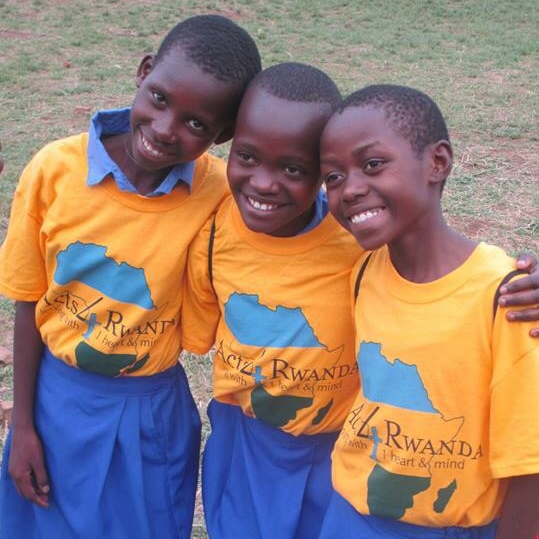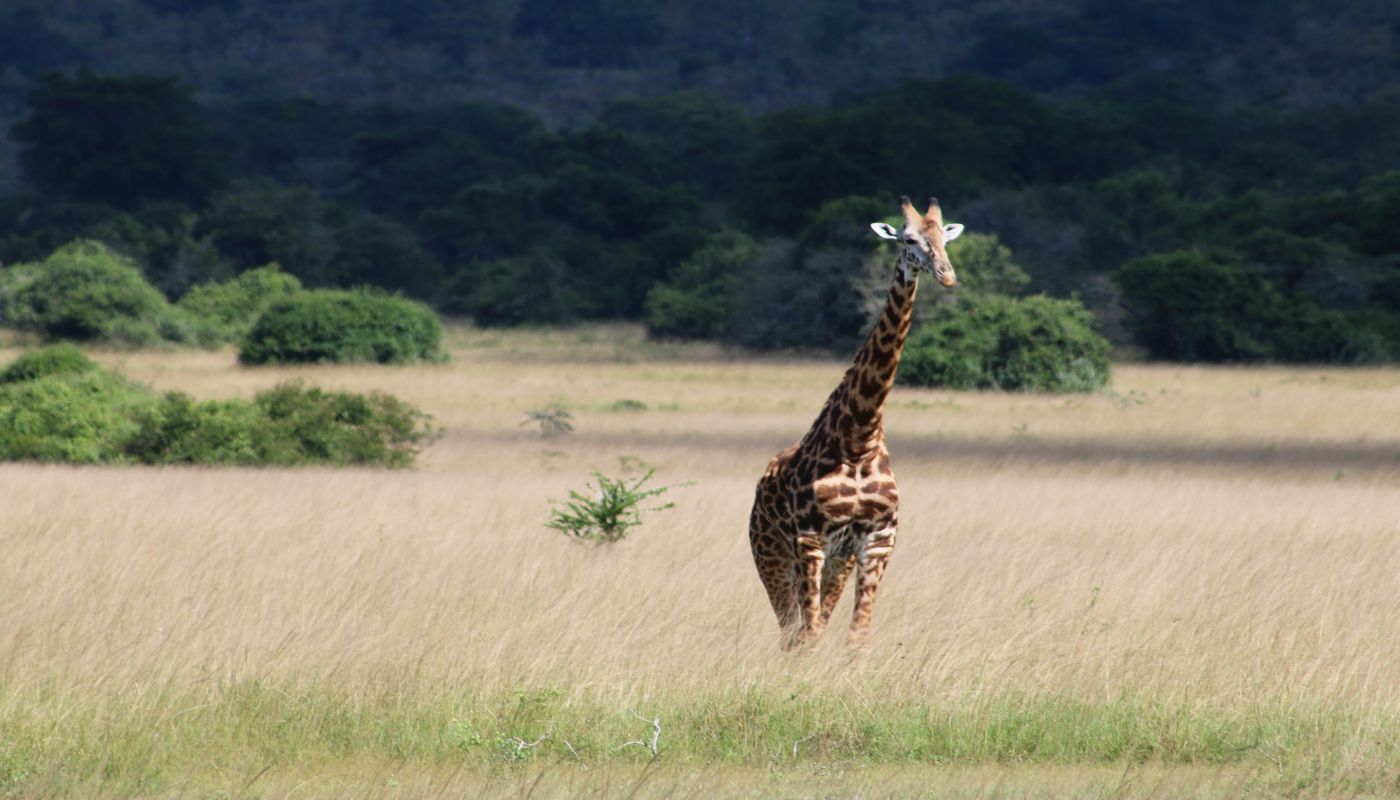
Landscape of Rwanda
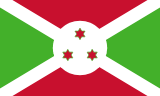
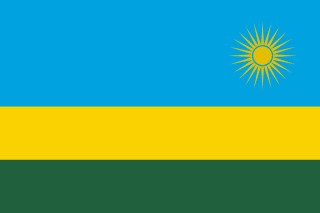
Flag of Rwanda

Rwanda

Africa

One of the most densely populated nations in Africa, Rwanda has a tainted history. The government-organized Rwandan genocide of 1994 left over 800,000 people dead, and the country has slowly been recovering since.1 Poverty, HIV/AIDs, and poor governance still hold Rwanda back from having a higher standard of living, but it has made significant progress to create jobs, educate children, and boost the economy.2 1 https://www.britannica.com/place/Rwanda
2 https://www.cia.gov/library/publications/the-world-factbook/geos/rw.html

What would you like to learn about in Rwanda?

Select a section to explore the country where nonprofits are creating positive change.

About Rwanda

In 1959, three years before independence from Belgium, the majority ethnic group, the Hutus, overthrew the ruling Tutsi king. Over the next several years, thousands of Tutsis were killed, and some 150,000 driven into exile in neighboring countries. The children of these exiles later formed a rebel group, the Rwandan Patriotic Front (RPF), and began a civil war in 1990. The war, along with several political and economic upheavals, exacerbated ethnic tensions, culminating in April 1994 in a state-orchestrated genocide, in which Rwandans killed up to a million of their fellow citizens, including approximately three-quarters of the Tutsi population. The genocide ended later that same year when the predominantly Tutsi RPF, operating out of Uganda and northern Rwanda, defeated the national army and Hutu militias, and established an RPF-led government of national unity. Approximately 2 million Hutu refugees - many fearing Tutsi retribution - fled to neighboring Burundi, Tanzania, Uganda, and former Zaire. Since then, most of the refugees have returned to Rwanda, but several thousand remained in the neighboring Democratic Republic of the Congo (DRC, the former Zaire) and formed an extremist insurgency bent on retaking Rwanda, much as the RPF did in 1990. Rwanda held its first local elections in 1999 and its first post-genocide presidential and legislative elections in 2003. Rwanda in 2009 staged a joint military operation with the Congolese Army in DRC to rout out the Hutu extremist insurgency there, and Kigali and Kinshasa restored diplomatic relations. Rwanda also joined the Commonwealth in late 2009. In January 2013, Rwanda assumed a nonpermanent seat on the UN Security Council for the 2013-14 term.

Quick Facts

Population
12,012,589 (July 2013 est.)
Area
26,338 sq km
ISO Code
RW
Continent
Africa
Government
republic; presidential, multiparty system
Active Causes
12
View all countries in Africa

Geography & Environment

Climate

temperate; two rainy seasons (February to April, November to January); mild in mountains with frost and snow possible

Terrain

mostly grassy uplands and hills; relief is mountainous with altitude declining from west to east

Natural Resources

gold, cassiterite (tin ore), wolframite (tungsten ore), methane, hydropower, arable land

Environmental Issues

deforestation results from uncontrolled cutting of trees for fuel; overgrazing; soil exhaustion; soil erosion; widespread poaching

People & Society

58.85 years
Avg. Life Expectancy
71.1%
Literacy Rate
19.1% of total population (2011)
Total Urban Population

Languages

Kinyarwanda (official, universal Bantu vernacular), French (official), English (official), Kiswahili (Swahili, used in commercial centers)

Religions

Roman Catholic 56.5%, Protestant 26%, Adventist 11.1%, Muslim 4.6%, indigenous beliefs 0.1%, none 1.7% (2001)

Health Expenditure

10.5% of GDP (2010) of GDP

Education Expenditure

4.8% of GDP (2011) of GDP

Economy

$1,500
GDP per Capita (PPP)
NA%
Unemployment Rate
44.9% (2011 est.)
Below Poverty Line

Economic Overview

Rwanda is a poor rural country with about 90% of the population engaged in (mainly subsistence) agriculture and some mineral and agro-processing. Tourism, minerals, coffee and tea are Rwanda's main sources of foreign exchange. Minerals exports declined 40% in 2009-10 due to the global economic downturn. The 1994 genocide decimated Rwanda's fragile economic base, severely impoverished the population, particularly women, and temporarily stalled the country's ability to attract private and external investment. However, Rwanda has made substantial progress in stabilizing and rehabilitating its eco...

Causes in Rwanda

Environment

Some of the primary environmental concerns facing Rwanda are overgrazing, degradation, and erosion of soil. Due to its heavy reliance on the agricultural industry, soil has been largely depleted of nutrients and fertility. Deforestation also presents a threat to the wellbeing of the environment due to wood’s widespread use as a fuel source.1 The Rwanda Environment Management Agency (REMA) is active in promoting environmental concerns and reporting on environmental action in Rwanda. It is one of the only African nations that has been able to adequately prepare itself for the climate change effects of floods and droughts.2

Family

Modern families in Rwanda still grapple with the ramifications of the HIV/AIDS epidemic and the 1994 genocide.1 Families in Rwanda tend to be large, as the number of children a family contains is considered to be a symbol of wealth and prosperity.The average family has nearly five children.2 Rwanda also has a rampant problem with domestic violence, but the culture highly stigmatizes this which causes nearly all cases to go unreported.3

Human Rights

Historically, Rwanda has had a horrific human rights record, the most notable human rights violation being the 1994 genocide. Freedom of press and political association are also very restricted in Rwanda. Opposition political parties face discrimination, arrests, and unfair trials.1 Furthermore, aid and human rights organizations sometimes experience difficulty registering with the government if they have been critical of the government’s policies.2 Rwanda has received international criticism for its military support of an armed group responsible for serious abuses in the Democratic Republic of the Congo.1

Education

Rwanda has the highest primary school enrollment rate in all of Africa at 96%. Even with this high enrollment rate, there are concerns over the quality of education and duration.1 Only 41% of children continue on to secondary school, and there are large attendance discrepancies between urban and rural areas. Many teachers are not qualified and there is not sufficient infrastructure for students to have individual help.2 The national literacy rate is at 70%.3

Poverty

Nearly 40% of Rwanda’s population live below the poverty line.1 With many people dependent on agriculture, resolutions to the poverty crisis are difficult to formulate and implement without improving the economic outlook.1 At the root of the country’s poverty problem is the lingering effects of the 1994 genocide. This began the cycle of social and economic devastation.2

Religion

Rwanda’s constitution provides for religious freedom, and this is generally enforced. Individuals or institutions that limit another’s ability to practice religion freely are subject to fines and imprisonment of up to five years.1 The population is approximately 49% Roman Catholic, 39% Protestant, 4.5% other Christian, and 1.8% Muslim.2

Clean Water

A mere 71% of Rwanda’s population has access to improved drinking water, and only 61.3% of the population has access to sanitation facilities.1 Compared to other sub-Saharan African countries, this is a very high percentage. Difficulties in water access, particularly where agriculture sustains the majority of the population, is a significant problem and can often trap people in cycles of poverty. Diarrhea from drinking from unclean water sources is one of the leading causes of death for children under 5 years old.2

Economy

Rwanda is largely regarded as an economic development success story because of their structural changes and a good entrepreneurial environment. Government reforms and reconciliation efforts have mitigated the influence of corruption and inspired free market practices.1 Even with these improvements, Rwanda still depends heavily on foreign aid, and governmental weaknesses prevent further private expansion. The unemployment rate is under 5%, but many people still rely on subsistence farming as their job.2

Government

Rwanda is a presidential republic with a multiparty system. Despite largely successful reconciliation efforts, political repression and corruption continue to plague society.1 One of the largest obstacles hindering political progress is the lack of a well-functioning legal system. Although the government has made significant changes towards reforming the judicial system to become fully independent from the executive branch, corruption and favoritism are still a common part of the legal process.2

Health

Over 140,000 adults in Rwanda suffer from HIV/AIDS, and this epidemic has left thousands of children without one or both parents.1 In a nation plagued by poverty, much of the population, particularly children, suffers from malnutrition. Roughly half of Rwandan children experience stunted growth due to malnourishment and approximately 20% are underweight. The life expectancy is 65.2

Children

50% of the country’s population is under the age of 18, and 86% of these children live in rural areas.1 Since the horrific genocide at the end of the twentieth century, Rwanda has made significant strides in reducing the infant and child mortality rates and the overall quality of life for children. Now, only 46 children out of 1,000 children will die before their fifth birthday.2

Animals

The mountain gorilla is the crown jewel of Rwanda and each year this unique animal attracts thousands of tourists. There are other rare animals like zebras, lions, hippopotamuses, buffalo, and warthogs.1 As the human population rapidly increases, some animals are poached more often and their habitats are destroyed.2

Nonprofits Working in Rwanda

Discover organizations making a difference in Rwanda

Rising International

Rising International

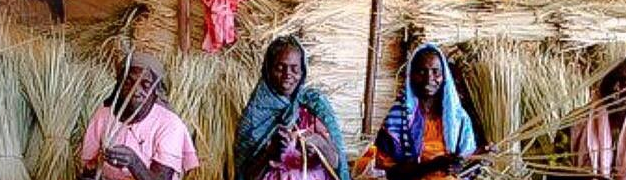
Our Unique Local-Global Solution Rising International is a nonprofit organization that has revolutionized the home party business model to alleviate poverty locally and globally. Think Avon or Tupperware for a social cause. We find the world’s most forgotten women (like Fatima) and enable them to change their destinies by selling their handmade crafts at Rising Home and Corporate Parties. We train women and teens, many un-employed or under- employed, (like Susana) to run their own Rising Home Party businesses and sell crafts made by their global sisters. We search the U.S. for party hosts (like Nancy) who invite friends to their homes to shop. Our sustainable model empowers both local and global entrepreneurs to rise above their circumstances.

Santa Cruz, California

Make Your Impact Today

Discover causes you care about and support the nonprofits making a difference in communities around the world.

Are you a nonprofit? Join Project World Impact for free

Join Us Free