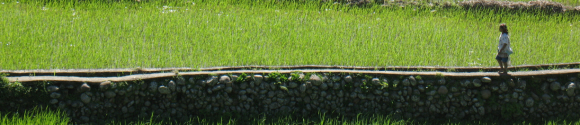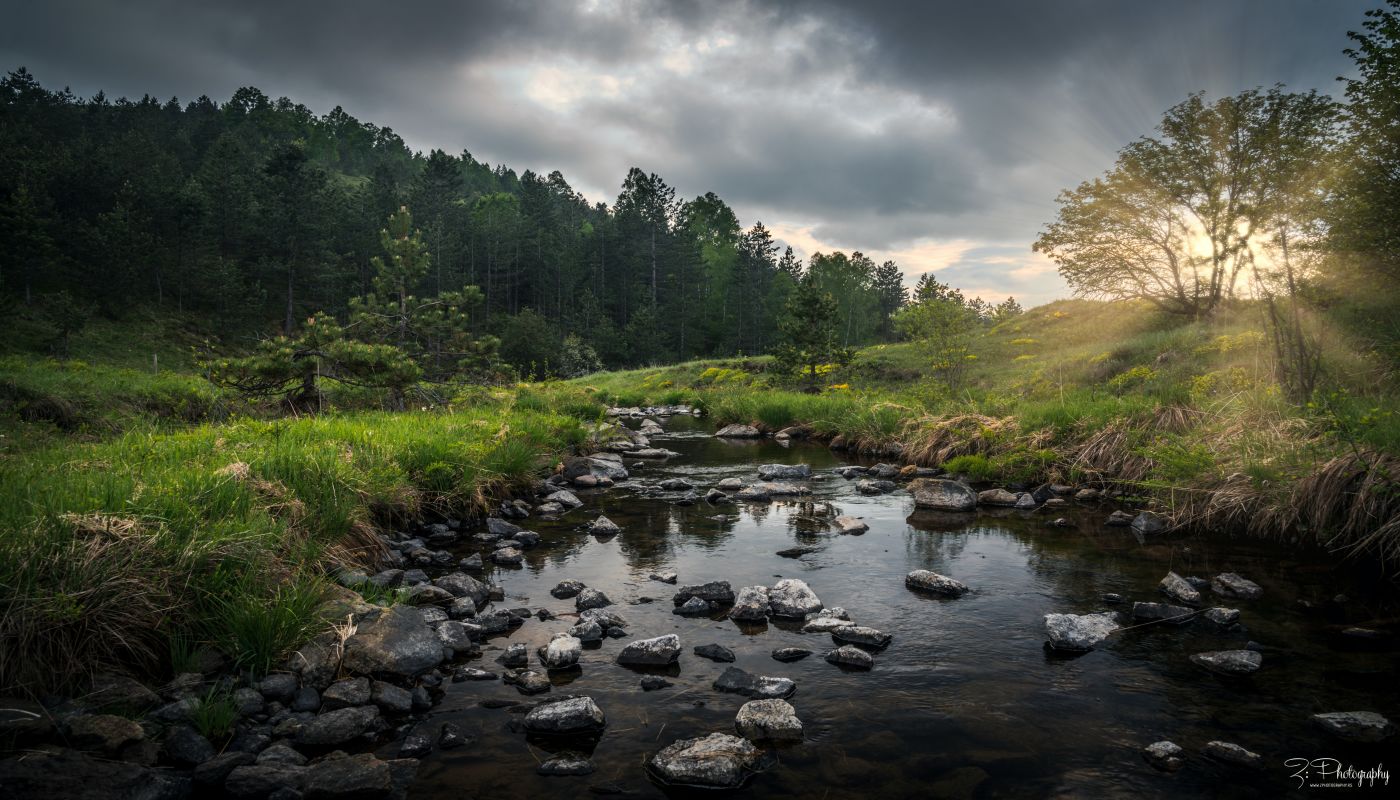
Landscape of Serbia
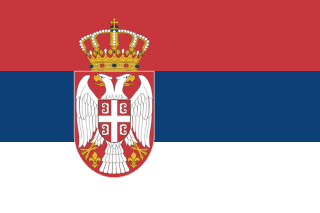
Flag of Serbia

Serbia

Europe

For most of the 20th century, Serbia was part of Yugoslavia. It only became the independent, democratic state it is today in 2006 after years of bloody war with the surrounding Baltic states. Since the fall of the Soviet Union in 1991, Serbia has undergone a long journey of transforming their economy to become more privatized, but its multiple international conflicts and government controls have made it difficult to bolster the economy.1 Youth unemployment is particularly high at nearly 50%.2 1 https://www.britannica.com/place/Serbia#toc654691main
2 https://www.cia.gov/library/publications/the-world-factbook/geos/ri.html

What would you like to learn about in Serbia?

Select a section to explore the country where nonprofits are creating positive change.

About Serbia

The Kingdom of Serbs, Croats, and Slovenes was formed in 1918; its name was changed to Yugoslavia in 1929. Various paramilitary bands resisted Nazi Germany's occupation and division of Yugoslavia from 1941 to 1945, but fought each other and ethnic opponents as much as the invaders. The military and political movement headed by Josip "TITO" Broz (Partisans) took full control of Yugoslavia when German and Croatian separatist forces were defeated in 1945. Although communist, TITO's new government and his successors (he died in 1980) managed to steer their own path between the Warsaw Pact nations and the West for the next four and a half decades. In 1989, Slobodan MILOSEVIC became president of the Republic of Serbia and his ultranationalist calls for Serbian domination led to the violent breakup of Yugoslavia along ethnic lines. In 1991, Croatia, Slovenia, and Macedonia declared independence, followed by Bosnia in 1992. The remaining republics of Serbia and Montenegro declared a new Federal Republic of Yugoslavia (FRY) in April 1992 and under MILOSEVIC's leadership, Serbia led various military campaigns to unite ethnic Serbs in neighboring republics into a "Greater Serbia." These actions were ultimately unsuccessful and led to the signing of the Dayton Peace Accords in 1995. MILOSEVIC retained control over Serbia and eventually became president of the FRY in 1997. In 1998, an ethnic Albanian insurgency in the formerly autonomous Serbian province of Kosovo provoked a Serbian counterinsurgency campaign that resulted in massacres and massive expulsions of ethnic Albanians living in Kosovo. The MILOSEVIC government's rejection of a proposed international settlement led to NATO's bombing of Serbia in the spring of 1999, to the withdrawal of Serbian military and police forces from Kosovo in June 1999, and to the stationing of a NATO-led force in Kosovo to provide a safe and secure environment for the region's ethnic communities. FRY elections in late 2000 led to the ouster of MILOSEVIC and the installation of democratic government. In 2003, the FRY became Serbia and Montenegro, a loose federation of the two republics. Widespread violence predominantly targeting ethnic Serbs in Kosovo in March 2004 caused the international community to open negotiations on the future status of Kosovo in January 2006. In June 2006, Montenegro seceded from the federation and declared itself an independent nation. Serbia subsequently gave notice that it was the successor state to the union of Serbia and Montenegro. In February 2008, after nearly two years of inconclusive negotiations, the UN-administered province of Kosovo declared itself independent of Serbia - an action Serbia refuses to recognize. At Serbia's request, the UN General Assembly (UNGA) in October 2008 sought an advisory opinion from the International Court of Justice (ICJ) on whether Kosovo's unilateral declaration of independence was in accordance with international law. In a ruling considered unfavorable to Serbia, the ICJ issued an advisory opinion in July 2010 stating that international law did not prohibit declarations of independence. In late 2010, Serbia agreed to an EU-drafted UNGA Resolution acknowledging the ICJ's decision and calling for a new round of talks between Serbia and Kosovo, this time on practical issues rather than Kosovo's status. The EU-moderated Belgrade-Pristina dialogue began in March 2011 and was raised to the level of prime ministers in October 2012.

Quick Facts

Population
7,243,007 (July 2013 est.)
Area
77,474 sq km
ISO Code
RS
Continent
Europe
Government
republic
Active Causes
12
View all countries in Europe

Geography & Environment

Climate

in the north, continental climate (cold winters and hot, humid summers with well-distributed rainfall); in other parts, continental and Mediterranean climate (relatively cold winters with heavy snowfa...

Terrain

extremely varied; to the north, rich fertile plains; to the east, limestone ranges and basins; to the southeast, ancient mountains and hills

Natural Resources

oil, gas, coal, iron ore, copper, zinc, antimony, chromite, gold, silver, magnesium, pyrite, limestone, marble, salt, arable land

Environmental Issues

air pollution around Belgrade and other industrial cities; water pollution from industrial wastes dumped into the Sava which flows into the Danube

People & Society

74.79 years
Avg. Life Expectancy
98%
Literacy Rate
56% of total population (2010)
Total Urban Population

Languages

Serbian (official) 88.3%, Hungarian 3.8%, Bosniak 1.8%, Romany (Gypsy) 1.1%, other 4.1%, unknown 0.9% (2002 census)

Religions

Serbian Orthodox 85%, Catholic 5.5%, Protestant 1.1%, Muslim 3.2%, unspecified 2.6%, other, unknown, or atheist 2.6% (2002 census)

Health Expenditure

10.4% of GDP (2010) of GDP

Education Expenditure

4.7% of GDP (2010) of GDP

Economy

$10,600
GDP per Capita (PPP)
25.9%
Unemployment Rate
9.2% (2010 est.)
Below Poverty Line

Economic Overview

Serbia has a transitional economy mostly dominated by market forces, but the state sector remains large and many institutional reforms are needed. The economy relies on manufacturing and exports, driven largely by foreign investment. MILOSEVIC-era mismanagement of the economy, an extended period of international economic sanctions, civil war, and the damage to Yugoslavia's infrastructure and industry during the NATO airstrikes in 1999 left the economy only half the size it was in 1990. After the ousting of former Federal Yugoslav President MILOSEVIC in September 2000, the Democratic Opposition...

Causes in Serbia

Environment

Serbia has not yet implemented a comprehensive, nationwide climate change mitigation plan, but they generally align with the European Union standards and goals.1 Serbia is committed to the 2015 Paris Climate Agreement and plans to make reducing their carbon footprint significantly in coming years.2

Family

There is a domestic abuse epidemic in Serbia. Estimates say that 54% of Serbian women will experience domestic violence or abuse in their lifetimes. Authorities are often unable to prevent domestic violence due to the lack of victim reporting.1 In 2017, the nation adopted a remembrance day for domestic violence victims with the hope to increase awareness of this issue that plagues many Balkan states.2

Human Rights

The most concerning human rights violation in Serbia is the discrimination against ethnic minorities such as Roma and Albanians. Serbian authorities perpetuate forced evictions against Roma, and these children often face exclusion within the education system. News sources that criticize the government are sometimes targeted with threats or arrested.1

Education

After its transition into a democratic state, Serbia began to rehabilitate its neglected education system, but there is still an underdeveloped program for children with disabilities. The literacy rate is now at 98%.1 The primary school enrollment rate is at 96%.2

Poverty

It’s difficult to understand the prevalence of poverty in Serbia since there has been little data gathered since 2010. However, estimates put the poverty rate near 9%.1 Inequalities between urban and rural populations persist, as do disparities between disabled and healthy citizens.2

Religion

85% of Serbia’s population identify as Orthodox, 5% as Catholic, 3% as Muslim, and 1% as Protestant.1 The government guarantees religious freedom, but widespread ethnic discriminations persist, creating tensions within society.3

Clean Water

While 99% of the population has access to clean drinking water, Serbia’s water infrastructure lacks a cohesive wastewater treatment system. As a developing country, there are challenges to creating a sustainable water system. About 20% of water is lost during the purification process, greatly reducing the overall efficiency of the system.1 Approximately 98% of the population has access to improved sanitation infrastructure.2

Economy

The Serbian economy is driven by foreign investment and manufacturing. The GDP and economy have been slow to grow because of political instability, civil war, and multiple bombing campaigns in the early 21th century. In addition, many large companies remain state owned, a remnant of the former communist era, and this tight government control is holding the economy back from growing further. The unemployment rate is near 15%.1

Government

The Republic of Serbia formally became an independent, democratic nation in 2006 after years of conflict with the neighboring countries. The nation is now a parliamentary republic with both a president and a prime minister to lead the country. One of the most prevalent political issues is Serbia’s refusal to recognize the sovereignty of Kosovo, which is recognized by over 100 other countries, but Serbia continues to regard it as part of their land.1 There is government corruption that prevents the privatization and judiciary processes from operating effectively.2

Health

The leading causes of death in Serbia are heart disease, stroke, and cancer. Health risk factors include smoking, poor nutrition and diet, and obesity. 30% of deaths have been attributed to smoking. Overall, the healthcare sector has been underfunded and 15% of the population does not have access to healthcare clinics and medications.1 The life expectancy in Serbia is 75 years of age.2

Children

Children’s rights have drastically improved in Serbia since the fall of the Soviet Union in 1991. The government has made steady progress in advancing access to primary health care and education for children. The rate of child mortality is 8 deaths for 1,000 live births. Serbian children living with disabilities are not given adequate support to stay with their families, and instead they spend almost their entire childhoods institutionalized.1

Animals

Serbia is largely covered in forests, and many medium and large mammals live in these forests. Bears, deer, and wild pigs are all common.1

Nonprofits Working in Serbia

Discover organizations making a difference in Serbia

Make Your Impact Today

Discover causes you care about and support the nonprofits making a difference in communities around the world.

Are you a nonprofit? Join Project World Impact for free

Join Us Free