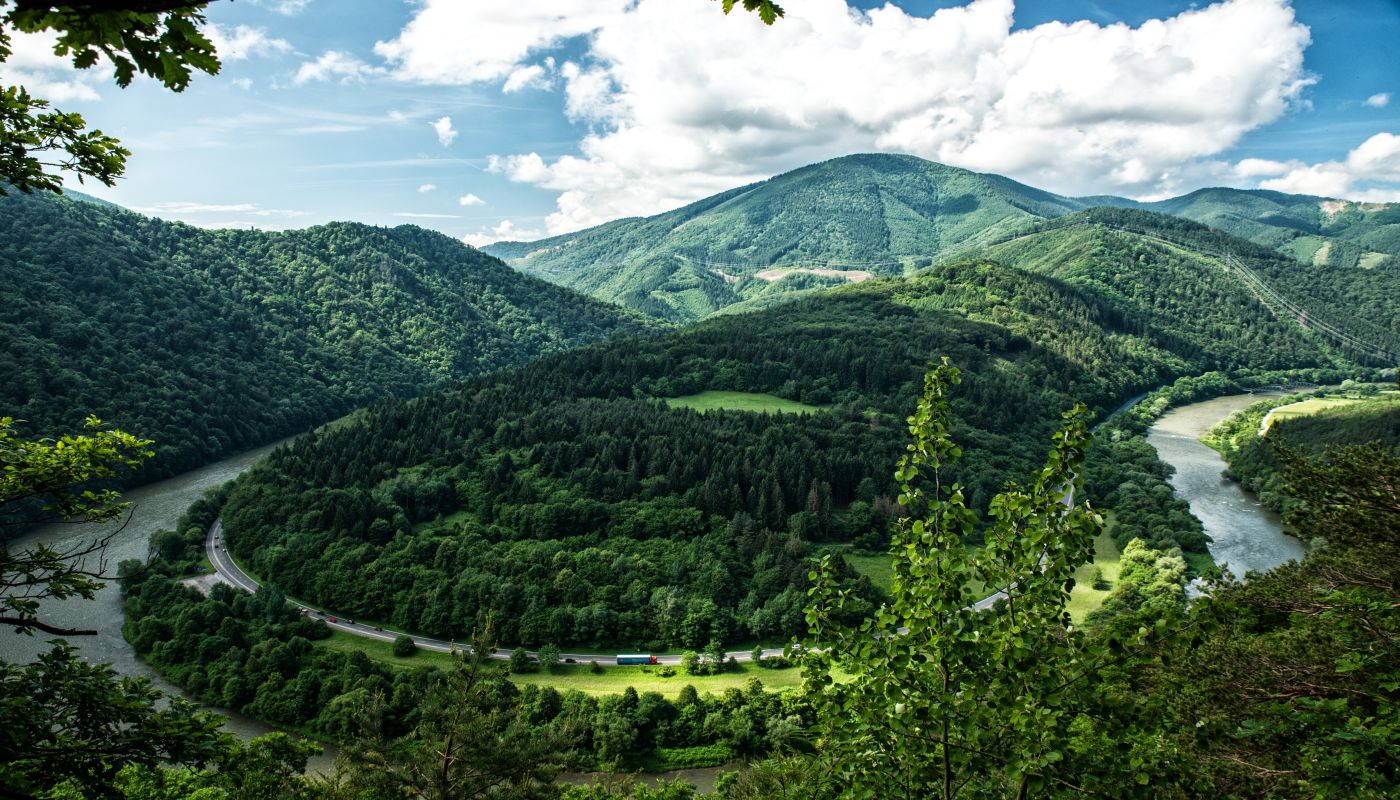
Landscape of Slovakia
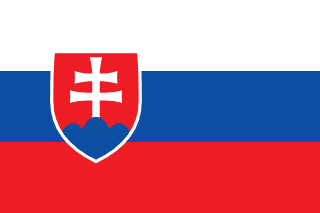
Flag of Slovakia

Slovakia

Europe

In 1993, Slovakia officially split from the Czech Republic to become an independent nation.1 Since then, its government system has been marked by significant corruption. Officials are accused of dealing with bribes, tampering with elections, and influencing the judiciary system.2 The greatest human rights violations occur at the expense of the Roma people, one of the country’s ethnic minorities. The Roma are not given equal opportunities for employment and education, and often never get the opportunity to escape from systematic poverty.3 1 https://www.cia.gov/library/publications/the-world-factbook/geos/lo.html 2 http://www.heritage.org/index/country/slovakia 3 http://www.aljazeera.com/indepth/features/2017/04/life-slovakia-roma-slums-poverty-segregation-170425090756677.html

What would you like to learn about in Slovakia?

Select a section to explore the country where nonprofits are creating positive change.

About Slovakia

Slovakia's roots can be traced to the 9th century state of Great Moravia. Subsequently, the Slovaks became part of the Hungarian Kingdom, where they remained for the next 1,000 years. Following the formation of the dual Austro-Hungarian monarchy in 1867, language and education policies favoring the use of Hungarian (Magyarization) resulted in a strengthening of Slovak nationalism and a cultivation of cultural ties with the closely related Czechs, who were under Austrian rule. After the dissolution of the Austro-Hungarian Empire at the close of World War I, the Slovaks joined the Czechs to form Czechoslovakia. During the interwar period, Slovak nationalist leaders pushed for autonomy within Czechoslovakia, and in 1939 Slovakia became an independent state allied with Nazi Germany. Following World War II, Czechoslovakia was reconstituted and came under communist rule within Soviet-dominated Eastern Europe. In 1968, an invasion by Warsaw Pact troops ended the efforts of the country's leaders to liberalize communist rule and create "socialism with a human face," ushering in a period of repression known as "normalization." The peaceful "Velvet Revolution" swept the Communist Party from power at the end of 1989 and inaugurated a return to democratic rule and a market economy. On 1 January 1993, the country underwent a nonviolent "velvet divorce" into its two national components, Slovakia and the Czech Republic. Slovakia joined both NATO and the EU in the spring of 2004 and the euro zone on 1 January 2009.

Quick Facts

Population
5,488,339 (July 2013 est.)
Area
49,035 sq km
ISO Code
SK
Continent
Europe
Government
parliamentary democracy
Active Causes
12
View all countries in Europe

Geography & Environment

Climate

temperate; cool summers; cold, cloudy, humid winters

Terrain

rugged mountains in the central and northern part and lowlands in the south

Natural Resources

brown coal and lignite; small amounts of iron ore, copper and manganese ore; salt; arable land

Environmental Issues

air pollution from metallurgical plants presents human health risks; acid rain damaging forests

People & Society

76.24 years
Avg. Life Expectancy
99.6%
Literacy Rate
54.7% of total population (2011)
Total Urban Population

Languages

Slovak (official) 83.9%, Hungarian 10.7%, Roma 1.8%, Ukrainian 1%, other or unspecified 2.6% (2001 census)

Religions

Roman Catholic 68.9%, Protestant 10.8%, Greek Catholic 4.1%, other or unspecified 3.2%, none 13% (2001 census)

Health Expenditure

8.8% of GDP (2010) of GDP

Education Expenditure

4.1% of GDP (2009) of GDP

Economy

$24,600
GDP per Capita (PPP)
13.6%
Unemployment Rate
21% (2002)
Below Poverty Line

Economic Overview

Slovakia has made significant economic reforms since its separation from the Czech Republic in 1993. Reforms to the taxation, healthcare, pension, and social welfare systems helped Slovakia consolidate its budget and get on track to join the EU in 2004 after a period of relative stagnation in the early and mid 1990s and to adopt the euro in January 2009. Major privatizations are nearly complete, the banking sector is almost entirely in foreign hands, and the government has helped facilitate a foreign investment boom with business friendly policies. Slovakia's economic growth exceeded expectati...

Causes in Slovakia

Family

Over the past five years, Slovakia has been at the top of the list of countries with the highest amount of abandoned children, with 4.9 abandoned for every 1,000 live births.1 Child abuse is also a common and underreported, although estimates suggest that approximately 36% of children are physically abused. Additionally, domestic abuse is a major problem in Slovakia. Statistics do not accurately portray the amount of people who are abused because cases are often either not reported or not punished by the law.2

Human Rights

Recent human rights violations in Slovakia include police mistreatment of suspects, discrimination against Romani people, lengthy pretrial detentions, human trafficking, violence against women and children, and government corruption.1 Roma citizens are the second-largest ethnic minority in Slovakia and make up 10% of the population, but they are not treated equally. 97% of Roma are unemployed and live off small amounts of government welfare. Even those who are employed make minimal salaries and don’t have equal access to housing or education, leaving families trapped in cycles of poverty.2 There has also been a rise in hate crimes and police violence against Roma in recent years.3

Education

Basic education, which includes primary and secondary education, is free and compulsory for nine years in Slovakia.1 The literacy rate in Slovakia is 99.6%.2 There are separate schools for children with special educational needs, and integration into the public school system requires both parental consent, as well as school consent.3 Romani children are often discriminated against in educational settings and are either placed in segregated classes or not given the same opportunities to learn as Slovak children.4

Poverty

The unemployment rate in Slovakia is 9%, and 12% of the population live below the poverty line.1 Slovakia is the second poorest member of the eurozone, just above Greece.2 Rising housing costs have led to many Slovak families spending most of their income on housing. Roughly 1 in 5 Slovak citizens deal with housing costs that exceed 40% of their annual income. The Slovak government spends only 17% of its GDP on social protection, which is half of the European Union average.3

Religion

Approximately 62% of Slovakia’s population is Roman Catholic, 8% are Protestant, 3% are Greek Catholic, and 26% are unspecified or nonreligious.1 Slovakia’s constitution provides for freedom of religion, and this is generally respected by the government. However, in order to qualify for tax exemption and government subsidiaries, religions groups must have at least 20,000 members, which excludes many religious minorities, such as Muslims, from receiving religious benefits.2

Clean Water

100% of Slovakia has access to improved drinking water and 99% have access to improved sanitation infrastructure.1

Economy

After the separation from the Czech Republic in 1993, Slovakia significantly rehabbed its economic system.1 After joining the European Union in 2004, Slovakia reformed its taxation system, healthcare, pension, and social welfare systems. Slovakia has successfully privatized its financial sector and obtained many beneficial foreign investments. However, the presence of corruption within the government and mismanagement of government funds continue to inhibit economic growth.2 The unemployment rate in Slovakia is 9%, and 12% of the population lives below the poverty line.1

Government

The Slovak Republic is a parliamentary democracy with a president and a prime minister. Slovakia has been a member of the European Union since 2004 and it adopted the euro as its currency in 2009.1 Corruption within the Slovak government is pervasive. The mismanagement of public funds and large fiscal deficits have hindered growth and public confidence. The executive branch is known to assert undue influence over the judiciary, which has created a severe backlog of criminal cases.2

Health

The right to health care is outlined in the Slovak constitution as a basic fundamental human right. Public health insurance is mandatory for all citizens, and people pay in proportion to their income.1 Non-communicable diseases are the leading causes of illness and death in Slovakia, mainly cardiovascular disease and cancer.2 35% of adults smoke regularly and the number of adolescents who smoke is increasing.3 The infant mortality rate in Slovakia is 6 deaths per 1,000 live births.4 The average life expectancy is 77 years of age.5

Children

Hundreds of Slovak children are abandoned by their birth parents each year and put up for adoption. Over the past five years, Slovakia has been at the top of the list of countries with the highest number of abandoned children, with 4.9 abandoned for every 1,000 live births.1 In 2015, Slovakia passed a law that mandates all children ages six and under be raised in homes rather than institutions.2 Additionally, Slovakia’s infant mortality rate is low at 6 deaths per 1,000 live births.3 Child abuse continues to be an underreported problem in the country. The most recent estimates approximate that 36% of children suffer from physical abuse.4

Environment

Overall, Slovakia has improved its efforts at environmental conservation in recent decades. There are still excess amounts of waste in landfills, and 39% of agricultural land suffers from erosion.1 Agriculture also contributes to air pollution. Lignite, a commonly used energy source, creates high amounts of sulfur dioxide emissions which have led to consequences as severe as acid rain in some areas.2

Animals

Slovakia has a diverse wildlife population, but focuses its conservation efforts on bears and wolves.1 Tatry National Park shelters many of these wild animals and protects them from hunting.2

Nonprofits Working in Slovakia

Discover organizations making a difference in Slovakia

Make Your Impact Today

Discover causes you care about and support the nonprofits making a difference in communities around the world.

Are you a nonprofit? Join Project World Impact for free

Join Us Free