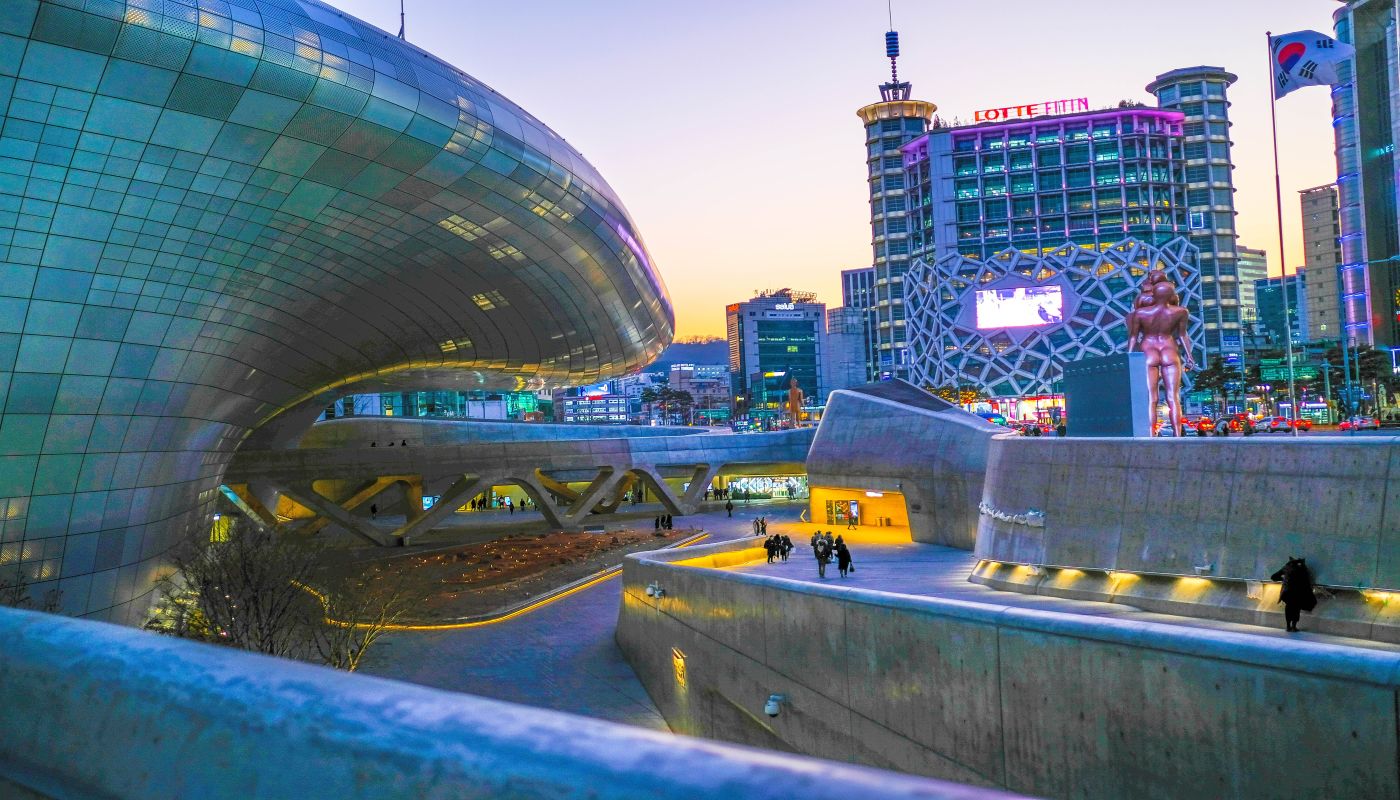
Landscape of South Korea
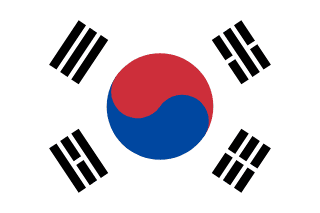
Flag of South Korea

South Korea

Asia

In the past fifty years, South Korea has made a dramatic rise to become one of the most well-developed nations in the world. This is due in large part to its presence as a high-tech marketplace, emphasis on imports and exports, and an efficient business sector.1 Since its rapid industrialization, South Korea has become one of the most polluted countries in the world.2 In 2017, its president was impeached on counts of bribery and abuse of power, and the public remains dissatisfied with their government and its restrictions on freedom of speech and assembly.3 The unemployment rate is low at 3%, and the majority of citizens in poverty are the elderly, who have no means of income besides small government pensions.4 1 http://www.heritage.org/index/country/southkorea 2 https://www.ft.com/content/b49a9878-141b-11e7-80f4-13e067d5072c?mhq5j=e1 3 https://www.theguardian.com/world/2017/mar/10/south-korea-president-park-geun-hye-constitutional-court-impeachment 4 http://www.npr.org/sections/parallels/2015/04/10/398498496/a-forgotten-generation-half-of-s-koreas-elderly-live-in-poverty

What would you like to learn about in South Korea?

Select a section to explore the country where nonprofits are creating positive change.

About South Korea

An independent kingdom for much of its long history, Korea was occupied by Japan beginning in 1905 following the Russo-Japanese War. In 1910, Tokyo formally annexed the entire Peninsula. Korea regained its independence following Japan's surrender to the United States in 1945. After World War II, a democratic-based government (Republic of Korea, ROK) was set up in the southern half of the Korean Peninsula while a communist-style government was installed in the north (Democratic People's Republic of Korea, DPRK). During the Korean War (1950-53), US troops and UN forces fought alongside ROK soldiers to defend South Korea from a DPRK invasion supported by China and the Soviet Union. A 1953 armistice split the peninsula along a demilitarized zone at about the 38th parallel. PARK Chung-hee took over leadership of the country in a 1961 coup. During his regime, from 1961 to 1979, South Korea achieved rapid economic growth, with per capita income rising to roughly 17 times the level of North Korea. South Korea held its first free presidential election under a revised democratic constitution in 1987, with former ROK Army general ROH Tae-woo winning a close race. In 1993, KIM Young-sam (1993-98) became South Korea's first civilian president. South Korea today is a fully functioning modern democracy. LEE Myung-bak (2008-2013) pursued a policy of global engagement , highlighted by Seoul's hosting of the G-20 summit in November 2010 and the Nuclear Security Summit in March 2012. South Korea also secured a non-permanent seat (2013-14) on the UN Security Council and will host the 2018 Winter Olympic Games. President PARK Geun-hye took office in February 2013 and is South Korea's first female leader. Serious tensions with North Korea have punctuated inter-Korean relations in recent years, including the North's sinking of the South Korean warship Cheonan in March 2010 and its artillery attack on South Korean soldiers and citizens in November 2010. In January 2013, South Korea assumed a nonpermanent seat on the UN Security Council for the 2013-14 term.

Quick Facts

Population
48,955,203 (July 2013 est.)
Area
99,720 sq km
ISO Code
KR
Continent
Asia
Government
republic
Active Causes
12
View all countries in Asia

Geography & Environment

Climate

temperate, with rainfall heavier in summer than winter

Terrain

mostly hills and mountains; wide coastal plains in west and south

Natural Resources

coal, tungsten, graphite, molybdenum, lead, hydropower potential

Environmental Issues

air pollution in large cities; acid rain; water pollution from the discharge of sewage and industrial effluents; drift net fishing

People & Society

79.55 years
Avg. Life Expectancy
97.9%
Literacy Rate
83.2% of total population (2011)
Total Urban Population

Languages

Korean, English (widely taught in junior high and high school)

Religions

Christian 31.6% (Protestant 24%, Roman Catholic 7.6%), Buddhist 24.2%, other or unknown 0.9%, none 43.3% (2010 survey)

Health Expenditure

6.9% of GDP (2010) of GDP

Education Expenditure

5.1% of GDP (2009) of GDP

Economy

$32,800
GDP per Capita (PPP)
3.2%
Unemployment Rate
16.5% (2011 est.)
Below Poverty Line

Economic Overview

South Korea over the past four decades has demonstrated incredible growth and global integration to become a high-tech industrialized economy. In the 1960s, GDP per capita was comparable with levels in the poorer countries of Africa and Asia. In 2004, South Korea joined the trillion dollar club of world economies, and is currently the world's 12th largest economy. Initially, a system of close government and business ties, including directed credit and import restrictions, made this success possible. The government promoted the import of raw materials and technology at the expense of consumer g...

Causes in South Korea

Environment

Despite innovations such as natural-gas powered buses and heavier restrictions on factories, South Korea is still ranked as one of the world’s most polluted countries. Vehicle emissions, industrial sites, and coal-burning factories are the biggest causes of pollution, especially in urban areas. In addition, although the exact percentage is unknown, some of the pollution is carried over from China by air currents.1

Family

Since the Korean War in the 1950s split Korea into North and South and ended with a ceasefire rather than a peace treaty, there have been no real means of communication between family members living in the two separate countries. There are about 72,000 elderly South Koreans who are on a waiting list to communicate with family members through government-operated reunions, the only legal means of seeing each other. Additionally, child abuse is a significant and often unreported problem in South Korean families. The idea of child discipline and punishment as a private matter is deeply ingrained in Korean culture, and often, even schools and hospitals refrain from reporting child abuse.1 Additionally, more than 50% of married couples experience domestic abuse. When abuse is reported, only 8% of cases result in arrests.2

Human Rights

South Korea continues to infringe upon people’s basic human rights with the National Security Law. This law is often used to oppress the South Koreans’ right to freedom of expression and association. The law also has a very loose definition of anti-state activities, which allows authorities to arbitrarily assign long sentences and even the death penalties.1 The government has been known to make arrests at peaceful protests and increase their surveillance of communication from anyone they suspect of terrorism.2 Additionally, South Korea’s armed forces have been accused of violence and bullying tactics used to threaten, terrorize, and sometimes kill men among their ranks.3

Education

South Korea has long been known for its high achieving education system. Between the ages of 6 and 15 in South Korea, education is free and mandatory. Funding for public schools is provided almost entirely through the Ministry of Education. On average, the government spends $7,652 on each student, no matter what level of education. In total, 7.6% of the GDP is spent on education and its improvement.1 Due to this amount of investment, South Korea continually ranks at the top of the Program for International Student Assessment surveys. Additionally, around 64% of South Koreans have advanced degrees.2 However, high levels of academic stress negatively affect Korean students, with half of students between the ages of 15 and 19 experiencing suicidal thoughts and citing college entrance exams and academic pressure as the cause.3

Poverty

South Korea’s 50-year meteoric rise to economic powerhouse has left several thousand of elderly citizens in poverty.1 45% of the elderly population lives in poverty.2 The government provides pensions to the elderly, but only one-third of needy citizens receive them, and they often are not to enough to sustain them.3 South Korean companies regularly force employees who are in their mid-50’s to retire.2 South Korea’s national poverty rate is about 12.5% and the unemployment rate is at 3.2%.4

Religion

Religious freedom and separation of church and state are guaranteed constitutional rights in South Korea.1 Over half of the population claims to have no religious affiliation. However, 16% adhere to Buddhism, 20% to Protestantism, 8% to Catholicism, and the remaining to a small percentage of other religions.2 The biggest limit to religious freedom is in regards to military service. Anyone who objects to their required two year service commitment for religious reasons is prosecuted and has a criminal record that cannot be absolved.3

Clean Water

In 1961, only 18% of the population had access to clean water. Today, 98% of South Korea’s total population has access to improved water sources and 100% has access to improved sanitation.1 This is a result of decades of policies and government funding of water infrastructure projects aimed at improving the quality and sanitation of life in South Korea.2

Economy

The country has shown impressive growth and commitment to integration into the global market in recent years. Its GDP per capita went from amongst the lowest in the world in the 1960s to a trillion dollar economy in recent years. One of the strengths of the South Korean economy is the high-tech industrialized niche it has carved for itself. Some of the major challenges that the country faces are its aging population, inflexible labor market, and heavy economic reliance on exports.1 Other economic hindrances include bribery, corruption, extortion, and government unrest.2 The unemployment rate is at 3.7% and 12% of the population lives below the poverty line.3

Government

South Korea is a presidential republic with both a president and a prime minister.1 In 2017, President Geun-hye Park was impeached before the end of her term on counts of bribery, extortion, and leaking government secrets.2 This level of corruption has caused the public to lose trust in the government and left national policies in flux.3 Conflict remains despite Park’s impeachment as the public demands more equality in distribution of government office positions instead concentrating them amongst the wealthy.2

Health

The government spends around 7.4% of its total GDP on health care, below the Organization for Economic Co-operation and Development (OECD)’s country average of 9.3%. A national healthcare system is in place and covers over 97% of South Koreans. A medical aid program covers the remaining 2-3% of the country’s low income citizens.1 South Korea’s infant mortality rate is low at under 4%, and the life expectancy is high at 81 years.2 More than 80% of deaths are caused by chronic diseases like cancer and heart and respiratory disease. Preventable conditions like obesity and diabetes are caused by low levels of physical activity and alcohol or tobacco use.3

Children

In recent years, the gender gap has been shortened and there has been an improvement in access to education. The internet has become the easiest way to exploit children and has resulted in increased sex merchandising. In South Korea, there are around 100,000 runaway children per year at a high risk for being trafficked. Child abuse is a common but often unreported problem in South Korea.1 Child abandonment is a major problem as well, in part due to legislation in 2012 that decreased the amount of children that could be adopted internationally and required families to register any children for adoption through the courts. As the number of adoptions has decreased over the past several decades, four-fifths of abandoned children end up spending their lives in state-run facilities.2 Children growing up in families are not immune from trouble either. One survey found that South Korean children ranked last amongst the most-developed countries for overall satisfaction with life, often citing academic stress and pressures.3

Animals

Many native species in South Korea have been extinguished by years of war, intense cultivation, and deforestation. The demilitarized zone that runs between North and South Korea is uninhabited and has become a well-preserved nature area due to the absence of humans in the past several decades. It is now home to a variety of ecosystems like marshlands and forests that are home to many birds, fish, and mammals.1

Nonprofits Working in South Korea

Discover organizations making a difference in South Korea

Make Your Impact Today

Discover causes you care about and support the nonprofits making a difference in communities around the world.

Are you a nonprofit? Join Project World Impact for free

Join Us Free