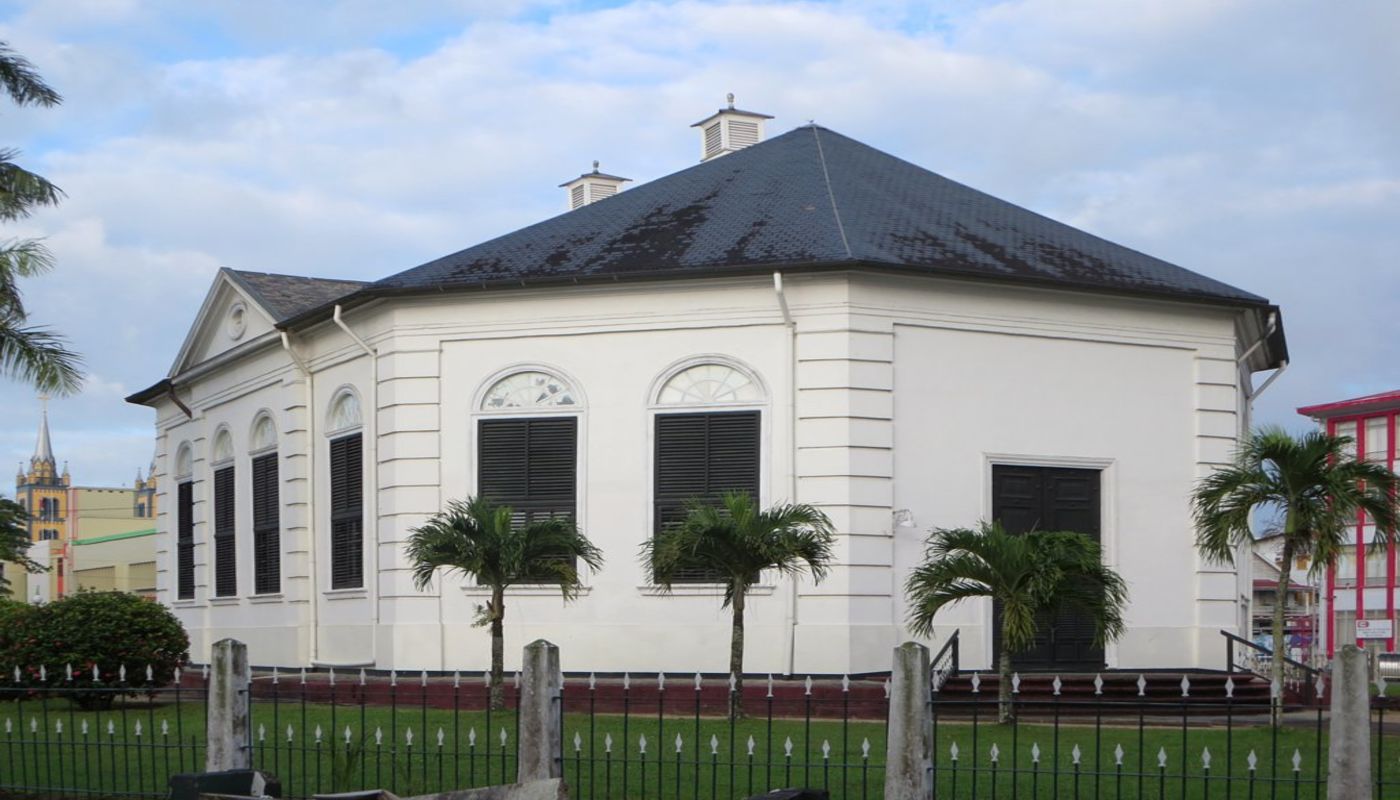
Landscape of Suriname
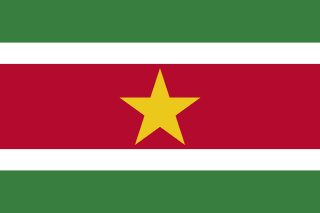
Flag of Suriname

Suriname

South America

A former colony of the Netherlands, Suriname gained independence in 1975. Since then, their economy has consisted mainly of mining and forestry activities. There are less than 600,000 people living in the entire nation, and over two-thirds of all people live in urban areas near the coast because of the dense forest inland.1 1 https://www.britannica.com/place/Suriname#toc285407

What would you like to learn about in Suriname?

Select a section to explore the country where nonprofits are creating positive change.

About Suriname

First explored by the Spaniards in the 16th century and then settled by the English in the mid-17th century, Suriname became a Dutch colony in 1667. With the abolition of African slavery in 1863, workers were brought in from India and Java. Independence from the Netherlands was granted in 1975. Five years later the civilian government was replaced by a military regime that soon declared a socialist republic. It continued to exert control through a succession of nominally civilian administrations until 1987, when international pressure finally forced a democratic election. In 1990, the military overthrew the civilian leadership, but a democratically elected government - a four-party coalition - returned to power in 1991. The coalition expanded to eight parties in 2005 and ruled until August 2010, when voters returned former military leader Desire BOUTERSE and his opposition coalition to power.

Quick Facts

Population
566,846 (July 2013 est.)
Area
163,820 sq km
ISO Code
SR
Continent
South America
Government
constitutional democracy
Active Causes
12
View all countries in South America

Geography & Environment

Climate

tropical; moderated by trade winds

Terrain

mostly rolling hills; narrow coastal plain with swamps

Natural Resources

timber, hydropower, fish, kaolin, shrimp, bauxite, gold, and small amounts of nickel, copper, platinum, iron ore

Environmental Issues

deforestation as timber is cut for export; pollution of inland waterways by small-scale mining activities

People & Society

71.41 years
Avg. Life Expectancy
94.7%
Literacy Rate
69% of total population (2010)
Total Urban Population

Languages

Dutch (official), English (widely spoken), Sranang Tongo (Surinamese, sometimes called Taki-Taki, is native language of Creoles and much of the younge...

Religions

Hindu 27.4%, Protestant 25.2% (predominantly Moravian), Roman Catholic 22.8%, Muslim 19.6%, indigenous beliefs 5%

Health Expenditure

7% of GDP (2010) of GDP

Education Expenditure

NA of GDP

Economy

$12,600
GDP per Capita (PPP)
9%
Unemployment Rate
70% (2002 est.)
Below Poverty Line

Economic Overview

The economy is dominated by the mining industry, with exports of alumina, gold, and oil accounting for about 85% of exports and 25% of government revenues, making the economy highly vulnerable to mineral price volatility. Economic growth, which reached about 7% in 2008, owing to sizeable foreign investment in mining and oil, slowed to 2.2% in 2009 as investment waned and the country earned less from its commodity exports when global prices for most commodities fell. Trade picked up, boosting Suriname's economic growth about 4% per year in 2010-12, but the government's budget remained strained....

Causes in Suriname

Human Rights

Human trafficking is a pervasive issue within Suriname. Young girls and women are vulnerable to be lured into the prostitution industry. In remote mining camps, prostitution rings are common, and, with a very limited government presence in those regions, it is very difficult to monitor the sex trafficking.1 Additionally, migrant workers on fishing boats are vulnerable to forced labor. Freedom of thought, assembly, and press are protected and generally upheld. Although women are promised legal equality, they are still, in some cases, discriminated against in Suriname society.2

Religion

22% of Surinamese people practice Hinduism, 24% are Protestants, 22% identify with being Roman Catholic, 14% follow Islam, and the remaining percentage of the population are mostly followers of indigenous belief systems. The government protects citizens’ right to freely practice and follow any religion. There is separation of church and state present in Surinamese schools, although many public schools still observe religious holidays.1

Clean Water

95% of the population has access to clean water, and the only issues arise in extremely rural areas where there is less access to piped water infrastructures.1

Economy

The mining industry is the backbone of Suriname’s economy, with exports of aluminum, oil, and gold.1 High inflation has limited the amount of economic growth possible, and the poorly regulated economy has caused a budget deficit. There is a significant government presence in the economy which has continued to hamper economic growth and liberalization. The unemployment rate is estimated to be near 8%.2

Government

Suriname is a constitutional democracy, but there are large amounts of corruption which makes for low levels of trust between citizens and the government. There is a history of authoritarianism and government officials being involved in narcotic trafficking.1 Additionally, government corruption and organized crime continually undermine rule of law within the country.2

Health

Because of the thick rainforest that covers most of Suriname, the people are susceptible to waterborne illnesses and malaria. Undernourishment affects 8% of the population, and those living in rural areas or in poverty are more vulnerable to this.1 HIV/AIDs is common with over 40% of females being infected with HIV.2

Children

Suriname has thousands of children that are engaged in child labor and face exploitation either in sex trafficking or working in mines.1 Children are easily trafficked through the thick jungles to Guyana, Brazil, and the Dominican Republic.2

Environment

95% of Suriname is covered in dense rainforests. Although not all of this unique terrain is protected by the government, much of it is untouched by human activity.1 There are concerns that lose deforestation laws and poor mining regulation will damage the ecosystem and poison the water with mercury.2

Family

Because of the slave trade that used to exist in Suriname, there are a variety of different ethnic groups who can trace their roots to many places like African nations, India, Caribbean islands, Europe, and various indigenous groups. The fertility rate has decreased to under two children per family. However, less than 50% of people use contraceptives, and many families in rural areas are larger.1

Education

Over 90% of the population is literate, and school is compulsory up until age 12. There is more limited access to education in rural areas away from the coastline, so children are less likely to attend school there. The nation has secondary schools, junior colleges, and one university.1

Poverty

Suriname has not released statistical data on poverty levels in recent years, but there are likely high levels of disparity in standard of living between those in rural areas and those in cities.1

Animals

There are over 650 bird species, 150 mammal species, and 350 different types of fish in Suriname. Some these animals are only found in Suriname.1

Nonprofits Working in Suriname

Discover organizations making a difference in Suriname

Make Your Impact Today

Discover causes you care about and support the nonprofits making a difference in communities around the world.

Are you a nonprofit? Join Project World Impact for free

Join Us Free