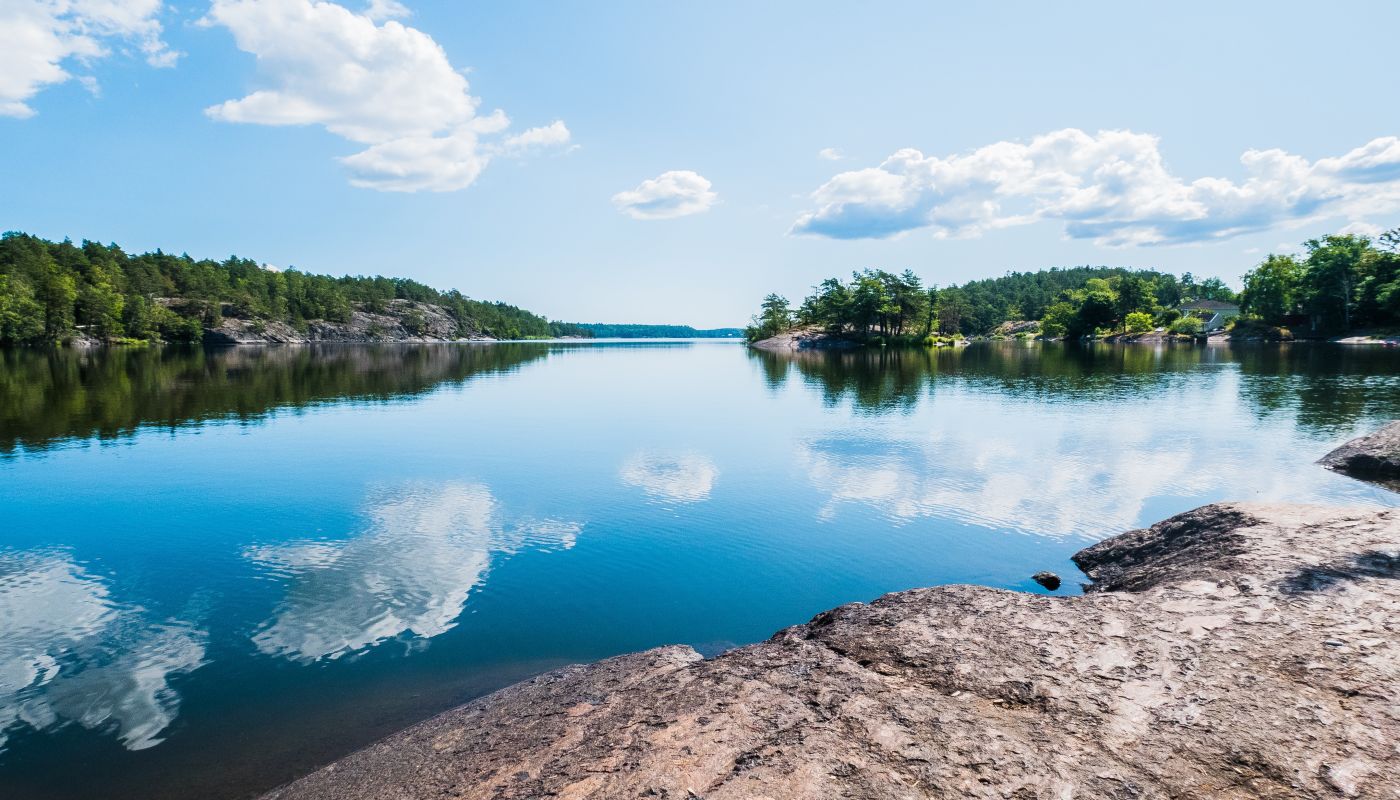
Landscape of Sweden
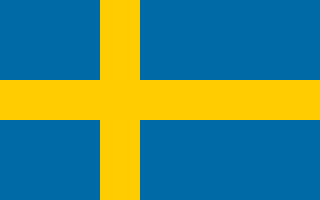
Flag of Sweden

Sweden

Europe

Sweden is known for its high standard of living, robust social welfare system, and long parental leave benefits. One of the oldest nations in the world, Sweden has been a sovereign state for over 1,000 years, and they now promote world peace and neutrality in war times.1 Often hailed as a capitalist success story, Sweden has low levels of national debt and liberal trade policies. Their biggest industries are machinery and natural resources, and they are a global leader in sustainable energy.2 1 https://www.britannica.com/place/Sweden
2 https://sweden.se/business/how-sweden-created-a-model-economy/

What would you like to learn about in Sweden?

Select a section to explore the country where nonprofits are creating positive change.

About Sweden

A military power during the 17th century, Sweden has not participated in any war for almost two centuries. An armed neutrality was preserved in both world wars. Sweden's long-successful economic formula of a capitalist system interlarded with substantial welfare elements was challenged in the 1990s by high unemployment and in 2000-02 and 2009 by the global economic downturns, but fiscal discipline over the past several years has allowed the country to weather economic vagaries. Sweden joined the EU in 1995, but the public rejected the introduction of the euro in a 2003 referendum.

Quick Facts

Population
9,119,423 (July 2013 est.)
Area
450,295 sq km
ISO Code
SE
Continent
Europe
Government
constitutional monarchy
Active Causes
12
View all countries in Europe

Geography & Environment

Climate

temperate in south with cold, cloudy winters and cool, partly cloudy summers; subarctic in north

Terrain

mostly flat or gently rolling lowlands; mountains in west

Natural Resources

iron ore, copper, lead, zinc, gold, silver, tungsten, uranium, arsenic, feldspar, timber, hydropower

Environmental Issues

acid rain damage to soils and lakes; pollution of the North Sea and the Baltic Sea

People & Society

81.28 years
Avg. Life Expectancy
99%
Literacy Rate
85% of total population (2010)
Total Urban Population

Languages

Swedish (official), small Sami- and Finnish-speaking minorities

Religions

Lutheran 87%, other (includes Roman Catholic, Orthodox, Baptist, Muslim, Jewish, and Buddhist) 13%

Health Expenditure

9.6% of GDP (2010) of GDP

Education Expenditure

7.3% of GDP (2009) of GDP

Economy

$41,900
GDP per Capita (PPP)
8%
Unemployment Rate
NA%
Below Poverty Line

Economic Overview

Aided by peace and neutrality for the whole of the 20th century, Sweden has achieved an enviable standard of living under a mixed system of high-tech capitalism and extensive welfare benefits. It has a modern distribution system, excellent internal and external communications, and a highly skilled labor force. In September 2003, Swedish voters turned down entry into the euro system concerned about the impact on the economy and sovereignty. Timber, hydropower, and iron ore constitute the resource base of an economy heavily oriented toward foreign trade. Privately owned firms account for vast ma...

Causes in Sweden

Environment

The country is vulnerable to floods, landslides, and erosion because of climate change. Ecosystems in the Baltic sea and the water quality in lakes and streams are deteriorating due to increased sea levels and global temperatures.1 Sweden’s climate will likely change to become warmer and wetter and wreak havoc on fragile ecosystems near the arctic.2 The government fails to efficiently make environmental policies, as many different levels of the public sector are involved and some fail to see to long term benefits of conservation. However, a positive effect of climate change in Sweden will be the increase in the amount of energy that can be derived from hydropower energy sources.2

Family

The majority of families in Sweden enjoy a stable family life, and it is ranked as one of the European Union’s most successful countries in balancing the responsibilities of work and family.1 The employment rate of mothers and females in the work force is the highest in the EU as well. The family model of Sweden is supportive of dual income families, and policies encourage this. There are flexible leave policies, and the government has many family benefits.2 Sexual harassment and violence against women are a problem, and in recent years there has been a spike in sexual assault, with 2% of the population saying they have been assaulted in 2017.3

Human Rights

Sweden has a historically positive record of human rights. The nation has been instrumental in promoting women’s rights and equality worldwide.6

Education

82% of adults in Sweden have earned a high school degree. Swedish students perform well in school, which suggests that the Swedish school systems are able to provide quality teachers for their students.1 There is an excellent higher education system and selection of schools, and many of these are free to attend.2 The literacy rate is 99%, and the primary school enrollment rate is 99%.2

Poverty

There is a low level of people who live below the international poverty line.1 In Sweden, less than 20,000 people are homeless, but this number is much higher than a decade ago as high unemployment rates have caused more poverty.2 Despite the widely held belief that Sweden has a thriving social benefits system to help those in need, the majority of benefits go to families who are not desperately in need of social assistance. Additionally, income inequality in Sweden has been growing every year.1

Religion

Sweden has the freedom of religion and the separation of church and state in their constitution. 68% of Swedes are members of the Lutheran Church of Sweden, but only 29% of the population claims to be religious, which is one of the lowest in the world.1 There has been an increase in migrants from the Middle East, but only 5% of the population identifies as Muslim. There are six mosques in Sweden, and other minority religions are Mormonism and Judaism.1

Clean Water

Sweden is a water-rich country, and 9% of the country is covered in lakes. There are no problems with water access. Local governments and municipalities are responsible for the management of water supply and sanitation.1 The necessary funds to maintain the water infrastructures throughout the municipalities in Sweden are obtained through taxes, and 100% of the population has access to clean drinking water and adequate sanitation infrastructure.1

Economy

The economy in Sweden relies on timber, hydropower, and iron ore to use in international trade.1 The economy is transparent and regulated effectively, but there have been strains to integrate the influx of migrants and asylum seekers into the Swedish economy.2 Sweden was able to recover quickly from the global recession because of its openness to global trade, which increased economic dynamism.3 A large part of the economy's success is the stable financial sector, as well as the public’s unwillingness to use the Euro as currency.2 The unemployment rate in Sweden is around 7%.1

Government

The Kingdom of Sweden is a constitutional monarchy whose king is chief of state and prime minister is head of government.1 Although Sweden has no formalized anti-corruption strategies, the government has participated in risk assessment studies of corruption which have found near non-existent corruption level.2 The judicial and legal framework in Sweden is rigorous, stamps out potential acts of corruption, and it has criminalized corrupt activities.2

Health

Sweden ensures that all citizens have equal access to quality health care. The life expectancy is high, with the average for men being 80 years and 84 for women.1 Health is seen as a communal effort by Swedes, which leads to the nation spending 12% of their GDP on health annually.2 81% of people are reported to be in good health, but obesity is a growing problem. 11% of the population is obese, which is making health care more expensive.2

Children

Sweden is almost always ranked at the top of social progress and human development indicators. This translates to children’s rights and development being a top priority for the Swedish government.1 Sweden was the first country in the world to make child punishment like spankings illegal. Historically a homogenous European nation, Sweden’s demographic profile is changing. Now, 20% of children have family roots in other countries.1 Music and athletics are encouraged for all children, and among teenagers, 28% practice an instrument and 68% play an organized sport.1

Animals

Bears, lynx, and other cold climate animals are common in the northern forest, and herds of reindeer are also found in northern protected forestlands. Many birds migrate away from the cold winters, but owls and eagles stay year round. There are many different types of aquatic life in the lakes and seas, and the most commonly found fish is herring.1

Nonprofits Working in Sweden

Discover organizations making a difference in Sweden

Make Your Impact Today

Discover causes you care about and support the nonprofits making a difference in communities around the world.

Are you a nonprofit? Join Project World Impact for free

Join Us Free