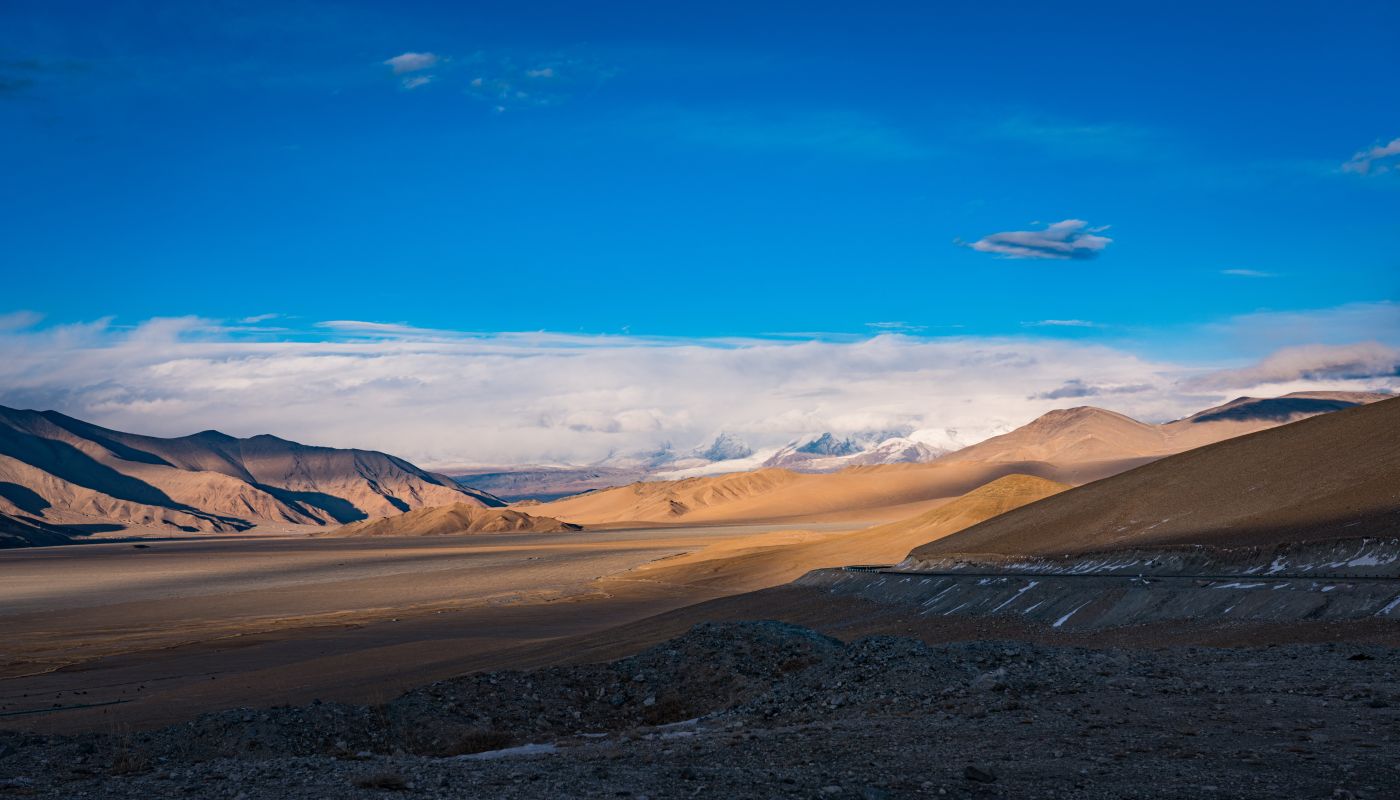
Landscape of Tajikistan
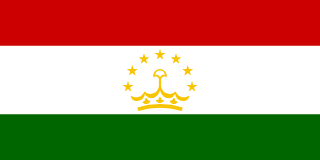
Flag of Tajikistan

Tajikistan

Asia

Tajikistan gained freedom from the former USSR in 1991 and has undergone a series of internal conflicts ever since. A civil war, along with several domestic security incidents, has divided the country and allowed the government to repress all opposition to the ruling party.1 Government regulations also suppress freedom of expression and religion, resulting in violence and arbitrary arrest against anyone who opposes them.2 The economy is one of the biggest concerns, as over 1 million citizens travel outside the country for work due to a lack of employment opportunities, and over 30% of remaining citizens live below the poverty line.3 1 https://www.cia.gov/library/publications/resources/the-world-factbook/geos/ti.html 2 https://www.hrw.org/world-report/2016/country-chapters/tajikistan#bdedc0 3 https://www.cia.gov/library/publications/resources/the-world-factbook/geos/ti.html

What would you like to learn about in Tajikistan?

Select a section to explore the country where nonprofits are creating positive change.

About Tajikistan

The Tajik people came under Russian rule in the 1860s and 1870s, but Russia's hold on Central Asia weakened following the Revolution of 1917. Bolshevik control of the area was fiercely contested and not fully reestablished until 1925. Much of present-day Sughd province was transferred from the Uzbek SSR to the newly formed Tajik SSR in 1929. Ethnic Uzbeks form a substantial minority in Tajikistan. Tajikistan became independent in 1991 following the breakup of the Soviet Union, and experienced a civil war between regional factions from 1992-97. Tajikistan endured several domestic security incidents in 2010-12, including a mass prison-break from a Dushanbe detention facility, the country's first suicide car bombing in Khujand, and armed conflict between government forces and local strongmen in the Rasht Valley and government forces and criminal groups in Gorno-Badakhshan Autonomous Oblast. The country remains the poorest in the former Soviet sphere. Attention by the international community since the beginning of the NATO intervention in Afghanistan has brought increased economic and security assistance, which could create jobs and strengthen stability in the long term. Tajikistan joined NATO's Partnership for Peace in 2002, and became a member of the World Trade Organization in March 2013.

Quick Facts

Population
7,910,041 (July 2013 est.)
Area
143,100 sq km
ISO Code
TJ
Continent
Asia
Government
republic
Active Causes
12
View all countries in Asia

Geography & Environment

Climate

midlatitude continental, hot summers, mild winters; semiarid to polar in Pamir Mountains

Terrain

Pamir and Alay Mountains dominate landscape; western Fergana Valley in north, Kofarnihon and Vakhsh Valleys in southwest

Natural Resources

hydropower, some petroleum, uranium, mercury, brown coal, lead, zinc, antimony, tungsten, silver, gold

Environmental Issues

inadequate sanitation facilities; increasing levels of soil salinity; industrial pollution; excessive pesticides

People & Society

66.72 years
Avg. Life Expectancy
99.7%
Literacy Rate
26.5% of total population (2011)
Total Urban Population

Languages

Tajik (official), Russian widely used in government and business

Religions

Sunni Muslim 85%, Shia Muslim 5%, other 10% (2003 est.)

Health Expenditure

6% of GDP (2010) of GDP

Education Expenditure

3.9% of GDP (2011) of GDP

Economy

$2,300
GDP per Capita (PPP)
2.5%
Unemployment Rate
39.6% (December 2012 est.)
Below Poverty Line

Economic Overview

Tajikistan has one of the lowest per capita GDPs among the 15 former Soviet republics. Because of a lack of employment opportunities in Tajikistan, more than one million Tajik citizens work abroad, almost all of them in Russia, supporting families in Tajikistan through remittances. Less than 7% of the land area is arable. Cotton is the most important crop, and its production is closely monitored, and in many cases controlled, by the government. In the wake of the National Bank of Tajikistan's admission in December 2007 that it had improperly lent money to investors in the cotton sector, the IM...

Causes in Tajikistan

Environment

Severe weather conditions as a result of climate change pose a threat to Tajikistan’s environment. Nearly half of Central Asia’s water resources begin in the mountains of Tajikistan, and melting glaciers could lead to water insecurity throughout the region.1 In the past 70 years, Tajikistan has lost 30% of its glaciers, and that rate will only continue to rise due to climate change. However, the country has potential for using its massive water stores for clean energy; it contains 4% of the world’s hydropower potential.2 Tajikistan is heavily reliant on its agricultural sector which makes up 21% of the country’s GDP.3 For most regions of the country, increased temperatures and precipitation in the summer months will have a negative impact on agricultural revenue.4

Family

In 2013, Tajikistan passed its first law making domestic abuse a criminal offense. However, the patriarchal culture and customs that permeate the social fabric of Tajikistan, coupled with an inadequate enforcement of the law, have led to women being consistently demeaned and abused.1 It is estimated that one in every two Tajik women are subjected to some form of domestic violence. The difficulty of the reporting process for victims discourages them from reporting offenses, and the state often fails to follow through on prosecuting perpetrators.2 Although child marriage is illegal in Tajikistan, there is little government enforcement of this law and child marriage is still common in much of the country.3

Human Rights

Tajikistan has a dismal record of human rights violations. The government has laws that repress freedom of religion and expression, and these laws are enforced through violence and arbitrary arrests. Prisoners are treated poorly and subject to torture. Police and military officers continue to use torture as a means of extracting information and confessions from detainees, and detainees are often denied their right to legal counsel. Domestic violence against both women and children persist in high numbers throughout the country and domestic violence laws are poorly enforced. Finally, the government has forcefully evicted 1,500 families since 2009 to make room for the construction of a new dam and hydropower plant. Authorities failed to compensate the families for the cost of housing and displacement from jobs.1

Education

The end of Tajikistan’s 1997 civil war left most of the country’s educational infrastructure in disrepair.1 However, recent reforms have brought about increased enrollment and literacy rates among school-aged children. 97% of primary-school aged children are enrolled in school, although over 30% of female students do not continue on to secondary school compared to 16% of their male counterparts not continuing. The literacy rate of youth aged 15-24 is almost 100%, which is significantly higher than other lower income countries.2 However, Tajikistan still struggles with funding its education system. Only 3% of the country’s GDP goes towards education, leaving schools under resourced and teachers underpaid. Tajikistan has received several million dollars in grants since 2008 in an attempt to properly equip schools and provide better teacher training.3

Poverty

After the civil war that destroyed Tajikistan’s economy, poverty has been widespread. 31% of the population lives below the poverty line, and official reports place the unemployment rate around 2% although actual rates are suspected to be much higher. Tajikistan is the poorest nation in Central Asia. Approximately 1 million citizens work abroad and support their families by sending money back to Tajikistan. Those who remain often find work in the agricultural sector or in drug trade, which is estimated to comprise 30-50% of the country’s GDP.1

Religion

Approximately 85% of Tajiks are Sunni Muslims and 5% are Shia Muslims, with the remaining 10% of the population following traditional or indigenous religions.1 Tajikistan places many restrictions on religious freedom and the government prosecutes and suppresses any religious group determined to be “extreme”. Restrictions prevent people from publicly displaying their religion through dress and even what they name their children.2 The United States Commission on Religious Freedom flagged Tajikistan as one of the world’s worst religious freedom violators in 2015.3

Clean Water

Tajikistan experiences high regional discrepancies in water access throughout the country. 93% of the urban population has access to clean drinking water, whereas only 66% of the rural population has access to potable water.1 In rural areas, people often get their water from polluted irrigation ditches. Water-borne bacteria, combined with poor hygienic practices, contribute to diseases and malnutrition.2

Economy

Since the fall of the Soviet Union, Tajikistan has consistently put forth one of the lowest per capita GDPs out of the 15 former Soviet-controlled republics. The economic infrastructure of the country is very weak, but the unemployment rate of 2.5% does not reflect the lack of jobs available inside the country. Approximately 1 million Tajik citizens are driven to leave and seek work abroad due to lack of employment opportunities.1 The corrupt government is overly involved in the business sector and hinders economic growth. It is estimated that 45% of the country’s GDP comes from illegal drug trade and remittances from migrant workers living in other countries.2

Government

The Republic of Tajikistan was formerly known as the Tajik Soviet Socialist Republic until the fall of the USSR. Now, it is a republic that functions with a president and a prime minister as the chief of state and head of government, respectively. However, long-time President Emomali Rahmon has continued to seize more power in recent years. In 2016, he granted himself unlimited terms and lifelong immunity through constitutional reforms.1 Corruption extends to other branches of government, as politics in Tajikistan revolve around patronage networks and nepotism. The judiciary is not transparent and is very susceptible to outside influences.2 In 2015, authorities banned the opposition political party and arrested hundreds of activists after declaring it a terrorist organization. The government has also been known to arrest and harass journalists and political workers who speak out against the government in any way.3

Health

The average life expectancy in Tajikistan is just 67 years of age. There are around 16,000 people living with HIV/AIDS, and 800 die from the disease every year.1 Those affected often face discrimination and social stigmas. In 2014, the first Zero Discrimination Day for those living with HIV was celebrated in Tajikistan in an attempt to raise awareness about the discrimination that those who live with debilitating diseases face.2 64% of all deaths are caused by non-communicable diseases, mainly heart and respiratory diseases.3 Child malnutrition has contributed to stunted growth in many children, and approximately 26% of children in Tajikistan under age 5 are stunted. Undernutrition causes 35% of child deaths in the country.4

Children

Tajik children are vulnerable to a number of threats, such as child labor, lack of medical care, and racial discrimination. Tajik gypsy children are the most likely to face discrimination at school, and many drop out due to discrimination from ethnic Tajik children.1 Throughout Tajikistan, children are sent to pick cotton or sell in markets in order to help support their families. This increases their risk for exploitation, abuse, unnecessary injury, and a loss of education.2 A huge health risk that Tajik children face is drug resistant forms of tuberculosis.3

Animals

A diverse landscape provides a variety of habitats for Tajikistan’s animal life. Lizards and gophers live in the desert; deer, tigers, and wildcats populate the forests; brown bears and eagles prefer the mountain regions.1 Species like snow leopards and grey wolves face endangerment from destruction of their natural habitats through deforestation.2

Nonprofits Working in Tajikistan

Discover organizations making a difference in Tajikistan

Make Your Impact Today

Discover causes you care about and support the nonprofits making a difference in communities around the world.

Are you a nonprofit? Join Project World Impact for free

Join Us Free