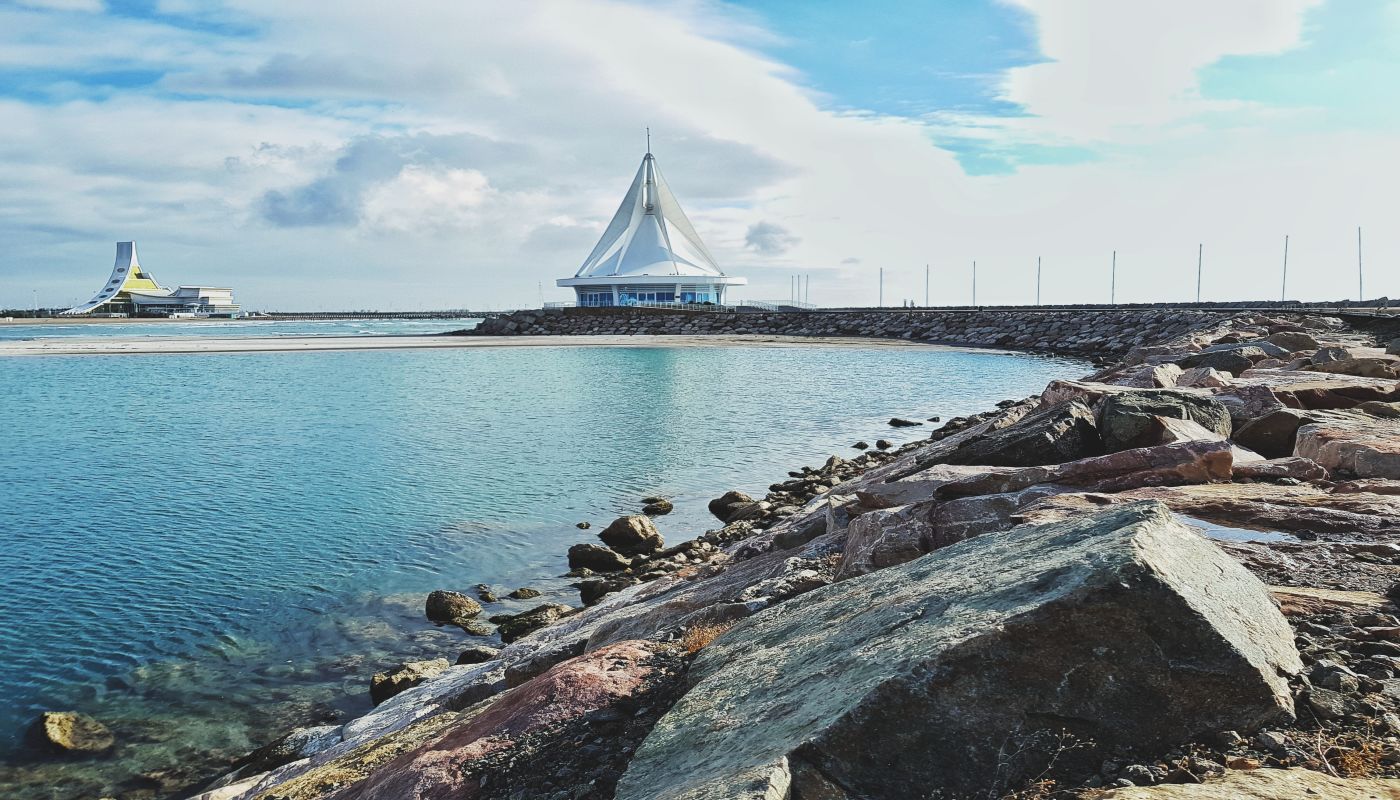
Landscape of Turkmenistan
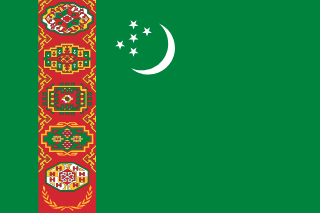
Flag of Turkmenistan

Turkmenistan

Asia

Turkmenistan was a historically important trade route located on the Silk Road, and it was part of the Soviet Union during the 20th century. Since gaining independence in 1991, the nation has continued to be governed by communist ideologies which have prevented economic growth and international trade.1 The authoritative government has recently begun to open up more international trade of its large oil, natural gas, and hydrocarbon reserves which is bolstering the economy. There are many suspected human rights abuses and oppressive policies, but an accurate representation of life in Turkmenistan is difficult to find because it is largely closed off from the rest of the world. 2 1 https://www.britannica.com/place/Turkmenistan#toc73623
2 https://www.cia.gov/library/publications/the-world-factbook/geos/tx.html

What would you like to learn about in Turkmenistan?

Select a section to explore the country where nonprofits are creating positive change.

About Turkmenistan

Present-day Turkmenistan covers territory that has been at the crossroads of civilizations for centuries. The area was ruled in antiquity by various Persian empires, and was conquered by Alexander the Great, Muslim crusaders, the Mongols, Turkic warriors, and eventually the Russians. In medieval times Merv (today known as Mary) was one of the great cities of the Islamic world and an important stop on the Silk Road. Annexed by Russia in the late 1800s, Turkmenistan later figured prominently in the anti-Bolshevik movement in Central Asia. In 1924, Turkmenistan became a Soviet republic; it achieved independence upon the dissolution of the USSR in 1991. Extensive hydrocarbon/natural gas reserves, which have yet to be fully exploited, have begun to transform the country. Turkmenistan is moving to expand its extraction and delivery projects. The Government of Turkmenistan is actively working to diversify its gas export routes beyond the still important Russian pipeline network. In 2010, new gas export pipelines that carry Turkmen gas to China and to northern Iran began operating, effectively ending the Russian monopoly on Turkmen gas exports. President for Life Saparmurat NYYAZOW died in December 2006, and Turkmenistan held its first multi-candidate presidential election in February 2007. Gurbanguly BERDIMUHAMEDOW, a deputy cabinet chairman under NYYAZOW, emerged as the country's new president; he was chosen as president again in February 2012, in an election that the OSCE said lacked the freedoms necessary to create a competitive environment.

Quick Facts

Population
5,113,040 (July 2013 est.)
Area
488,100 sq km
ISO Code
TM
Continent
Asia
Government
defines itself as a secular democracy and a presidential republic; in actuality displays authoritarian presidential rule, with power concentrated within the presidential administration
Active Causes
12
View all countries in Asia

Geography & Environment

Climate

subtropical desert

Terrain

flat-to-rolling sandy desert with dunes rising to mountains in the south; low mountains along border with Iran; borders Caspian Sea in west

Natural Resources

petroleum, natural gas, sulfur, salt

Environmental Issues

contamination of soil and groundwater with agricultural chemicals, pesticides; salination, water logging of soil due to poor irrigation methods; Caspian Sea pollution; diversion of a large share of th...

People & Society

69.16 years
Avg. Life Expectancy
99.6%
Literacy Rate
48.7% of total population (2011)
Total Urban Population

Languages

Turkmen (official) 72%, Russian 12%, Uzbek 9%, other 7%

Religions

Muslim 89%, Eastern Orthodox 9%, unknown 2%

Health Expenditure

2.5% of GDP (2010) of GDP

Education Expenditure

NA of GDP

Economy

$8,900
GDP per Capita (PPP)
60%
Unemployment Rate
30% (2004 est.)
Below Poverty Line

Economic Overview

Turkmenistan is largely a desert country with intensive agriculture in irrigated oases and sizeable gas and oil resources. The two largest crops are cotton, most of which is produced for export, and wheat, which is domestically consumed. Although agriculture accounts for roughly 8% of GDP, it continues to employ nearly half of the country's workforce. Turkmenistan's authoritarian regime has taken a cautious approach to economic reform, hoping to use gas and cotton export revenues to sustain its inefficient and highly corrupt economy. Privatization goals remain limited. From 1998-2005, Turkmeni...

Causes in Turkmenistan

Environment

Turkmenistan is mainly a desert country with arid land and a high amount of biodiversity.1 The recent increase of agricultural activities has led to erosion, further desertification, and the disappearance of already scarce water resources. While the government does have some policies in place to combat the negative effects of climate change, the implementation of these policies is not cohesive and there are vast regional disparities. Environmental protection has not been a pressing national priority.1

Family

There are high rates of domestic abuse and violence against women, and social stigmas keep nearly all cases from being reported. The laws in place to protect against abuse are not consistently enforced.1 There is limited access to family planning resources and women often are not properly educated on reproductive health.2 Child marriage is also a problem in the country. Although the legal minimum age of marriage is 18, 7% of marriages in Turkmenistan involved children who were minors, but this number has been steadily decreasing in recent years.3

Human Rights

Turkmenistan is one of the world's most repressive and closed off countries. There are serious restrictions on freedom of press, religion, access to information, and assembly.1 The government is in control of almost all news sources, has cut off internet access to the rest of the world, and has destroyed most satellite dishes that could reach other nations.1 The court system is severely corrupt, and trials are often unfair with prisoners being subject to torture and violence.2 Family members of political prisoners and activists are also the victims of violence and arbitrary arrest.2 Freedom of movement is also restricted with many Turkmen citizens being unable to leave the country, and international visitors and human rights groups are often barred from entering.1

Education

Since the end of the Soviet era, education in Turkmenistan has been dismal. Education is compulsory for only nine years, and the country has had difficulty adhering to international education standards as Turkmen public high school diplomas are not recognized abroad.1 However, the government has begun to put more funding towards education in the past decade, and the country now has a 99% literacy rate.2 Because of the previous lack of funding for education, there is a lack of qualified teachers, and rural areas have a disproportional amount of unqualified teachers.3

Poverty

Turkmenistan has made great strides in reducing poverty in the past decade, and when the last census was taken in 2012, only .2% of the population lived below the poverty line.1 However, that the government’s standards for poverty differ significantly than that of more wealthy nations. In an attempt to ensure more citizens have prosperous lives outside of poverty, private companies are hoping to expand and diversify the economy.2

Religion

89% of Turkmenistan’s population is Muslim and around 9% identify as Eastern Orthodox.1 There are very severe restrictions on the freedoms of religion in Turkmenistan instituted by the government. All religious groups and 50 of their members must register with the government, and this limits smaller faith communities from forming or practicing openly.2 The government cites the fight against Islamic extremism as their reasoning for severe religion restrictions on all faiths.1

Clean Water

80% of Turkmenistan’s landmass is covered by the Karakum desert which contributes to the country’s water scarcity concerns.1 40% of the population does not have reliable access to potable water, and even those who do experience water shortages periodically.2 The government poorly manages the water resources it does have by wasting water on elaborate fountains, creating green parks, and installing sprinkler systems.3 71% of the population has access to improved drinking water and 99% of the population has access to improved sanitation.4

Economy

Turkmenistan's economy is in very poor shape. The authoritative regime that governs the country is resistant to economic diversification and reforms. The sectors that contribute most to the Turkmen economy are agriculture, natural gas, and oil.1 Many industries are state owned, and the corrupt government does not allow for much privatization or international business endeavors.1 The government is exploring how to encourage foreign investment and diversify in order to grow their economy.2 The unemployment rate is listed at 11%, but this number is likely inaccurate because the government does not release data.1

Government

Although Turkmenistan presents itself to the global community as a secular presidential republic, its government is actually an extremely oppressive, authoritarian regime with power concentrated solely within the presidential administration.1 Presidential elections are corrupt, biased and flawed, and the president exerts control over all branches of government and bureaucracy.2 In 2017, long time leader Kurbanguly Berdymukhamedov won another election, receiving 98% of the vote, after changing the term limit and age restrictions parts of the constitution.3 Government policies produce international isolationism, and bribery and corruption have become normalized aspects of the public sector.4

Health

Hospitals are in poor condition, function without modern medical equipment, and lack basic medications and antibiotics.1 The life expectancy is only 70, and the under 5 mortality rate is high at 55 deaths per 1,000 live births.2 The nation’s corruption also affects citizens’ health, and there is widespread misinformation and poor education regarding the spread of preventable diseases and how to receive medical help. However, there is no reliable information regarding health in Turkmenistan, and the situation is believed to be worse than reported.1 In addition, the country only spends 2% of its GDP on healthcare, which is far below the global average.2

Children

Turkmenistan is fairly closed off, and because of this, the state of children is difficult to qualify.1 The under 5 mortality rate in Turkmenistan is still very high at 55 deaths per 1,000 live births, and there are high rates of child malnourishment.1 It is widely known that the government recruits children to labor in cotton fields. These children are forced to work in inhumane conditions instead of attending school.2

Animals

Most of the country is occupied by the Karakum desert. This land is home to foxes, wildcats, and gazelles. Up in the mountains, snow leopards, lynx, and goats are found.1 As a newer country with low funding for conservation, there is a lack of nature preserves for these animals to live protected from human interference.2

Nonprofits Working in Turkmenistan

Discover organizations making a difference in Turkmenistan

Make Your Impact Today

Discover causes you care about and support the nonprofits making a difference in communities around the world.

Are you a nonprofit? Join Project World Impact for free

Join Us Free