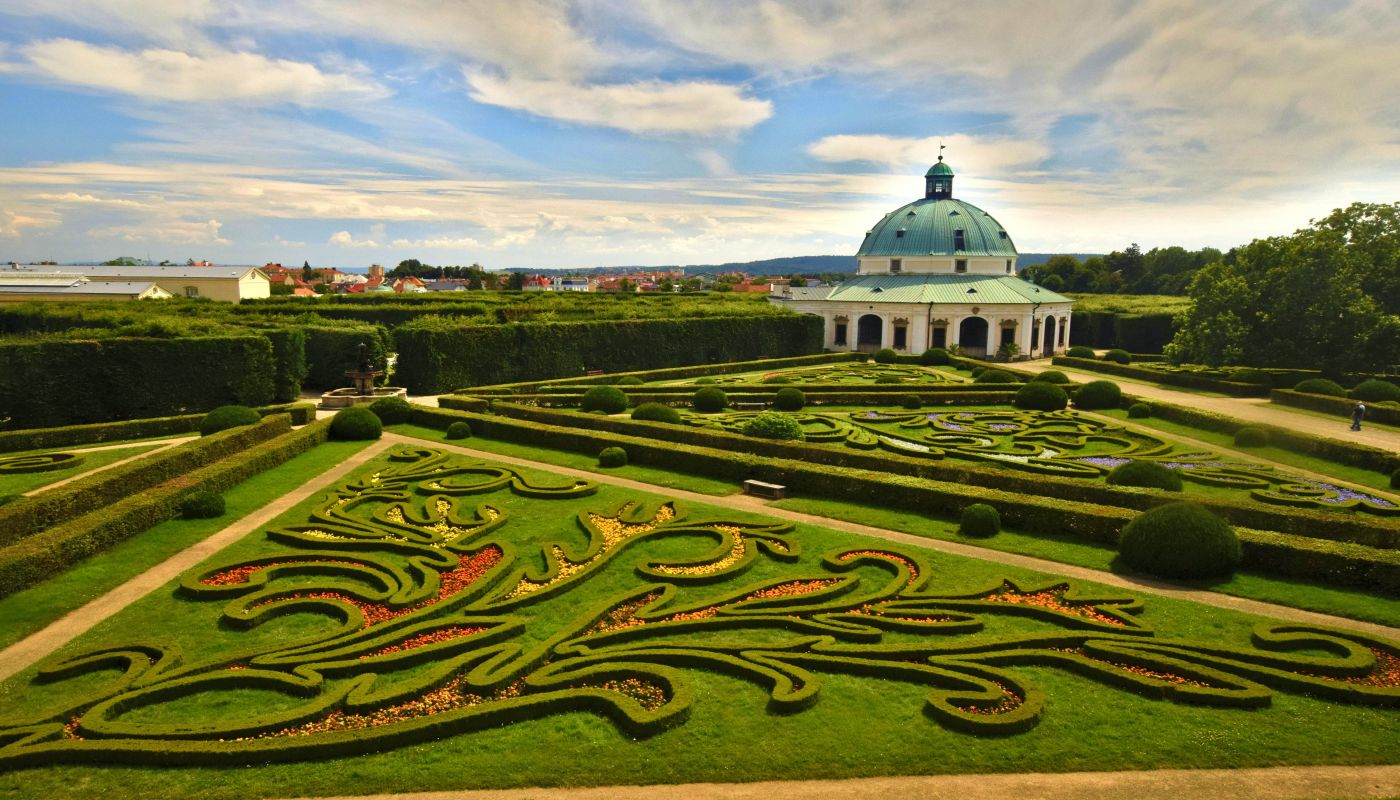
Landscape of Czech Republic
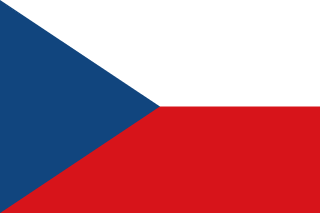
Flag of Czech Republic

Czech Republic

Europe

The Czech Republic is a high-income country that recently joined the EU in 2004. The country struggles with issues such as racism and xenophobia, as well as extreme air pollution. The education system is efficient and effective, allowing students to choose between basic schooling and vocational training. Corruption is rampant in the government, although steps have been taken to improve the situation. Domestic abuse is common, and the social stigma of reporting abuse prevents some victimized women from coming forward.1 1 https://www.cia.gov/library/publications/the-world-factbook/geos/ez.html

What would you like to learn about in Czech Republic?

Select a section to explore the country where nonprofits are creating positive change.

About Czech Republic

At the close of World War I, the Czechs and Slovaks of the former Austro-Hungarian Empire merged to form Czechoslovakia. During the interwar years, having rejected a federal system, the new country's predominantly Czech leaders were frequently preoccupied with meeting the increasingly strident demands of other ethnic minorities within the republic, most notably the Slovaks, the Sudeten Germans, and the Ruthenians (Ukrainians). On the eve of World War II, Nazi Germany occupied the Czech part of the country and Slovakia became an independent state allied with Germany. After the war, a reunited but truncated Czechoslovakia (less Ruthenia) fell within the Soviet sphere of influence. In 1968, an invasion by Warsaw Pact troops ended the efforts of the country's leaders to liberalize communist rule and create "socialism with a human face," ushering in a period of repression known as "normalization." The peaceful "Velvet Revolution" swept the Communist Party from power at the end of 1989 and inaugurated a return to democratic rule and a market economy. On 1 January 1993, the country underwent a nonviolent "velvet divorce" into its two national components, the Czech Republic and Slovakia. The Czech Republic joined NATO in 1999 and the European Union in 2004.

Quick Facts

Population
10,162,921 (July 2013 est.)
Area
78,867 sq km
ISO Code
CZ
Continent
Europe
Government
parliamentary democracy
Active Causes
12
View all countries in Europe

Geography & Environment

Climate

temperate; cool summers; cold, cloudy, humid winters

Terrain

Bohemia in the west consists of rolling plains, hills, and plateaus surrounded by low mountains; Moravia in the east consists of very hilly country

Natural Resources

hard coal, soft coal, kaolin, clay, graphite, timber

Environmental Issues

air and water pollution in areas of northwest Bohemia and in northern Moravia around Ostrava present health risks; acid rain damaging forests; efforts to bring industry up to EU code should improve do...

People & Society

77.56 years
Avg. Life Expectancy
99%
Literacy Rate
73.4% of total population (2011)
Total Urban Population

Languages

Czech 95.4%, Slovak 1.6%, other 3% (2011 census)

Religions

Roman Catholic 10.3%, Protestant (includes Czech Brethren and Hussite) 0.8%, other and unspecified 54.6%, none 34.2% (2011 census)

Health Expenditure

7.9% of GDP (2010) of GDP

Education Expenditure

4.4% of GDP (2009) of GDP

Economy

$27,600
GDP per Capita (PPP)
6.8%
Unemployment Rate
9% (2010 est.)
Below Poverty Line

Economic Overview

The Czech Republic is a stable and prosperous market economy closely integrated with the EU, especially since the country's EU accession in 2004. While the conservative, inward-looking Czech financial system has remained relatively healthy, the small, open, export-driven Czech economy remains sensitive to changes in the economic performance of its main export markets, especially Germany. When Western Europe and Germany fell into recession in late 2008, demand for Czech goods plunged, leading to double digit drops in industrial production and exports. As a result, real GDP fell 4.7% in 2009, wi...

Causes in Czech Republic

Environment

The city of Prague, in particular, struggles with severe air pollution due to its population density and industrially-focused industries. The Czech Republic is reported to be one of the six worst countries in Europe for air pollution, contributing to the deaths of over two thousand people each year. 89% of the population comes into contact with harmful pollutants on a daily basis. Such exposure can cause lung diseases, heart attacks, and other major cardiovascular issues, particularly in young children, pregnant women, the elderly, and the homeless.1

Family

Czech men and women are encouraged to marry and have children only after completing a university education and starting a career.1 Due to generous maternity leave policies, many women in the Czech Republic stay home during the first 3 years of their child’s life before returning to work.1 Family planning can be challenging, as contraceptive methods are costly and there is a general lack of comprehensive sex education among youth.2 One prevalent issue in the Czech Republic is domestic violence against women. Between 2009 and 2013, there were 999 recorded cases of rape. In 2013, 21 women were killed by their partners or ex-partners. 32% of women in the country have experienced physical or sexual violence after the age of 15.3

Human Rights

One of the greatest humanitarian concerns in the Czech Republic is discrimination against the Roma and other minority nationalities. In 2013, when a riot broke out to protest Roma citizenship, Roma families were attacked and their homes were burned. Other humanitarian concerns include government corruption and sex trafficking.1 Racism and xenophobia are prevalent within Czech society. Prague played host to anti-immigration protests in 2016 and the president perpetuated the use of anti-immigration rhetoric.2 The Czech Republic is widely known as a central destination for the capture and transportation of trafficked individuals.3

Education

Education is government-funded and compulsory for children ages 6 to 15 in the Czech Republic. The educational system is tailored to individual students, allowing them to choose from different educational tracks based on their interests and abilities. After fifth grade, the students can choose between continuing with basic school or choosing a vocational path. The literacy rate in the Czech Republic is over 99%.1 The Czech Republic has achieved their goal of less than 5% dropout rate in school. The majority of students who drop out are Roma children.2

Poverty

9.7% of the population in the Czech Republic live below the poverty line, with over 4% unemployed.1 The Czech government spends a large portion of GDP on social services such as welfare. Funds designated for unemployment benefits as well as sickness and disability remain very low.2 The Borgen Project notes that there have been minor changes that will decrease poverty in the Czech Republic, such as the country’s new membership in the EU. Difficulties still face the impoverished population, due to the extremely low minimum wage and the focus on decreasing unemployment rather than supplementing the wages of the working poor.3

Religion

There is no formal separation of church and state currently in the Czech Republic and several religious organizations still receive state funding. Approximately 10% of Czech citizens consider themselves to be Roman Catholic, 1% are Protestants and the remaining segments of the population do not identify with any religion at all.2

Clean Water

100% of the population has access to clean drinking water. 99% of the population has access to improved sanitation facilities.1 Water quality is monitored by modern water purification systems and processed thoroughly. Homeless individuals, young children, and low-income families are particularly vulnerable during flooding due to exposure to pollutants and sewage and a lack of immunity to disease. There have been reports of issues with “dead-end” pipes, or pipes that are inactive but hold stagnant water unless extreme changes in water pressure occur (potentially in flood season). The activation of these pipes has been cited as the cause for an outbreak of illness that affected up to 150 people in Prague.2

Economy

Since the Czech Republic joined the EU in 2004, the government has done an excellent job of creating a progressive and stable market economy. Although the country has not yet adopted the euro, it is closely integrated with the EU. The economic sector does show signs of corruption, most prevalently in the realm of public procurement.1 This corruption has hampered the country’s economic growth, as well as its ability to stabilize. Recent policy changes have helped streamline the process for creating a small business, boosting the private sector.2

Government

The Czech Republic is a parliamentary republic with a president and a prime minister leading the country. The country recently drafted a new civil code to replace the code that was leftover from the Austro-Hungarian empire.1 Overall corruption among the European Union states is at an all-time high and the Czech Republic was cited as one of the worst countries for corruption. Recently, a survey of Czech citizens revealed that 95% of them believed their government to be corrupt and 71% of business owners and companies considered government corruption to be the largest challenge of business. The widespread corruption between public institutions and businesses has caused tremendous financial deficits. There is rampant abuse of resources as well as a lack of transparency within public procurement measures.2

Health

The Czech Republic has universal, mandatory health insurance and spends about 7.5% of its GDP on public health measures, although the long-term financial sustainability of the health insurance system is precarious. Over two-thirds of the population live in areas of heavy air pollution, which puts citizens at risk for lung cancer, heart attacks, and stroke. Additionally, a large percentage of the population smokes, contributing to a rise in lung cancer and respiratory diseases. Insufficient physical activity, paired with poor eating habits, has also caused a rise in obesity, particularly among the elderly.1 The Czech government has made progress recently in raising the standard of care and quality of training provided to medical professionals. They have recently increased government funding to 6.8% in 2011.2

Children

Racial discrimination is the primary concern for Roma children living in the Czech Republic. In the education system, Roma children have a high failure rate due to segregation and teacher bias, and are often misdiagnosed with mental disabilities and taught with educational curriculums that do not fit their needs.1 Children of all ethnicities whose families cannot afford to send them to private institutions are placed in public institutions that receive minimal funding and little public advocacy.2 It has been observed by The League of Human Rights that some of the greatest difficulties facing children in the Czech Republic are the lack of a structured complaint mechanism for rights concerns, and the failure of relevant authorities to provide a space for children’s voices to be heard.3

Animals

The Palearctic region that includes the Czech Republic is known for its broadleaf and conifer forests. Some species that live in these forests include the lynx, white-tailed eagle, spotted eagle, and black grouse. Threats to local wildlife include logging, hunting, and air and soil pollution. There are legal parameters in place to protect wildlife, but they are not as effective as would be desired.1

Nonprofits Working in Czech Republic

Discover organizations making a difference in Czech Republic

Polaris

Modern slavery is a multi-billion dollar criminal industry that denies freedom to 20.9 million people around the world. And no matter where you live, chances are it’s happening right down the street. From the girl forced into prostitution at a truck stop, to the man discovered in a restaurant kitchen, stripped of his passport and held against his will. Polaris, named after the North Star that guided slaves to freedom in the U.S., disrupts the conditions that allow human trafficking to thrive in our society. From working with government leaders to protect victims’ rights, to building partnerships with the world’s leading technology corporations, we spark long-term change that focuses communities on identifying, reporting and eliminating trafficking networks. Our comprehensive model puts victims at the center of all that we do -- helping survivors restore their freedom, preventing more victims, and gathering the data to pursue traffickers wherever they operate. Unparalleled expertise. Relentlessness. And an innovative spirit. This is how Polaris eradicates the slavery networks that rob human beings of their lives and their independence. Freedom happens now.

Washington, District Of Columbia

Make Your Impact Today

Discover causes you care about and support the nonprofits making a difference in communities around the world.

Are you a nonprofit? Join Project World Impact for free

Join Us Free