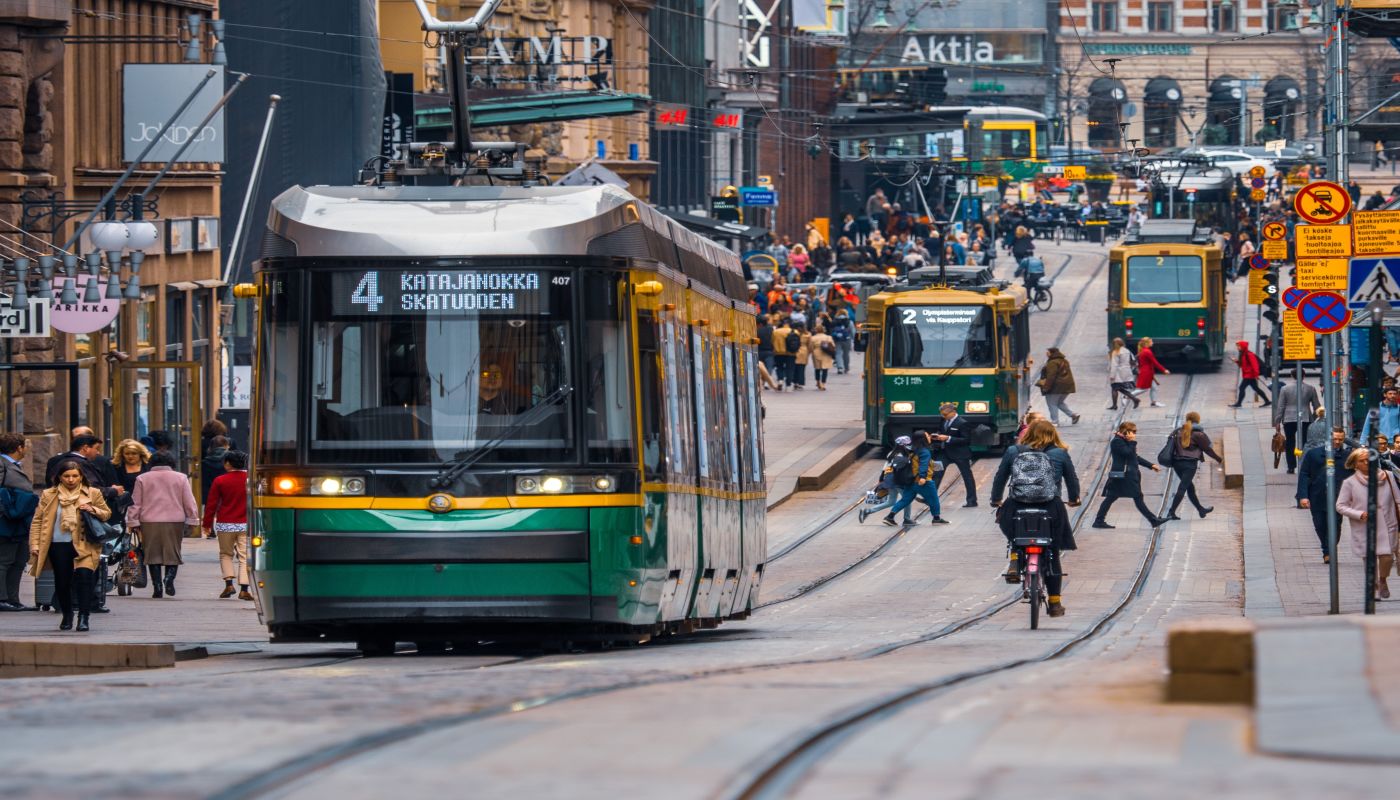
Landscape of Finland
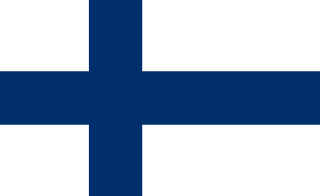
Flag of Finland

Finland

Europe

Around one-third of the Nordic country lies in the arctic circle. The harsh and long winters have resulted in a majority of the population living in the southern part of the country. The small country is internationally recognized for its stellar education system and pro-gender equality policies. In addition, the government is known for its highly inclusive economic assistance to those in danger of living below the poverty line. One of the issues facing the Finnish government is the prevalence of domestic abuse against women, despite the country’s reputation for being highly progressive and forward-thinking.1 1 https://www.cia.gov/library/publications/the-world-factbook/geos/fi.html

What would you like to learn about in Finland?

Select a section to explore the country where nonprofits are creating positive change.

About Finland

Finland was a province and then a grand duchy under Sweden from the 12th to the 19th centuries, and an autonomous grand duchy of Russia after 1809. It won its complete independence in 1917. During World War II, it was able to successfully defend its freedom and resist invasions by the Soviet Union - albeit with some loss of territory. In the subsequent half century, the Finns made a remarkable transformation from a farm/forest economy to a diversified modern industrial economy; per capita income is now among the highest in Western Europe. A member of the European Union since 1995, Finland was the only Nordic state to join the euro system at its initiation in January 1999. In the 21st century, the key features of Finland's modern welfare state are a high standard of education, equality promotion, and national social security system - currently challenged by an aging population and the fluctuations of an export-driven economy.

Quick Facts

Population
5,266,114 (July 2013 est.)
Area
338,145 sq km
ISO Code
FI
Continent
Europe
Government
republic
Active Causes
12
View all countries in Europe

Geography & Environment

Climate

cold temperate; potentially subarctic but comparatively mild because of moderating influence of the North Atlantic Current, Baltic Sea, and more than 60,000 lakes

Terrain

mostly low, flat to rolling plains interspersed with lakes and low hills

Natural Resources

timber, iron ore, copper, lead, zinc, chromite, nickel, gold, silver, limestone

Environmental Issues

air pollution from manufacturing and power plants contributing to acid rain; water pollution from industrial wastes, agricultural chemicals; habitat loss threatens wildlife populations

People & Society

79.55 years
Avg. Life Expectancy
100%
Literacy Rate
85% of total population (2010)
Total Urban Population

Languages

Finnish (official) 91.2%, Swedish (official) 5.5%, other (small Sami- and Russian-speaking minorities) 3.3% (2007)

Religions

Lutheran Church of Finland 82.5%, Orthodox Church 1.1%, other Christian 1.1%, other 0.1%, none 15.1% (2006)

Health Expenditure

9% of GDP (2010) of GDP

Education Expenditure

6.8% of GDP (2009) of GDP

Economy

$37,000
GDP per Capita (PPP)
7.8%
Unemployment Rate
NA%
Below Poverty Line

Economic Overview

Finland has a highly industrialized, largely free-market economy with per capita output almost as high as that of Austria, Belgium, the Netherlands, and Sweden. Trade is important with exports accounting for over one third of GDP in recent years. Finland is strongly competitive in manufacturing - principally the wood, metals, engineering, telecommunications, and electronics industries. Finland excels in high-tech exports such as mobile phones. Except for timber and several minerals, Finland depends on imports of raw materials, energy, and some components for manufactured goods. Because of the...

Causes in Finland

Environment

Finland has done well in preserving its natural environment. The low population density makes nature conservation relatively easy to maintain.1 The government and environmental groups have successfully added climate change adaptation to their mandates, and implementation has overall been successful. Finland has also recently adopted a new climate change policy meant to reduce the amount of emissions to 80% by the year 2050.2 Logging is one of the greatest dangers to the Finnish environment. Not only does this practice reduce the amount of land covered by forests, it also contaminates groundwater and rivers. Waterways continue to be affected negatively by the disposal of fertilizer by the agricultural sector into local streams.3

Family

Gender equality and a history of progressive women’s rights in Finland have not translated into Finland being a safe place for women. The United Nations High Commissioner for Human Rights has recently critiqued Finland for not responding with harsher sanctions against those who commit domestic violence abuses.1 In a phenomenon referred to as the “Nordic Paradox,” the Nordic nations are internationally recognized for their progressive and inclusive legislation regarding equality of the sexes, and yet generally have extremely high domestic violence rates. Finland has the third-highest abuse rate in the EU; 30% of women report experiencing physical and/or sexual violence.2

Human Rights

Finland has a positive history of protecting and respecting human rights. The government and parliament have been instrumental in instituting various programs and resources for its citizens regarding human rights. The government recently agreed to draft a new law that would outlaw the government’s ability to label people’s gender, specifically in the cases of transgender individuals.1 However, despite the country’s efforts towards gender inequality, domestic abuse remains a ubiquitous problem throughout the country.2 The government has also been criticized for not providing legal counsel to detainees in a timely manner or complete transparency of funds for political campaigns. There have also been reports of abuse not only against women but also those in the LGBT community.3

Education

Finland’s education system is internationally-renowned and consistently ranks among the top five countries in the world.1 The country has maintained its goal of offering primary school access to every citizen, as well as of creating a system that is extremely permeable. The vast majority of students complete some form of degree program at the university level. There is only one national examination, which is at the conclusion of upper secondary education.2 Finland’s primary school enrollment rate is 100%.3 The teachers are required to have a Master’s certificate in order to hold a teaching job, and it must come from one of the eleven graduate schools found in Finland.4

Poverty

The Borgen Project has found that no one in Finland lives below the poverty line after taking into account government programs that supplement incomes or lack thereof.1 The unemployment rate in Finland is high at 9%, and has been rising in recent years.2

Religion

Christian Lutheranism is the primary religious denomination in Finland, with 72% of the population identifying as Lutheran. Additionally, 1% of the population identifies as Orthodox Christian, 1% as non-denominational Christian, and 19% are unspecified.1 The majority of Finnish citizens are baptized, married, and buried with the Evangelical Lutheran Church. Since 1923, freedom of religion has been guaranteed to all citizens and is well-respected by both the government and society.2

Clean Water

Finland experiences no shortage of water resources, and 10% of Finland’s land is covered in water in the form of lakes, ponds, or rivers. The overall success of Finland’s sustainable water infrastructure lies in the sound administrative practices, legislation, and efficient water practices research. The current internationally-renowned quality of Finnish water did not always exist. It comes after the public uproar that occurred in reaction to the discovery of carcinogenic material in the drinking water over a decade ago. This led the government to invest heavily in improving their system and creating the high quality water systems that exist today.1

Economy

Finland boasts a free and industrialized economy with a per capita output on par with Sweden, Austria, the Netherlands, and Belgium. The majority of the economic activity in Finland comes from trade, with exports accounting for one-third of GDP. Finland’s top exports include technology and equipment for international biotechnology sectors. Finland's unemployment rate is 9%.1 Overall, Finland has an economy that is incredibly flexible and open to foreign trade, not unlike its other Scandinavian neighbors. The government is struggling to reduce its own spending, having already created a large debt burden on the country in a failed effort to boost the economy.2

Government

The Republic of Finland is a parliamentary republic and has both a president and a prime minister.1 Finland has earned an international reputation for gender equality in politics, at one point having women in office as both the president and the prime minister during the same term.2 Corruption within the government is rare in Finland and the country is ranked 3rd least corrupt out of 176 nations by Transparency International. The Finnish people score their government 89 out of 100 for perceived corruption.3 The judiciary is highly independent, swift, and fair. Finland is also party to several international treaties that aim to protect transparent government practices.4

Health

Finland’s main health care policies involve the reduction of premature death and extending and improving Finnish citizen’s overall quality of life. There are three different healthcare systems at work in tandem in Finland: municipal health care, private health care, and occupational health care. Finland has a very high life expectancy at 81 years. The two main causes of death are heart disease and cancer.1 The country’s infant mortality rate is very low, with 2.5 deaths per 1,000 live births. The maternal mortality rate is the 4th lowest in the world, with only 3 deaths per 100,000 live births.2

Children

The state of children’s rights in Finland is very good. The country was ranked in the top 10 nations with the best children’s rights in an international ranking created by KidsRights Index 2017.1 Finland has done an excellent job in adhering to the National Convention on the Rights of the Child and there is an ombudsman for children in Finland.1 Finland is very invested in youth and child participation in society and there are many safeguards for this. This means that children have a right to be heard and participate in their communities and in society.2

Animals

The Palearctic region which includes Norway, Sweden, and Finland is home to the Saimaa ringed seal, the eurasian brown bear, reindeer, grey wolf, golden eagle, and the snowy owl.1 Dangers to these species include air pollution from manufacturing, habitat loss, and illegal hunting.2

Nonprofits Working in Finland

Discover organizations making a difference in Finland

Make Your Impact Today

Discover causes you care about and support the nonprofits making a difference in communities around the world.

Are you a nonprofit? Join Project World Impact for free

Join Us Free