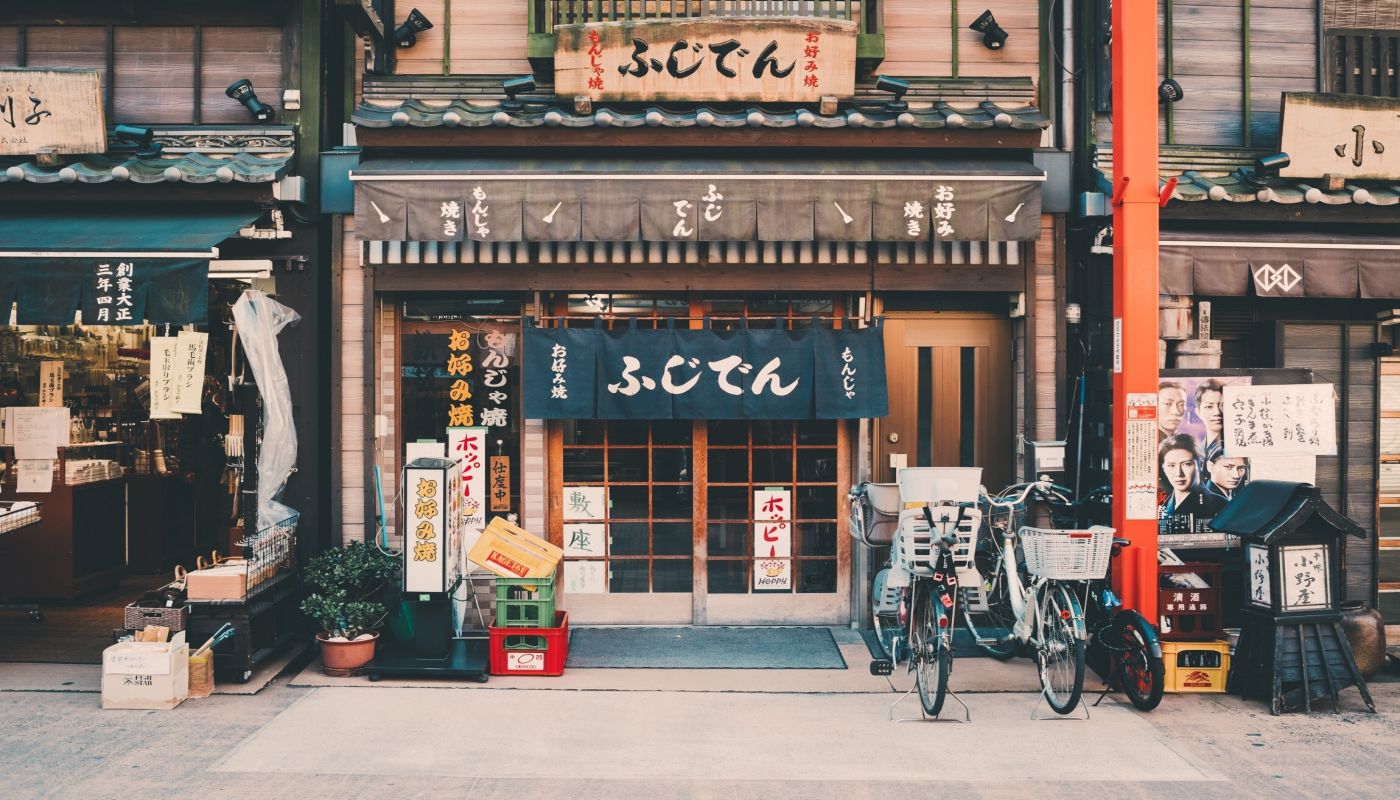
Landscape of Japan
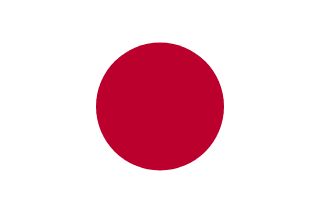
Flag of Japan

Japan

Asia

Japan is still recovering from the 2011 earthquake and resulting tsunami that destroyed the Fukushima nuclear power plant. The country has dealt with major economic problems and has had to restructure its power system. Japan’s education system is internationally recognized for its success and focus on equality. Poverty is a problem in Japan but is kept hidden in areas not often seen by the public.1 1 https://www.cia.gov/library/publications/the-world-factbook/geos/ja.html

What would you like to learn about in Japan?

Select a section to explore the country where nonprofits are creating positive change.

About Japan

In 1603, after decades of civil warfare, the Tokugawa shogunate (a military-led, dynastic government) ushered in a long period of relative political stability and isolation from foreign influence. For more than two centuries this policy enabled Japan to enjoy a flowering of its indigenous culture. Japan opened its ports after signing the Treaty of Kanagawa with the US in 1854 and began to intensively modernize and industrialize. During the late 19th and early 20th centuries, Japan became a regional power that was able to defeat the forces of both China and Russia. It occupied Korea, Formosa (Taiwan), and southern Sakhalin Island. In 1931-32 Japan occupied Manchuria, and in 1937 it launched a full-scale invasion of China. Japan attacked US forces in 1941 - triggering America's entry into World War II - and soon occupied much of East and Southeast Asia. After its defeat in World War II, Japan recovered to become an economic power and an ally of the US. While the emperor retains his throne as a symbol of national unity, elected politicians hold actual decision-making power. Following three decades of unprecedented growth, Japan's economy experienced a major slowdown starting in the 1990s, but the country remains a major economic power. In March 2011, Japan's strongest-ever earthquake, and an accompanying tsunami, devastated the northeast part of Honshu island, killing thousands and damaging several nuclear power plants. The catastrophe hobbled the country's economy and its energy infrastructure, and tested its ability to deal with humanitarian disasters.

Quick Facts

Population
127,253,075 (July 2013 est.)
Area
377,915 sq km
ISO Code
JP
Continent
Asia
Government
a parliamentary government with a constitutional monarchy
Active Causes
12
View all countries in Asia

Geography & Environment

Climate

varies from tropical in south to cool temperate in north

Terrain

mostly rugged and mountainous

Natural Resources

negligible mineral resources, fish

Environmental Issues

air pollution from power plant emissions results in acid rain; acidification of lakes and reservoirs degrading water quality and threatening aquatic life; Japan is one of the largest consumers of fish...

People & Society

84.19 years
Avg. Life Expectancy
99%
Literacy Rate
91.3% of total population (2011)
Total Urban Population

Languages

Japanese

Religions

Shintoism 83.9%, Buddhism 71.4%, Christianity 2%, other 7.8%

Health Expenditure

9.5% of GDP (2010) of GDP

Education Expenditure

3.8% of GDP (2010) of GDP

Economy

$36,900
GDP per Capita (PPP)
4.4%
Unemployment Rate
16% (2010)
Below Poverty Line

Economic Overview

In the years following World War II, government-industry cooperation, a strong work ethic, mastery of high technology, and a comparatively small defense allocation (1% of GDP) helped Japan develop a technologically advanced economy. Two notable characteristics of the post-war economy were the close interlocking structures of manufacturers, suppliers, and distributors, known as keiretsu, and the guarantee of lifetime employment for a substantial portion of the urban labor force. Both features are now eroding under the dual pressures of global competition and domestic demographic change. Japan's...

Causes in Japan

Family

A major problem facing Japan is the population decline. The birth rate in Japan is 1.4 children per woman, while a rate of 2.1 is needed for population growth. The Washington Post notes that other countries have survived with similarly low birth rates but make up for it with high immigration. Japan does not have this advantage. Almost a third of Japan’s population was older than 65 in 2015.1 One of the factors credited with causing the low birth rates is the inability of mothers to work in the Japanese labor force. Countries with a higher working female population have higher birth rates.2

Education

Japan ranks in the top ten countries for education. There is a high literacy rate and a high enrollment rate. The Ministry of Education recently released a Basic Plan for the Promotion of Education. This plan will increase English language competency among Japanese students and the amount of international students accepted to study in Japan.1 The Japanese school system has been recognized internationally for its emphasis on equality. Education is partially funded by the national government, which helps alleviate the income disparities that might otherwise affect students’ quality of education. The discrepancy in student performance in poorer areas is only 9% due to income, as opposed to the OECD average of 15%. The country has also achieved a 97% high school graduation rate.2

Poverty

The Borgen Project states that one in six people live in relative poverty, including an estimated 3.5 million children. Some of the issues are unemployment and the sporadic employment of those who do have jobs.1 The poverty rate in Japan is 16% and the unemployment rate is 3%.2

Religion

80% of Japan’s population practices Shintoism, 67% are Buddhist, and 1.5% are Christian. These percentages exceed 100% because many of the population practice Shintoism and Buddhism.1

Clean Water

100% of the population in Japan has access to clean drinking water.1 The biggest problem that Japan faces with its water supply is contamination from nuclear plants. In 2011 in Fukushima, the tsunami crippled the nuclear plant and caused a terrible atomic disaster. The government pledged $500 million to contain nuclear leaks and decontaminate water, which had become radioactive. The leaks have also dumped radioactive water into the Pacific Ocean.2

Economy

Japan’s economy is based on close working bonds between manufactures, suppliers, and distributors, as well as the lifetime guarantee of employment for those in the urban labor force. One of the largest concerns Japan is facing economically is its debt, which was 230% of GDP in 2017.1 The main Japanese exports are cars, iron and steel products, and car parts. Imports are petroleum, liquid natural gas, and clothing. The country’s main trade partners are the US, China, South Korea, and Australia.2

Government

Japan’s government is a parliamentary constitutional monarchy. Japan also has an emperor who serves as a political figurehead and powerful symbol to the Japanese people. Despite their cultural significance, the Imperial Family essentially has no governmental powers and is only symbolic.1 Japan ranks 20th out of 180 countries on Transparency International’s Corruption Perception Index. The same survey showed that the Japanese public score their government 73 of 100.2

Health

The leading causes of death in Japan are cancer, heart disease, stroke, and suicide. Life expectancy is 89 years for women and 82 years for men. The maternal mortality rate is 5 deaths for every 100,000 live births, while the infant mortality rate is 2 deaths per 1,000 births. Japan has one of the lowest birth rates in the world.1 The biggest burden to the healthcare system in Japan is the shrinking, aging population. There are four times as many people over the age of 65 as there were in the 1960s. This is creating a strain on the healthcare system. Furthermore, due to state-imposed quotas, there is a shortage of qualified doctors in Japan.2

Children

Children have a special place of importance within Japanese society. There is an annual holiday celebrating them called Children’s Day.1 Japan is a signatory on many international conventions that promote the protection of children’s rights, such as the UN Convention on the Rights of the Child and the Optional Protocol on Involvement of Children in Armed Conflict. Japan also ensures that all children are covered with health insurance and that families with a limited income who have small children get an allowance from the government.2

Environment

In the 1990s, Japan revised its environmental law system to increase controls.1 The nuclear accidents Japan has endured have destroyed the safety of many water sources and contaminated food and air. There are communities where parents cannot let their children play outside for fear of radiation poisoning. 2 The country is working to clean up the area that was part of the explosion of a nuclear power plant in the wake of a tsunami in 2011. The radiation is contaminating groundwater which is leaking back into the ocean and creating major health hazards for those exposed to it. The plant is going to be decommissioned but will take 30 to 40 years to be completely shut down.3

Human Rights

Problems persist along ethnic lines in Japan. Racial protests have occurred in Tokyo’s Korea Town neighborhood, and racial minorities find it increasingly difficult to secure basic rights. Additionally, Japan continues to reject asylum requests.1 In 2016, 10,901 people applied for asylum and only 28 were approved. The Technical Intern Training Program was created to combat Japan’s labor shortage, and the first of 10,000 workers began to arrive in 2016.2 Recently, the United Nations High Commissioner for Human Rights addressed the issue of sexual slavery in Japan during World War II and criticized the government for not recognizing the problems that they have caused by not providing redress to the victims.3

Animals

The island archipelago that makes up Japan is part of the vulnerable palearctic region. The islands are home to the white-tailed sea eagle, the hazel grouse, and the three-toed woodpecker. There are also red foxes, Yezo brown bears, and Japanese marten. The species are threatened by poaching, road construction, and tourism. There are also issues with habitat loss as forests are cut down to create farmland.1

Nonprofits Working in Japan

Discover organizations making a difference in Japan

Make Your Impact Today

Discover causes you care about and support the nonprofits making a difference in communities around the world.

Are you a nonprofit? Join Project World Impact for free

Join Us Free