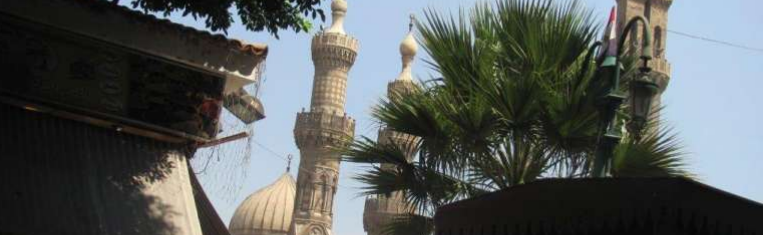
Landscape of Jordan
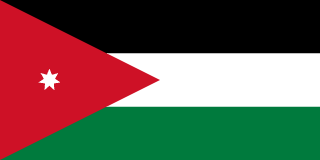
Flag of Jordan

Jordan

Asia

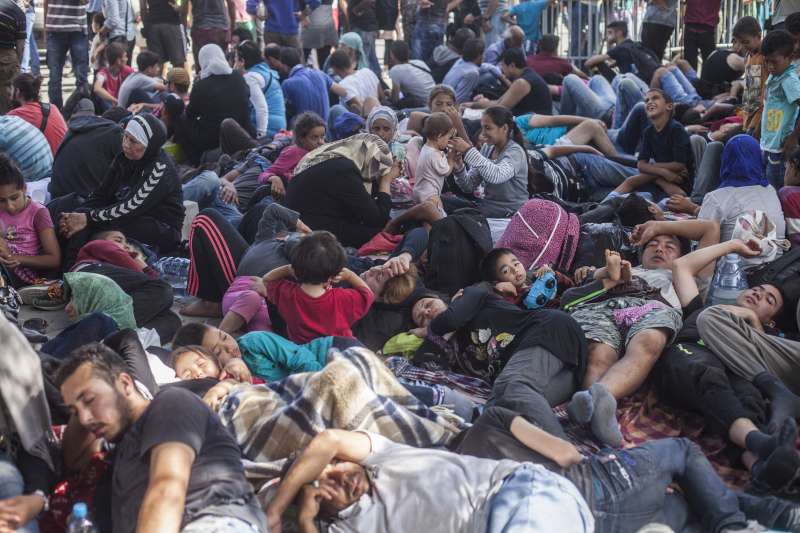
Jordan, previously part of the Ottoman empire, was given to Britain to govern after World War 1 and gained complete independence in 1946. Jordan is facing a large refugee crisis from the Syrian conflict, and the international community has supplied only a fraction of the financial aid that is needed to accommodate the number of people living in the country. Water scarcity is a major problem, but the government is in the process of building a desalination system called the Red Sea Dead Sea Project to ensure water for future generations.1 1 https://www.cia.gov/library/publications/the-world-factbook/geos/jo.html

What would you like to learn about in Jordan?

Select a section to explore the country where nonprofits are creating positive change.

About Jordan

Following World War I and the dissolution of the Ottoman Empire, the League of Nations awarded Britain the mandate to govern much of the Middle East. Britain demarcated a semi-autonomous region of Transjordan from Palestine in the early 1920s. The area gained its independence in 1946 and thereafter became The Hashemite Kingdom of Jordan. The country's long-time ruler, King HUSSEIN (1953-99), successfully navigated competing pressures from the major powers (US, USSR, and UK), various Arab states, Israel, and a large internal Palestinian population. Jordan lost the West Bank to Israel in the 1967 Six-Day War. King HUSSEIN in 1988 permanently relinquished Jordanian claims to the West Bank; in 1994 he signed a peace treaty with Israel. King ABDALLAH II, King HUSSEIN's eldest son, assumed the throne following his father's death in 1999. He implemented modest political and economic reforms, but in the wake of the "Arab Revolution" across the Middle East, Jordanians continue to press for further political liberalization, government reforms, and economic improvements.

Quick Facts

Population
6,482,081 (July 2013 est.)
Area
89,342 sq km
ISO Code
JO
Continent
Asia
Government
constitutional monarchy
Active Causes
12
View all countries in Asia

Geography & Environment

Climate

mostly arid desert; rainy season in west (November to April)

Terrain

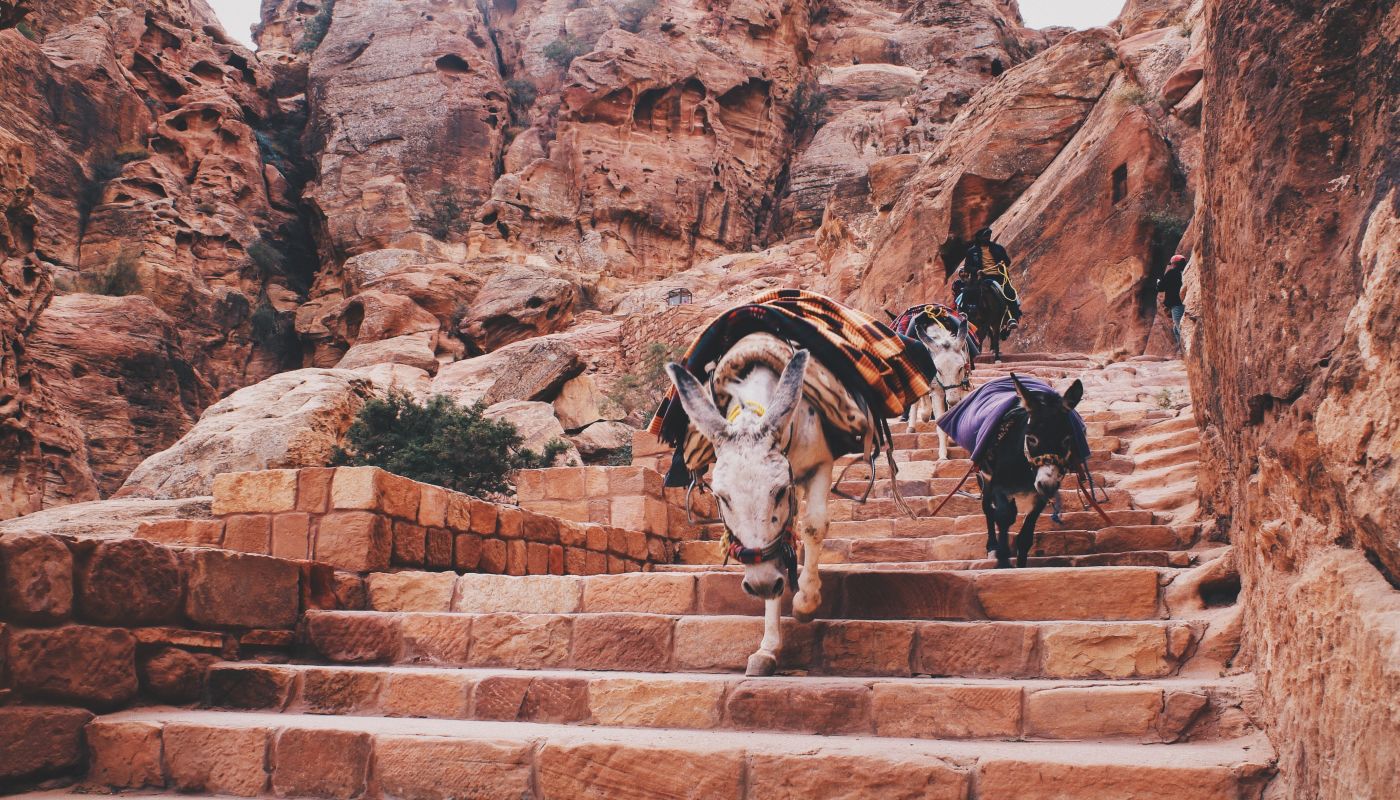
mostly desert plateau in east, highland area in west; Great Rift Valley separates East and West Banks of the Jordan River

Natural Resources

phosphates, potash, shale oil

Environmental Issues

limited natural freshwater resources; deforestation; overgrazing; soil erosion; desertification

People & Society

80.3 years
Avg. Life Expectancy
95.9%
Literacy Rate
82.7% of total population (2011)
Total Urban Population

Languages

Arabic (official), English (widely understood among upper and middle classes)

Religions

Sunni Muslim 92% (official), Christian 6% (majority Greek Orthodox, but some Greek and Roman Catholics, Syrian Orthodox, Coptic Orthodox, Armenian Ort...

Health Expenditure

8% of GDP (2010) of GDP

Education Expenditure

NA of GDP

Economy

$6,100
GDP per Capita (PPP)
12.5%
Unemployment Rate
14.2% (2002)
Below Poverty Line

Economic Overview

Jordan's economy is among the smallest in the Middle East, with insufficient supplies of water, oil, and other natural resources, underlying the government's heavy reliance on foreign assistance. Other economic challenges for the government include chronic high rates of poverty, unemployment, inflation, and a large budget deficit. Since assuming the throne in 1999, King ABDALLAH has implemented significant economic reforms, such as opening the trade regime, privatizing state-owned companies, and eliminating some fuel subsidies, which in the last decade spurred economic growth by attracting for...

Causes in Jordan

Environment

Climate change and water scarcity are two of the most pressing environmental concerns for Jordanian citizens. Small scale subsistence farmers are finding it very difficult to make a living when water is scarce. There are underground aquifers that are being depleted at twice the rate that they should. The water scarcity issues have increased the use of illegal water pumping throughout the country.1 In 2013 Jordan, Israel, and Palestine created an agreement to work together to build desalination plants on the banks of the Red Sea and Dead Sea, but recent Israeli-Jordanian tensions have caused many to question whether the project will remain part of a inter-state agreement, or if Jordan will invoke full control of the plant.2

Family

Currently, the law allows rapists to avoid prosecution if they marry their victims, but this section of the law has been under scrutiny, and many officials support the amendment of this clause. When the law was drafted, it was hailed as being progressive and recognized the issue of domestic violence, but there were many loopholes that made it easy to continue to exploit vulnerable women. Despite the loopholes, the law has been revolutionary in educating women about their rights. In government and other institutions many women’s rights are not recognized.2

Poverty

Jordan struggles somewhat with poverty alleviation strategies, as well as a 15.3% unemployment rate. In 2017 the GDP was increasing at about 2% annually1, but the IMF has stated that in order for actual poverty to decrease, the economic growth rate would need to increase 7% annually. The refugee crisis has increased strain on the economy and the debt deficit has increased dramatically. As the economy slowly recovers from the influx of refugees, the wealth disparity widens between rural and urban areas.2

Religion

Sunni Islam is the official religion of Jordan, with around 97% of the population following Islam. 2% of the population is Christian, and the remaining people practice various orthodox religions.1 Despite Islam being the official religion, the government and the constitution generally uphold the right of freedom of religion. The only instances in which this right might be restricted is when it would interfere with public order. Most of the suppression of freedom of expression or assembly only happens if the group is somehow influencing the public’s perception of the government negatively2

Clean Water

In Jordan, clean water coverage is very good; 97% of the population has access to clean water and 99% has access to improved sanitation infrastructure.1 However, despite optimistic official statistics regarding water access, the country is quickly approaching a state of water scarcity due to the high volume of refugees. In the northern regions of the country there are over 1.4 million refugees, placing a high strain on the water resources. The country’s number of refugees is second only to Lebanon. It is estimated that there is only enough water coming from local resources to provide for 3 million of the country’s 7.8 million residents.2

Economy

The Jordanian economy is struggling to stay afloat compared to other larger and more lucrative Middle Eastern economies. The country has insufficient natural resources and a waning supply of water and oil. There are extremely high rates of poverty, unemployment, and a huge deficit regarding the public budget. The unemployment rate is 15.3%, and the public debt is over 80% of the GDP. Jordan hopes to soon decrease their dependence on foreign aid, specifically from the IMF.1 The business culture of Jordan has been negatively influenced by a lack of transparency and peddling. Many citizens rely on family connections rather than their own merit to secure jobs and advance their interests. Anti-corruption measures have been met with varying degrees of success and implementation.2

Government

The Hashemite Kingdom of Jordan is a parliamentary constitutional monarchy with a king and a prime minister.1 Jordan’s penal code officially penalizes extortion, bribery, money laundering, and the abuse of public office. There are several pieces of legislation in place, including the Anti-Corruption Commission Law, that define corruption within the country, establish corruption as an economic crime, and denounce the use of nepotism. There is also an Anti-Money Laundering Law that complies with the Middle East/North Africa Financial Action Task Force and helps to reduce the number of complaints.2 Transparency International ranks Jordan 57th out of 178 countries for perceived corruption; their own citizens score the government 48 out of 100 for corruption transparency.3

Health

Jordan has relatively good health care coverage for its citizens, with around three physicians for every 1,000 citizens. 3% of children under five are underweight, with regional disparities between the northern and southern regions of the country. 35.5% of the adult population is overweight. The maternal mortality rate is 58 deaths per 100,000 live births, and the infant mortality rate is 14.2 deaths per 1,000 live births.1 Heart disease is the highest cause of death among citizens, followed by cerebrovascular diseases and diabetes. Children are at high risk for diarrheal diseases, hepatitis, and respiratory infections. Cardiovascular diseases, cancer, and high risks from local conflict and warfare are also increasing health problems. Life expectancy is 76 years old.2

Children

In Jordan, people under age 30 constitute 74% of the country’s population.1 The government is working on implementing protocols and legislation regarding child prostitution and pornography, as well as the sale of children. Jordan has advanced the legal status of children born out of wedlock in recent years, as well as the rights of children who have one Jordanian parent and one foreign parent.2 Child marriage remains a problem in Jordan, with 8% of children being married before they are 18.3 Two of the main reasons for young girls marrying so young are the hope of getting out of poverty and alleviating the financial burden for families with many daughters.4 There was a committee with an allocated budget formed to represent youth, but it hasn’t made many advancements in policy.5

Human Rights

Jordan has allowed millions of refugees into their borders including 2.1 million long-term Palestinian refugees. There are fairly strict media and censorship laws that punish those who do not comply with laws regarding self-expression. Jordan recently released a university professor the police had arrested because of a Facebook post that criticized the government. The State Security Court recently amended its rulings; it is now unnecessary for civilians to appear in trial before a court except in cases of terrorism, drug charges, money laundering, treason, and espionage. In 2016 the government submitted a ten-year human rights improvement plan to the King.1 The government struggles financially to support the provision of food and water for the millions of refugees. The international community has not sufficiently supported Jordan’s efforts to provide for the Syrians staying in their country, which has created a major humanitarian crisis.2

Education

Education in Jordan is inconsistent and does not allow for graduates to be internationally competitive. There is little government investment in programs outside the classroom, and public schools are generally overcrowded. There is a lack of teachers, as well as a lack in sufficient training for the few teachers who are interested.1 The literacy rate is 95%.2

Animals

The mainly desert plateau environment of Jordan is home to the Arabian Oryx, Capra ibex, and oxen. There are about 70 species and subspecies of mammals, and 73 species of reptiles. The Jordanian government cites desertification, droughts, and overhunting as threats to local wildlife. Similar to the human population, water shortage causes issues for the habitats and health of the native species.1

Nonprofits Working in Jordan

Discover organizations making a difference in Jordan

EUROPEAN & MIDDLE EASTERN MINISTRIES INCORPORATED

EUROPEAN & MIDDLE EASTERN MINISTRIES INCORPORATED

EME endeavors to enable worshipping communities to transform their local environments through education and community / business development projects, especially in the Southeastern Europe, the Middle East and North Africa Mission Statement EME Purposes To: • Enable local churches, ministries and other partners, primarily in the Mediterranean Region. • Empower partnerships with necessary provisions—e.g. personnel, finance, training and other essentials—to better advance their efforts. • Support the development of educational programs within the framework of partnerships— e.g. kindergartens, primary schools, K-12 schools and adult education—and the implementation of community building projects, including Business as/for Mission.

Jonesboro, Arkansas

Make Your Impact Today

Discover causes you care about and support the nonprofits making a difference in communities around the world.

Are you a nonprofit? Join Project World Impact for free

Join Us Free