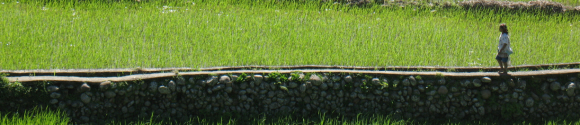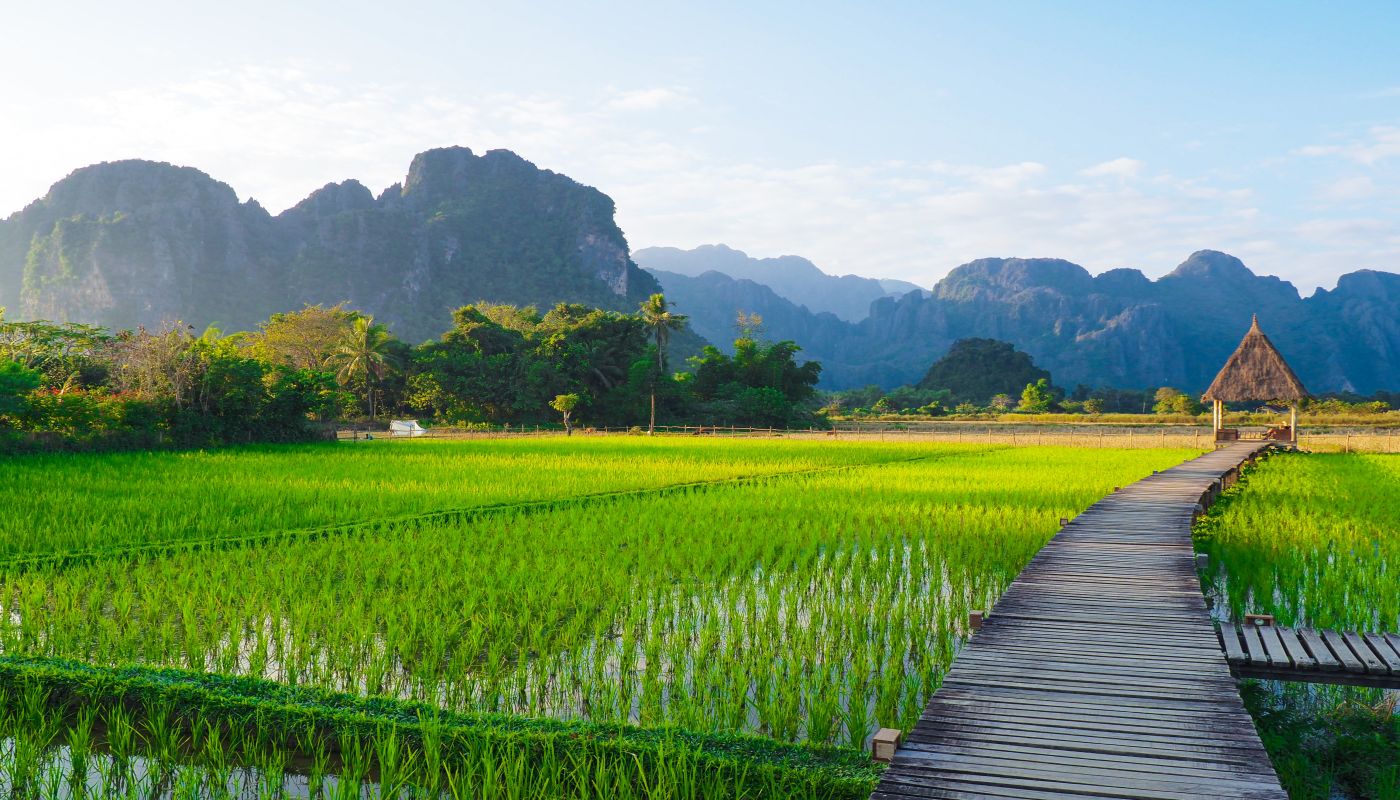

Landscape of Laos
Flag of Laos

Laos

Asia

The land-locked country of Laos has strong political ties with Vietnam. The government is communist, and the economy has been reaching high annual growth rates. This is believed to have been caused by the diversification of Laos’ economy and their recent membership in the World Trade Organization. Despite this economic success, many Lao struggle with poverty, and the wealth gained by a booming economy is distributed extremely unevenly with most of the wealth going to businesspeople in urban settings. Lao has a history of struggling with poor healthcare and high maternal mortality rates, but has managed to begin to reduce those high rates in recent years.1 1 https://www.cia.gov/library/publications/the-world-factbook/geos/la.html

What would you like to learn about in Laos?

Select a section to explore the country where nonprofits are creating positive change.

About Laos

Modern-day Laos has its roots in the ancient Lao kingdom of Lan Xang, established in the 14th century under King FA NGUM. For 300 years Lan Xang had influence reaching into present-day Cambodia and Thailand, as well as over all of what is now Laos. After centuries of gradual decline, Laos came under the domination of Siam (Thailand) from the late 18th century until the late 19th century when it became part of French Indochina. The Franco-Siamese Treaty of 1907 defined the current Lao border with Thailand. In 1975, the communist Pathet Lao took control of the government ending a six-century-old monarchy and instituting a strict socialist regime closely aligned to Vietnam. A gradual, limited return to private enterprise and the liberalization of foreign investment laws began in 1988. Laos became a member of ASEAN in 1997 and the WTO in 2013.

Quick Facts

Population
6,695,166 (July 2013 est.)
Area
236,800 sq km
ISO Code
LA
Continent
Asia
Government
Communist state
Active Causes
12
View all countries in Asia

Geography & Environment

Climate

tropical monsoon; rainy season (May to November); dry season (December to April)

Terrain

mostly rugged mountains; some plains and plateaus

Natural Resources

timber, hydropower, gypsum, tin, gold, gemstones

Environmental Issues

unexploded ordnance; deforestation; soil erosion; most of the population does not have access to potable water

People & Society

63.14 years
Avg. Life Expectancy
72.7%
Literacy Rate
34.3% of total population (2011)
Total Urban Population

Languages

Lao (official), French, English, various ethnic languages

Religions

Buddhist 67%, Christian 1.5%, other and unspecified 31.5% (2005 census)

Health Expenditure

4.5% of GDP (2010) of GDP

Education Expenditure

3.3% of GDP (2010) of GDP

Economy

$3,100
GDP per Capita (PPP)
2.5%
Unemployment Rate
26% (2010 est.)
Below Poverty Line

Economic Overview

The government of Laos, one of the few remaining one-party communist states, began decentralizing control and encouraging private enterprise in 1986. The results, starting from an extremely low base, were striking - growth averaged 6% per year from 1988-2008 except during the short-lived drop caused by the Asian financial crisis that began in 1997. Laos' growth exceeded 7% per year during 2008-12. Despite this high growth rate, Laos remains a country with an underdeveloped infrastructure, particularly in rural areas. It has a basic, but improving, road system, and limited external and internal...

Causes in Laos

Environment

In mountainous areas, the risk of flash floods is increasing. Droughts are another environmental risk. Due to illegal logging, Laos has transformed from a net carbon sink to a net emitter of greenhouse gases, which exacerbates the effects of climate change on a country.1

Family

According to the United Nations Development Program, Laos has one of the highest rates of maternal mortality for the region. There are 197 maternal deaths every 100,000 live births in the country. The infant mortality rate is 51.4 deaths per 1,000 live births.1 Laos has a variety of family planning information and services readily available, but over 20% of married and unmarried women who do not want children do not use contraception.2 Domestic abuse is another major problem, due largely to its cultural acceptability. A large majority of Lao women reported that they believe their husband had the right to hit them if they argued with him or refused sex.3 Child marriage is also a common occurrence in Laos, where the legal age of marriage is only 15. According to 2016 data, over 35% of girls were married or had been married by 18.4

Human Rights

Laos has a long history of human rights abuses. Official surveys and data often mask the real state of human rights since government controls the distribution of information. The government imposes significant restrictions on basic human rights and the freedom of expression on Laotian citizens. Labor rights are non-existent and abuse in drug treatment centers is rampant around the country.1 Child labor is a major concern as well, and 2013 data indicates that over 1.7 million children are involved in child labor. Additionally, 49% of Laotian children involved in the labor force are engaged in work that is hazardous to their lives and health.2 Domestic abuse and violence against women are also widespread problems in the country that often go unrecognized and unreported due to cultural gender norms.3

Education

The government of Laos spends around 3.3% of the overall GDP each year on education.1 The quality of teaching is low and teachers typically do not receive adequate training or resources for their schools. The adult literacy rate of Laos is 80%. The country’s primary school enrollment rate is 92%.2

Poverty

Around 22% of the Laotian people currently live below the international poverty line.1 There is a high discrepancy of wealth between rural and urban populations. Despite all of the economic investments and improvements, the rural poor have been left behind and are not benefiting from advancements. With such poverty in rural environments, only 70% of the Lao population has access to improved sanitation facilities.2

Religion

Laos is 64.7% Buddhist and 1.7% Christian, and 31% of the population’s religious preferences are unspecified.1 The Laotian constitution technically protects freedom of religion, but this is not always enforced on a local level. While Laos has no official religion, Buddhism is often given a privileged status and financial support from the state. Non-Buddhist religious communities are often regarded with suspicion, and there are occasional reports of discrimination and intolerance towards minority religious groups. However, large-scale religious conflict or discrimination are rare.2

Clean Water

Laos is a water-rich country, and their natural water resources contribute to the country’s irrigation systems, hydropower, navigation, fisheries, urban, and rural water supplies. 76% of the population has access to potable water, and 70% have access to sanitation services.2 However, some challenges still exist due to water pollution from factories and industrial regions. Additionally, environmental conditions like soil erosion and sedimentation are slowly degrading the overall clean water supply.1

Economy

Only 1.5% of the population is unemployed, but 22% live below the poverty line. Laos began to decentralize its government in 1986, leading to GDP expansion, consistently reaching growth of 7% annually. The primary economic challenge Laos faces today is overcoming weak infrastructure.1 Fiscal mismanagement, revenue shortfalls, and an increase in wages in the public sector have also challenged Laos’ economic growth. The backbone of the economy is capital-intensive natural resource exports and tourism. However, endemic corruption and poorly-enforced laws continually undermine growth and foreign investments. Around 75% of the Laos workforce is involved in subsistence farming.2

Government

A former country of French Indochina, Lao People’s Democratic Republic gained its independence in 1975 and established a communist regime, which abolished the monarchy that had been in power for the previous six centuries. The government has strong ties with Vietnam.1 Corruption and nepotism are rampant within the government and official ranks. Property rights of citizens are not protected and laws lack proper enforcement. These have all caused significant loss of confidence and trust in the government from the Lao people.2 Transparency International ranks Laos 123rd of 176 countries for the government’s perceived corruption and the public ranked the country 30 out of 100 for the public’s view of the amount of institutional corruption.3

Health

Since the late 1980s, Laos has significantly improved its economic status and the state of the nation’s health. The government’s long-term goal is to reduce poverty by improving the health care system. Respiratory infections and birth complications remain the leading causes of premature death.1 The lack of health education and hygiene habits significantly hinders the government’s efforts to keep the population healthy. High-risk behaviors involving alcohol and drug use are increasing in Laos.2 The under-5 child mortality rate in Laos is very high at 58 deaths per 1,000 live births,3 as is the maternal mortality rate at 197 deaths per 100,000 live births.4

Children

Chronic malnutrition of children under five remains a persistent problem in Laos, despite the country’s relative economic progress. Approximately 22% of children are stunted as a result of the food shortages.1 Laos is located in an isolated area which only increases the need for dietary diversity for children who live in rural areas that only rely on subsistence farming.2 Child labor is commonplace in Laos, where the unemployment rate and level of working poor is very high. Children involved in the labor force spend significantly less time in school and are less likely to complete their education.3 Laos’ under 5 mortality rate is 72 deaths per 1,000 live births.4

Animals

The World Wildlife Fund has been working in villages to train farmers in the production of rattan, a naturally-renewable crop that grow in forests. In encouraging this, WWF hopes to hinder the practice of traditional farming that tend to greatly harm the environment and the local forests.1 Central Laos is home to many diverse species; five new mammals were discovered recently in the span of only five years. Threatened local species include the Asian Elephant, tiger, and Douc langur.2

Nonprofits Working in Laos

Discover organizations making a difference in Laos

Make Your Impact Today

Discover causes you care about and support the nonprofits making a difference in communities around the world.

Are you a nonprofit? Join Project World Impact for free

Join Us Free