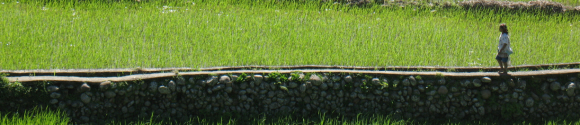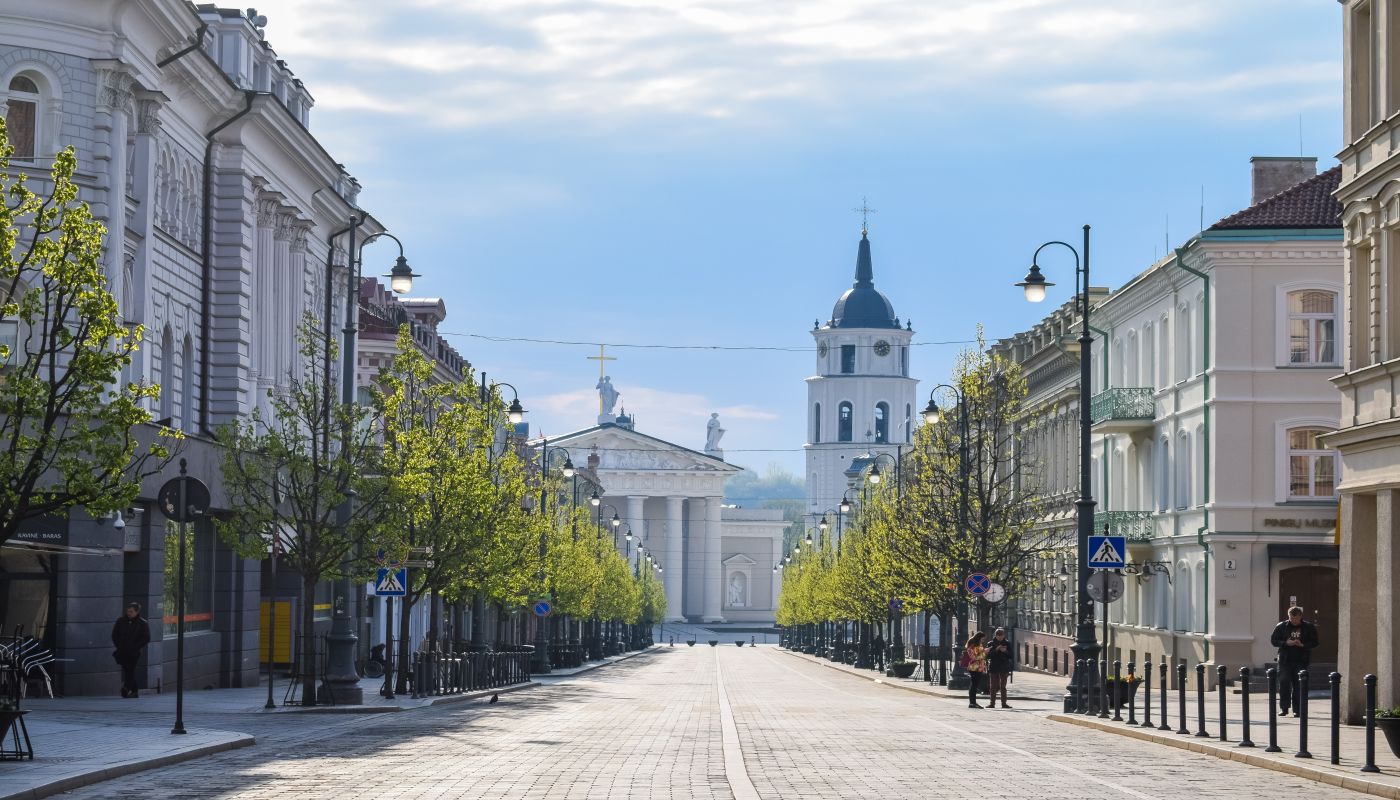
Landscape of Lithuania
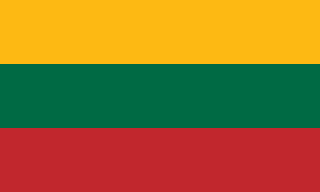
Flag of Lithuania

Lithuania

Europe

Of the three Baltic States, Lithuania is both the southernmost and largest. Since the fall of the Soviet Union when modern Lithuania gained independence, the country has steadily integrated with Western states by joining the EU, Eurozone, and NATO.1 Forests comprise 30% of the nation’s landscape, but the largest economic sectors are services and industry transport.2 1 https://www.cia.gov/library/publications/the-world-factbook/geos/lh.html 2 https://europa.eu/european-union/about-eu/countries/member-countries/lithuania_en

What would you like to learn about in Lithuania?

Select a section to explore the country where nonprofits are creating positive change.

About Lithuania

Lithuanian lands were united under MINDAUGAS in 1236; over the next century, through alliances and conquest, Lithuania extended its territory to include most of present-day Belarus and Ukraine. By the end of the 14th century Lithuania was the largest state in Europe. An alliance with Poland in 1386 led the two countries into a union through the person of a common ruler. In 1569, Lithuania and Poland formally united into a single dual state, the Polish-Lithuanian Commonwealth. This entity survived until 1795 when its remnants were partitioned by surrounding countries. Lithuania regained its independence following World War I but was annexed by the USSR in 1940 - an action never recognized by the US and many other countries. On 11 March 1990, Lithuania became the first of the Soviet republics to declare its independence, but Moscow did not recognize this proclamation until September of 1991 (following the abortive coup in Moscow). The last Russian troops withdrew in 1993. Lithuania subsequently restructured its economy for integration into Western European institutions; it joined both NATO and the EU in the spring of 2004.

Quick Facts

Population
3,515,858 (July 2013 est.)
Area
65,300 sq km
ISO Code
LT
Continent
Europe
Government
parliamentary democracy
Active Causes
12
View all countries in Europe

Geography & Environment

Climate

transitional, between maritime and continental; wet, moderate winters and summers

Terrain

lowland, many scattered small lakes, fertile soil

Natural Resources

peat, arable land, amber

Environmental Issues

contamination of soil and groundwater with petroleum products and chemicals at military bases

People & Society

75.77 years
Avg. Life Expectancy
99.7%
Literacy Rate
67% of total population (2010)
Total Urban Population

Languages

Lithuanian (official) 82%, Russian 8%, Polish 5.6%, other and unspecified 4.4% (2001 census)

Religions

Roman Catholic 79%, Russian Orthodox 4.1%, Protestant (including Lutheran and Evangelical Christian Baptist) 1.9%, other or unspecified 5.5%, none 9.5...

Health Expenditure

7% of GDP (2010) of GDP

Education Expenditure

5.7% of GDP (2009) of GDP

Economy

$22,000
GDP per Capita (PPP)
14.9%
Unemployment Rate
4% (2008)
Below Poverty Line

Economic Overview

Lithuania gained membership in the World Trade Organization and joined the EU in May 2004. Despite its EU accession, Lithuania's trade with its Central and Eastern European neighbors, and Russia in particular, accounts for a significant share of total trade. Foreign investment and business support have helped in the transition from the old command economy to a market economy. Lithuania's economy grew on average 8% per year for the four years prior to 2008 driven by exports and domestic demand. Lithuania''s GDP plunged nearly 15% in 2009. The three former Soviet Baltic republics were among the...

Causes in Lithuania

Environment

The Ministry of Environment has drawn up a plan to meet EU standards for pollution with benchmark years of 2020 and 2030. They expect to approve and begin to implement the plan by the end of 2018.1 Main environmental problems are droughts and floods, and the contamination of groundwater and soil from military bases.2

Family

Families are small in Lithuania with each women having less than two children on average.1 Domestic violence is widespread, but recent legislation better enforces laws already in place meant to protect women and children.2 In the first eight months of 2016 the police received 33,000 calls for domestic violence, and opened around 6,700 investigations. The government also increased funding for programs that assist victims of domestic violence.3

Human Rights

There is work to be done to improve the justice system and eliminate discrimination of minorities in Lithuanian society. There are some reports of lengthy pretrial detention periods and harsh prison conditions for both children and adults. There are reports of xenophobia and anti-semitism which sometimes manifest in officials denying access to asylum seekers.1 In addition, there are deeply ingrained societal prejudices against women and inadequate legal protections against domestic abuse for both women and children. Those with disabilities are largely kept separate from society, and legislation has been slow to implement ways to ensure housing and employment for the disabled.2

Education

After ten years of compulsory schooling, Lithuanian students have the option of leaving school for a technical education in a particular field or remaining for another two years in preparation for university.1 The literacy rate is 99%.2

Poverty

Approximately 22% of the Lithuanian population lives below the poverty line.1 However, there is widespread income equality, and many of the poorest people live in rural areas while urban populations contain most of the wealth. Despite recent economic success and growth, many lithuanians are migrating to countries with higher average standards of living. In 2015, 13,000 more Lithuanians left the country than in 2013.2

Religion

77% of Lithuanians claim affiliation with the Catholic church. 4% are Eastern Orthodox and 16% are non-religious. Religious conflict is relatively nonexistent in the country due to the Catholic majority and their peaceable disposition towards other religious affiliations.1

Clean Water

Nearly all people in Lithuania have access to clean water and reliable sanitation facilities.1 However, the Lithuanian government is concerned with country borders in regards to water security. They do not want water sources or pipes to be contaminated with pollution coming from their neighbors.2

Economy

Lithuania has made great strides to open and improve its economy since its freedom from the Soviet Union. It has joined the WTO, EU, and Eurozone and is now one of the fastest growing economies in Europe.1 The country’s evolution into a major European economy has made Lithuania commit to new judicial and rule of law reforms making the nation more free overall.2

Government

Lithuania is a parliamentary democracy, and has both a president and prime minister.1 The government has experienced some difficulty in maintaining political stability after transitioning to a democracy when the Soviet Union fell. In 2017, the presidency saw its first successful and peaceful transition of power. However, there is still widespread corruption in the bureaucracy, and the public does not have much confidence in the efficiency of their government.2

Health

Lithuania has a moderately successful healthcare program, but still does not ensure that primary care providers are adequately trained to treat minor ailments rather than having to send patients to specialists.1 The mixed private and public health care system is compulsory and teaches citizens how to live a healthy lifestyle to prevent disease. The life expectancy is high at 79 years, and some of the most common causes of death in Lithuania are diseases of the circulatory system, cancer, and road accidents.2

Children

Domestic violence is common in Lithuanian society, and children often suffer the most. Current statistics suggest that 1.7% of Lithuanian children live in state-run care facilities. These facilities often do not receive adequate government funding to provide children with a safe place to flourish.1 The high risk of contracting HIV/AIDS is another danger that children face.2

Animals

The Palearctic region that covers Lithuania is home to the lynx, white-tailed eagle, greater spotted eagle and black grouse. Threats to the local wildlife include air, soil, and water pollution, and logging and hunting are permitted in many legally protected natural habitats. Another difficulty is the prevalence of roads and highways, which limit the mobility of species.1

Nonprofits Working in Lithuania

Discover organizations making a difference in Lithuania

Make Your Impact Today

Discover causes you care about and support the nonprofits making a difference in communities around the world.

Are you a nonprofit? Join Project World Impact for free

Join Us Free