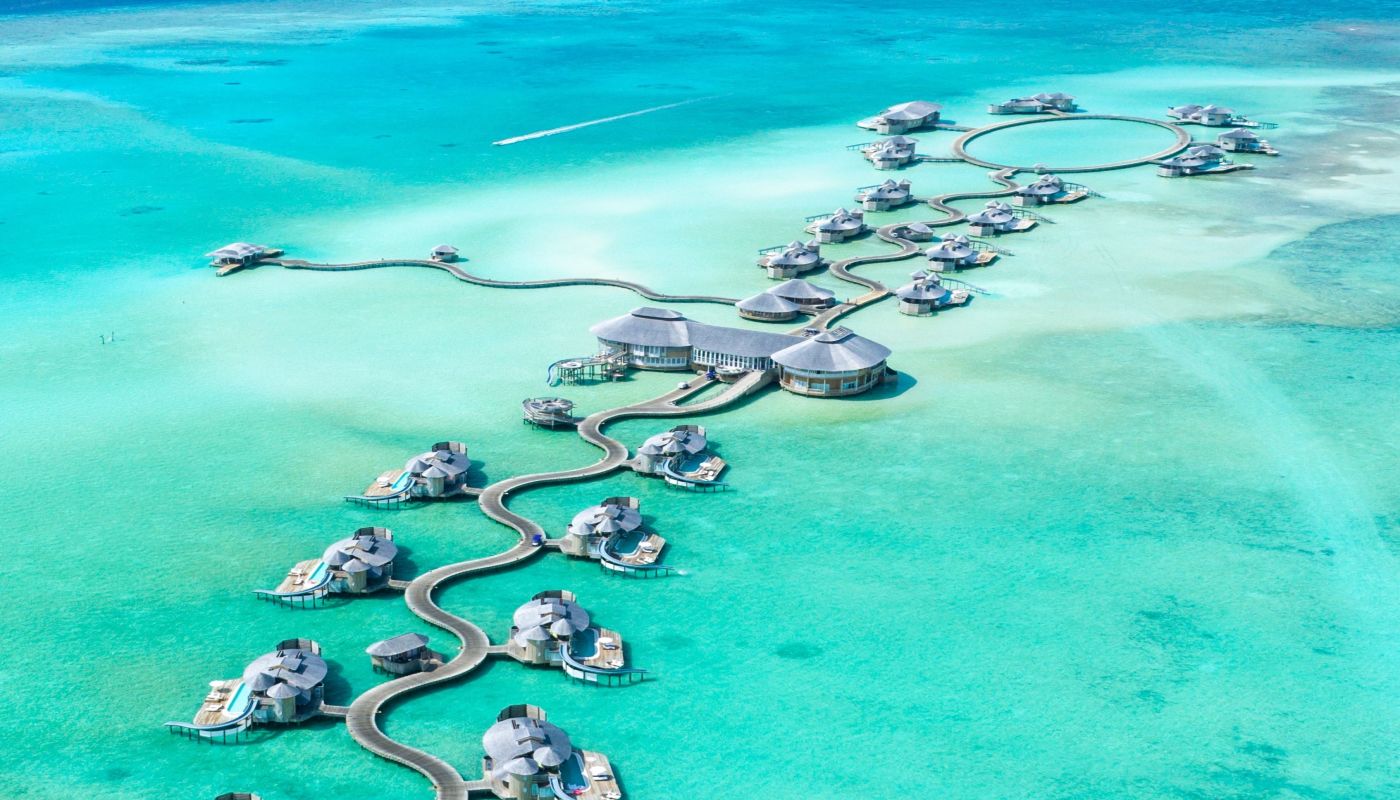
Landscape of Maldives
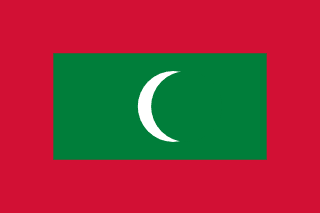
Flag of Maldives

Maldives

Asia

The Maldives are made up of over 1,000 islands. The country gained independence from the UK in 1965, but did not finalize a constitution until 2008. The Maldives’ official religion is Islam, and people must identify as Muslim in order to gain citizenship. Following any other religion is cause for harassment and even incarceration. Education has improved significantly in the decade leading up to 2018. Waste management is becoming a greater issue as the country’s “trash island,” Thilafushi, becomes overfilled with waste.1 1 https://www.cia.gov/library/publications/the-world-factbook/geos/mv.html

What would you like to learn about in Maldives?

Select a section to explore the country where nonprofits are creating positive change.

About Maldives

A sultanate since the 12th century, the Maldives became a British protectorate in 1887. It became a republic in 1968, three years after independence. President Maumoon Abdul GAYOOM dominated the islands' political scene for 30 years, elected to six successive terms by single-party referendums. Following political demonstrations in the capital Male in August 2003, the president and his government pledged to embark upon democratic reforms including a more representative political system and expanded political freedoms. Progress was sluggish, however, and many promised reforms were slow to be realized. Nonetheless, political parties were legalized in 2005. In June 2008, a constituent assembly - termed the "Special Majlis" - finalized a new constitution, which was ratified by the president in August. The first-ever presidential elections under a multi-candidate, multi-party system were held in October 2008. GAYOOM was defeated in a runoff poll by Mohamed NASHEED, a political activist who had been jailed several years earlier by the former regime. President NASHEED faced a number of challenges including strengthening democracy and combating poverty and drug abuse. In early February 2012, after several weeks of street protests following his sacking of a top judge, NASHEED resigned the presidency and handed over power to Vice President Mohammed WAHEED Hassan Maniku. In mid-2012, the Commission of National Inquiry was set by the Government to probe events leading to the regime change. Though no evidence of a coup was found, the report recommended the need to strengthen the country's democratic institutions to avert similar events in the future, and to further investigate alleged police misconduct during the crisis. Maldives officials have played a prominent role in international climate change discussions (due to the islands' low elevation and the threat from sea-level rise) on the United Nations Human Rights Council, and in encouraging regional cooperation, especially between India and Pakistan.

Quick Facts

Population
393,988 (July 2013 est.)
Area
298 sq km
ISO Code
MV
Continent
Asia
Government
republic
Active Causes
12
View all countries in Asia

Geography & Environment

Climate

tropical; hot, humid; dry, northeast monsoon (November to March); rainy, southwest monsoon (June to August)

Terrain

flat, with white sandy beaches

Natural Resources

fish

Environmental Issues

depletion of freshwater aquifers threatens water supplies; global warming and sea level rise; coral reef bleaching

People & Society

74.92 years
Avg. Life Expectancy
98.4%
Literacy Rate
41.2% of total population (2011)
Total Urban Population

Languages

Dhivehi (official, dialect of Sinhala, script derived from Arabic), English (spoken by most government officials)

Religions

Sunni Muslim (official)

Health Expenditure

6.3% of GDP (2010) of GDP

Education Expenditure

7.2% of GDP (2011) of GDP

Economy

$9,400
GDP per Capita (PPP)
28%
Unemployment Rate
16% (2008)
Below Poverty Line

Economic Overview

Tourism, Maldives' largest economic activity, accounts for 28% of GDP and more than 60% of foreign exchange receipts. Fishing is the second leading sector, but the fish catch has dropped sharply in recent years. Agriculture and manufacturing continue to play a lesser role in the economy, constrained by the limited availability of cultivable land and the shortage of domestic labor. Lower than expected tourist arrivals and fish exports, combined with high government spending on social needs, subsidies, and civil servant salaries contributed to a balance of payments crisis, which was temporarily...

Causes in Maldives

Environment

As an island nation, rising sea levels are very concerning for the Maldives. Much of the land on the islands is only one meter above sea level.1 One major issue for the population is waste management. The current solution is shipping all of the country’s waste to Thilafushi, an island off the coast of Male that serves as a trash can for the rest of the country.2

Human Rights

The Maldives has had several human rights violations over the past few years. The most notable were the interference of the Supreme Court in presidential elections, religious freedom restrictions, and pervasive corruption within the judicial and executive branches of the government. Freedom of expression and assembly are also limited.1 It has recently come to the attention of the United Nations that the Maldives has approved the use of capital punishment in the islands and it permits children over the age of seven to be sentenced to death if they are convicted of committing intentional murder.2

Education

The government in Maldives has placed a great emphasis on improving educational opportunities for children; net enrollment for primary education went from 51% in 2001 to 99% in 2016. As part of UNICEF’s Tsunami Recovery Program, teachers travelled to children in remote locations who didn’t have the means to get to school.1 99% of the adult population is literate, and 5.7% of GDP is spent on education.2 The government has been very active in the promotion of gender equality and closing the gender gap within in schools. The Maldives have seen a large increase in the number of women enrolled in both primary and tertiary education.1

Poverty

Although the Maldives is classified as a middle-income country, there is still severe income disparity between islands and inequality is widespread. 16% of the population of the Maldives lives below the international poverty line. 11% of the population is unemployed.1 The United Nations Development Programme states that the government needs more accountability measures, and there need to be more protections against environmental degradation in order to help protect the livelihoods of rural populations.2

Religion

The Maldives is an Islamic Republic of 1,191 islands. Islam is the only recognized religion in the islands and only people who are Muslims may become citizens. Openly practicing any other religion besides Islam is strictly forbidden and those who dare to do so are harassed, facing incarceration or torture.The laws require that citizens practice only Sunni Islam. The government and legal system prohibit propagation of other religious faiths, and other religions symbols are not permitted to be displayed.2

Clean Water

Over 99% of the population has access to clean water in the Maldives, but only 97% have access to improved sanitation facilities.1 Many of the smaller and less populated islands have been relying on imported water, but the government has been working with international organizations to help provide and fund desalination facilities to reduce the reliance on expensive imported water.2

Economy

Tourism is by far the most lucrative economic activity of the Maldives and accounts for 30% of the total GDP and 60% of foreign exchange. The government is focused on diversifying the economy beyond tourism, fishing, and agriculture in order to support economic growth.1 One of the biggest challenges within the economy is the lack of direct taxation of citizens and the heavy reliance on import and tourism taxes. Additionally, there is widespread corruption within in the economic processes and severe restrictions on private-sector participation.2 The unemployment rate is 11% of the population, and 16% of people live below the poverty line. The country’s only main export is fish, while imports include petroleum products, clothing, and capital goods.3

Government

The Republic of Maldives is a presidential republic. The former British colony has a president as the head of the government and chief of state. There are five major political parties, but there are also a variety of parties not registered with the state. The constitution was finalized in 2008, but the Maldives faced many challenges before becoming a successful democracy. Some of the problems included combating poverty and drug trafficking.1 Corruption has continued to be an issue for the government of the Maldives, so much so that an independent auditor was necessary to increase transparency and rid the country of corruption. Additionally, the judicial system is not independent and extremely lengthy pretrial detentions are common.2

Health

The overall health of Maldivians has greatly improved in the past decade. Through nationwide vaccination programs, polio, tuberculosis, and other communicable diseases have been almost eradicated.1 The average life expectancy in the Maldives is 76 years, and the government spends about 14% of GDP on healthcare. 9% of citizens are obese, and 18% of children under the age of five are underweight. The maternal mortality rate is 68 deaths per 100,000 live births, and the infant mortality rate is 22 deaths per 1,000 live births.2

Children

Since the Maldives consist of around 1,000 islands, many of which are uninhabited, the country has become a destination and source for human trafficking and child forced labor. Many children’s rights abuses happen against those who come from undocumented families. These immigrant families sometimes have their travel documents confiscated and often are not paid minimum wage.1 A majority of abducted children are transported to Male, the largest island. They are often victims of child abuse and are forced into labor or prostitution.

Family

In 2012, the Maldivian government created and passed the Domestic Violence Prevention Act, which was the first time that legislation of this sort was officially passed. One of the issue with this law to date is the inability of the system to actually carry out prosecution of those accused of gender-based violence or domestic abuse. There is strong societal pressure not to report any gender-based violence to the authorities, and those who do often later redact their reports.1

Animals

The Maldives, along with other island atolls in the Indian Ocean are crucial havens for a variety of seabirds and nesting spots for sea turtles. The highest islands are no more than five meters above sea level. Many of the species on the islands are from Africa, Malaysia, or Sri Lanka. The only native animals on the Maldives are the fruit bat, Indian flying fox, and another rare flying fox species. The green turtle, Olive Ridley turtle, leatherback turtle, and loggerhead turtles all nest on the islands. These animals are threatened by the rapid growth of the tourism industry and the resulting increase in trash volume.11

Nonprofits Working in Maldives

Discover organizations making a difference in Maldives

Make Your Impact Today

Discover causes you care about and support the nonprofits making a difference in communities around the world.

Are you a nonprofit? Join Project World Impact for free

Join Us Free