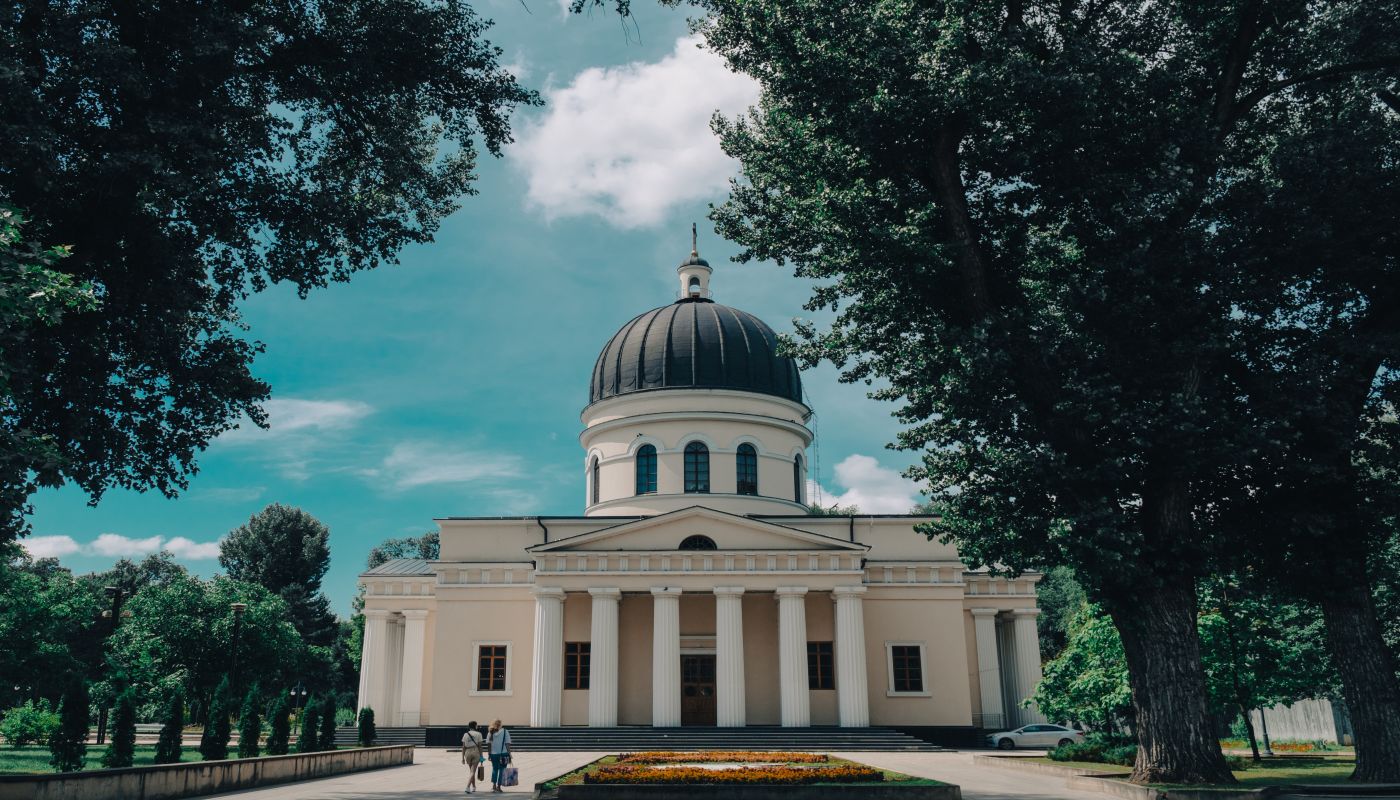
Landscape of Moldova
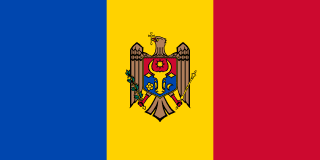
Flag of Moldova

Moldova

Europe

Moldova gained independence for the first time in 1991 from the former Soviet Union. Since then, it has faced challenges to self-sufficiency; there have been separatist movements and difficulties opening up the economy.1 Moldova is one of the poorest countries in Europe, and its economy relies heavily on agriculture.2 1 https://www.britannica.com/place/Moldova 2 https://www.cia.gov/library/publications/the-world-factbook/geos/md.html

What would you like to learn about in Moldova?

Select a section to explore the country where nonprofits are creating positive change.

About Moldova

Part of Romania during the interwar period, Moldova was incorporated into the Soviet Union at the close of World War II. Although the country has been independent from the USSR since 1991, Russian forces have remained on Moldovan territory east of the Nistru River supporting a Transnistrian separatist region composed of a Slavic majority population (mostly Ukrainians and Russians), but with a sizeable ethnic Moldovan minority. One of the poorest nations in Europe, Moldova became the first former Soviet state to elect a communist, Vladimir VORONIN, as its president in 2001. VORONIN served as Moldova's president until he resigned in September 2009, following the opposition's gain of a narrow majority in July parliamentary elections and the Communist Party's (PCRM) subsequent inability to attract the three-fifths of parliamentary votes required to elect a president. Four Moldovan opposition parties formed a new coalition, the Alliance for European Integration (AEI), which has acted as Moldova's governing coalition since. Moldova experienced significant political uncertainty between 2009 and early 2012, holding three general elections and numerous presidential ballots in parliament, all of which failed to secure a president. Following November 2010 parliamentary elections, a reconstituted AEI-coalition consisting of three of the four original AEI parties formed a government, and in March 2012 was finally able to elect an independent as president.

Quick Facts

Population
3,619,925 (July 2013 est.)
Area
33,851 sq km
ISO Code
MD
Continent
Europe
Government
republic
Active Causes
12
View all countries in Europe

Geography & Environment

Climate

moderate winters, warm summers

Terrain

rolling steppe, gradual slope south to Black Sea

Natural Resources

lignite, phosphorites, gypsum, arable land, limestone

Environmental Issues

heavy use of agricultural chemicals, including banned pesticides such as DDT, has contaminated soil and groundwater; extensive soil erosion from poor farming methods

People & Society

69.82 years
Avg. Life Expectancy
99%
Literacy Rate
47.7% of total population (2011)
Total Urban Population

Languages

Moldovan (official, virtually the same as the Romanian language), Russian, Gagauz (a Turkish dialect)

Religions

Eastern Orthodox 98%, Jewish 1.5%, Baptist and other 0.5% (2000)

Health Expenditure

11.7% of GDP (2010) of GDP

Education Expenditure

8.6% of GDP (2011) of GDP

Economy

$3,500
GDP per Capita (PPP)
5.6%
Unemployment Rate
21.9% (2010 est.)
Below Poverty Line

Economic Overview

Moldova remains one of the poorest countries in Europe despite recent progress from its small economic base. With its moderate climate and good farmland, Moldova's economy relies heavily on its agriculture sector, featuring fruits, vegetables, wine, and tobacco. With few natural energy resources, Moldova imports almost all of its energy supplies from Russia and Ukraine. Moldova's dependence on Russian energy is underscored by an estimated $4.3 billion debt to Russian natural gas supplier Gazprom due largely to unreimbursed natural gas consumption in the separatist Transnistria region. Previous...

Causes in Moldova

Family

The World Health Organization for Eastern Europe found that 19% of mar19% of married women are believed to be married before they are 18. Child marriages negatively affect the mental health of girls, as well as their physical health if they bear children before they are fully developed.2 Many women are not permitted to choose their spouse and their education is severely interrupted by the union. Women’s rights in Moldova are behind many other places in Europe, and courts were found to have defective protection against gender discrimination.2ried women between the ages of 20 and 24 in Moldova were married before they were 18.1 Child marriages negatively affect the mental and physical health of girls if they bear children before they are fully developed.2 Many are not permitted to choose their spouse and their education is severely interrupted by the union.3

Education

The quality of education in Moldova varies greatly between rural and urban areas.1 Even with the high literacy rate of 99%, Moldova’s corrupt government still hinders the possibility of improving their education system. Students continually score below international and regional averages in math and science.2

Poverty

Moldova is the poorest country in Europe, and there is massive income inequality. Rural Moldovans are worse off financially than those living in cities, and often people in small towns are not provided with resources or infrastructures to flourish.1 The unemployment rate is at 5.8% and 21% of the population lives below the poverty line.2

Religion

Over 90% of Moldovans ascribe to the Eastern Orthodox Church even though the constitution provides for the freedom of religion and that right is well respected. There are some special privileges afforded to the Moldovan Orthodox Church. The church exerts considerable influence over education, health care policies, family issues, and issues of equality.1

Clean Water

Moldova has done moderately well in providing its citizens with clean water, but there is still room for improvement exhibited in the discrepancies of water access between urban and rural areas. 96% of the population has access to clean drinking water and 86% of the population has access to adequate sanitation infrastructure.1

Economy

Moldova is one of the poorest countries in Europe. The country’s economy is heavily reliant on agricultural exports such as fruits, vegetables, and tobacco. In addition to this, remittances coming mainly from Russia and other former Soviet countries account for nearly $2 billion of the Moldovan GDP.1 Moldova’s goal of integrating into the European Union has been the driving force behind much of their economic progress. However, the government has not been able to steadily move to a market economy, and graft and illegal business activity undermine economic growth and rule of law. The unemployment rate is at 5%.2

Government

A former member state of the Soviet bloc, Moldova is now a republic government. Since the collapse of the Soviet Union, Moldova has struggled both economically and politically with instability and corruption.1 This instability has led to fragmented fiscal policies and has hindered the implementation of reforms and economic growth.2

Health

After Moldova became an independent nation in 1991, the health care system that they had inherited from the former Soviet Union was in a state of disrepair. The average life expectancy was decreasing and caused the newly formed government to make broad, sweeping reforms to the healthcare system in order to increase citizens’ ability to access primary care physicians and reduce the growing disability rates. Currently, the life expectancy is still significantly lower than other neighboring countries.1 The main causes of death in both men and women continue to be heart disease and cancer, and there is heavy alcohol and tobacco abuse.2

Children

21% of Moldovan children live in a one-parent home due to labor migration and the high reliance on remittances. This growing problem is leaving a generation of children without parents, raised by other family members or in Victorian-style, poorly funded orphanages.1 Additionally, Moldova has only taken moderate steps towards reforming and reducing the amount of child labor. Although employers are strictly prohibited from employing children in agricultural work during the school year, this rule is not always enforced. Children without present parents are more likely to be subject to various types of exploitation.2

Environment

The Moldovan environment suffered greatly during the Soviet area, as there were few regulations on how to use natural resources. High use of pesticide, deforestation, and soil contamination all contribute to harming the environment. There are few successful government programs combating this.1

Human Rights

The judicial branch is corrupt and law enforcements officials can be bribed without giving fair trials.1 Social care homes and psychiatric institutions were reported to be in poor conditions and were accused of mistreating their patients. Most forms of media are extremely biased and portray only opinions of the political elite. Media freedom was also suffering as the government continued to restrain the freedom of the press, and there were also reports of harassment and discrimination against gay, bisexual and transgender Moldovans.2

Animals

Even with its small size, Moldova has an abundance of wildlife such as birds, ducks, geese, deer, and fox. Deforestation is a concern, as these creatures used to have much more natural habitat to live in.1

Nonprofits Working in Moldova

Discover organizations making a difference in Moldova

Polaris

Modern slavery is a multi-billion dollar criminal industry that denies freedom to 20.9 million people around the world. And no matter where you live, chances are it’s happening right down the street. From the girl forced into prostitution at a truck stop, to the man discovered in a restaurant kitchen, stripped of his passport and held against his will. Polaris, named after the North Star that guided slaves to freedom in the U.S., disrupts the conditions that allow human trafficking to thrive in our society. From working with government leaders to protect victims’ rights, to building partnerships with the world’s leading technology corporations, we spark long-term change that focuses communities on identifying, reporting and eliminating trafficking networks. Our comprehensive model puts victims at the center of all that we do -- helping survivors restore their freedom, preventing more victims, and gathering the data to pursue traffickers wherever they operate. Unparalleled expertise. Relentlessness. And an innovative spirit. This is how Polaris eradicates the slavery networks that rob human beings of their lives and their independence. Freedom happens now.

Washington, District Of Columbia

Make Your Impact Today

Discover causes you care about and support the nonprofits making a difference in communities around the world.

Are you a nonprofit? Join Project World Impact for free

Join Us Free