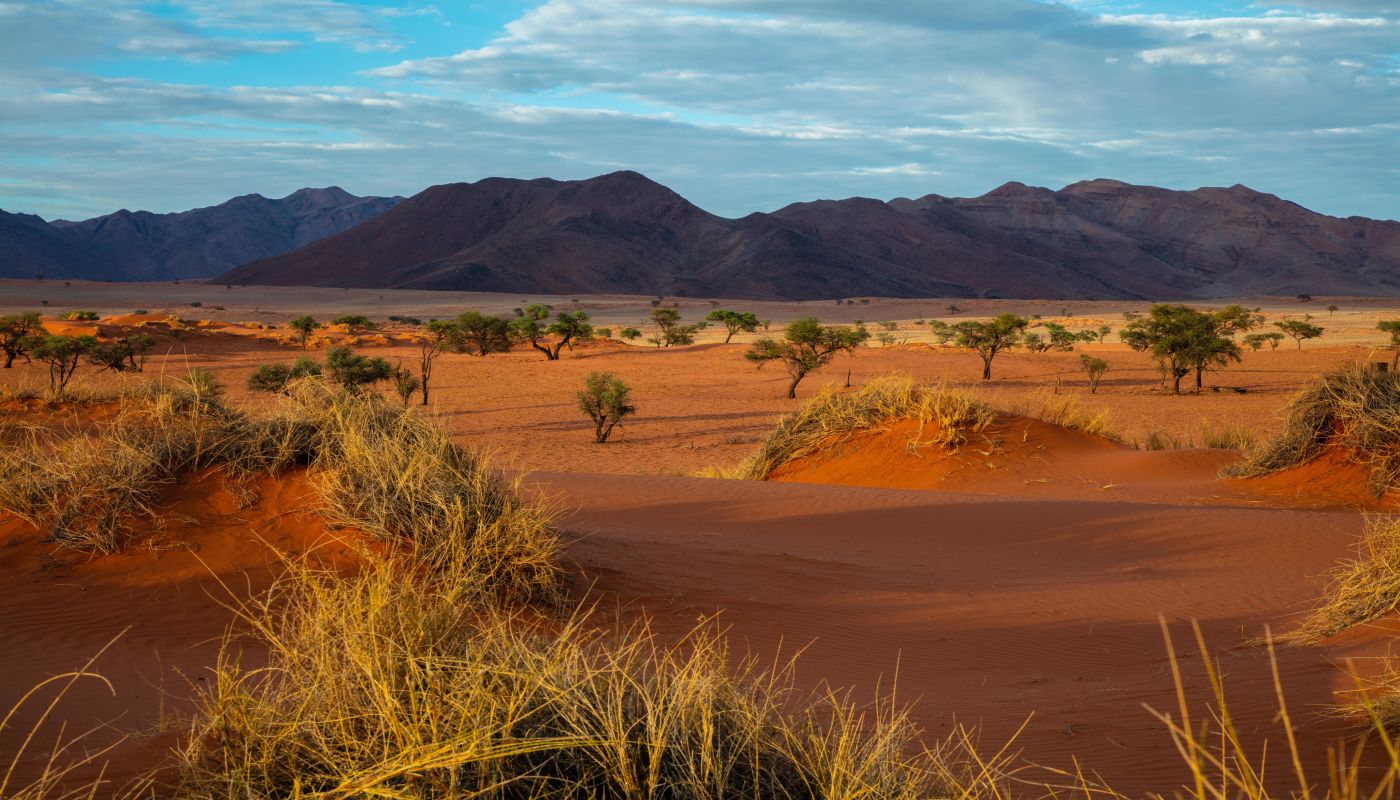
Landscape of Namibia
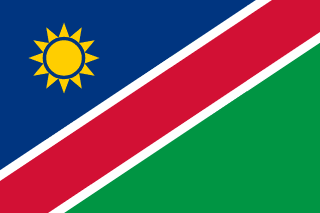
Flag of Namibia

Namibia

Africa

Although Namibia has one of Africa’s highest GDPs per capita, it also has one of the greatest wealth inequalities. The poverty rate is 27%, and citizens in poverty are more likely to suffer from disease and malnutrition.1 Namibia also has one of the highest rates of HIV/AIDS in the world, with 14% of the adult population suffering from the disease. It is the leading cause of death, especially among young mothers and infants.2 The government experiences moderate levels of corruption and has failed to create adequate legislation to prevent gender-based violence and discrimination.3 1 https://borgenproject.org/inequality-and-poverty-in-namibia/ 2 https://www.intrahealth.org/sites/ihweb/files/attachment-files/countrybriefnamibia.pdf 3 https://freedomhouse.org/report/freedom-world/2016/Namibia

What would you like to learn about in Namibia?

Select a section to explore the country where nonprofits are creating positive change.

About Namibia

South Africa occupied the German colony of South-West Africa during World War I and administered it as a mandate until after World War II, when it annexed the territory. In 1966 the Marxist South-West Africa People's Organization (SWAPO) guerrilla group launched a war of independence for the area that became Namibia, but it was not until 1988 that South Africa agreed to end its administration in accordance with a UN peace plan for the entire region. Namibia has been governed by SWAPO since the country won independence in 1990. Hifikepunye POHAMBA was elected president in November 2004 in a landslide victory replacing Sam NUJOMA who led the country during its first 14 years of self rule. POHAMBA was reelected in November 2009.

Quick Facts

Population
2,182,852 (July 2013 est.)
Area
824,292 sq km
ISO Code
NA
Continent
Africa
Government
republic
Active Causes
12
View all countries in Africa

Geography & Environment

Climate

desert; hot, dry; rainfall sparse and erratic

Terrain

mostly high plateau; Namib Desert along coast; Kalahari Desert in east

Natural Resources

diamonds, copper, uranium, gold, silver, lead, tin, lithium, cadmium, tungsten, zinc, salt, hydropower, fish

Environmental Issues

limited natural freshwater resources; desertification; wildlife poaching; land degradation has led to few conservation areas

People & Society

52.03 years
Avg. Life Expectancy
88.8%
Literacy Rate
38.4% of total population (2011)
Total Urban Population

Languages

English (official) 7%, Afrikaans (common language of most of the population and about 60% of the white population), German 32%, indigenous languages (...

Religions

Christian 80% to 90% (at least 50% Lutheran), indigenous beliefs 10% to 20%

Health Expenditure

6.8% of GDP (2010) of GDP

Education Expenditure

8.3% of GDP (2010) of GDP

Economy

$7,900
GDP per Capita (PPP)
51.2%
Unemployment Rate
55.8%
Below Poverty Line

Economic Overview

The economy is heavily dependent on the extraction and processing of minerals for export. Mining accounts for 8% of GDP, but provides more than 50% of foreign exchange earnings. Rich alluvial diamond deposits make Namibia a primary source for gem-quality diamonds. Marine diamond mining is becoming increasingly important as the terrestrial diamond supply has dwindled. Namibia is the world's fourth-largest producer of uranium. It also produces large quantities of zinc and is a small producer of gold and other minerals. The mining sector employs only about 3% of the population. Namibia normally i...

Causes in Namibia

Environment

Climate change in Namibia is increasing the severity of the seasonal droughts and causing food insecurity.1 The government is working with the European Union to obtain grants that would aid in the implementation of green technologies and the enhancement of the regulatory framework.2 Namibia was the first country in Africa to write environmental conservation measures into its constitution. These measures empower local communities to manage their natural resources and protect wildlife. Conservation measures have helped increase agricultural productivity and ecotourism.3

Family

Namibia’s high levels of gender-based and domestic violence have sparked the government’s efforts to strengthen the legislation and reform the treatment and social welfare services that survivors of domestic violence receive. Approximately one-third of all Namibian women will experience domestic violence in their life, as 9 out of 10 victims of domestic violence are women. Furthermore, 33% of all women who reported being sexually active before age 15 reported that their first sexual experience was rape.1

Human Rights

Namibia experiences moderate levels of corruption in its government, including bribery and an inefficient judicial system. There are often extraordinarily lengthy pretrial detentions, and there have been reports of torture used to elicit confessions. There have also been reports of discrimination against women, children, and other minorities. Furthermore, Namibian prisons are overcrowded and juveniles are held with adults. Unsanitary conditions lead to the transmission of diseases.1 Gender-based violence is a significant concern for women and girls. Rape is common and rarely punished by law. A higher number of women than men are affected by HIV/AIDS, and the government has failed to outlaw the practice of sterilization on infected women.2 Approximately one-third of all Namibian women will experience domestic violence in their life, and 9 out of 10 victims of domestic violence are women. Furthermore, 33% of all women who reported being sexually active before age 15 reported that their first sexual experience was rape.3

Education

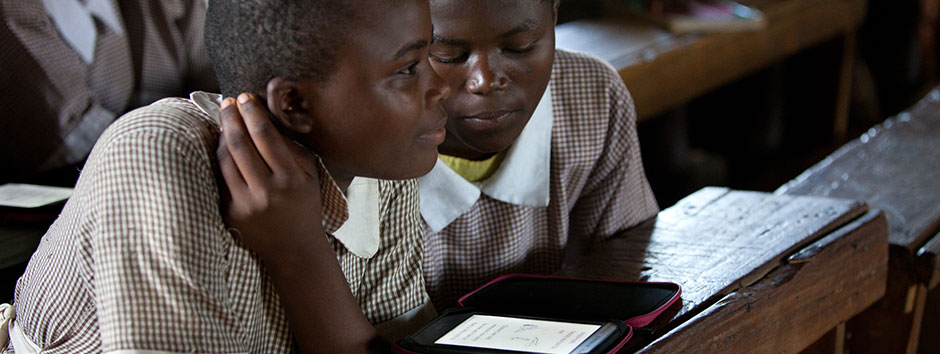
Namibia inherited a very inefficient and unequal education system from the colonial regime that dominated the country until the 1990s.1 After the dissolution of the colonial rule, the government made some institutional reforms to improve the system and make it more comprehensive. The Ministry of Education has begun to test the quality of the schools within the country to ensure that all are up to the regional, continental, and international standards.2 Namibia’s literacy rate is at 82%3 and the primary school enrollment rate is at 100%.4

Poverty

Despite being classified as a middle-income country, Namibia suffers from pervasive poverty and income inequality. The majority of the country’s income comes from the mining industry, so many citizens employed in agriculture and services do not benefit from the country’s wealth. The unemployment rate is 29% and the poverty rate is 27%.1

Religion

Approximately 80-90% of the Namibian population identifies as Christian, and 50% of the Christian population adheres to the Lutheran denomination. The other 10-20% of the population follow indigenous religions.1 Namibia’s constitution protects religious freedom, which is generally well respected by both the government and society. Religious conflict and discrimination are rare.2

Clean Water

Water insecurity due to frequent droughts is the largest hindrance to the realization of potable water access for all citizens.. Additionally, since Namibia is highly dependent on agriculture, the government has been working to drill wells to supply water for livestock, as well as distributing water purification tablets for rural villages.1 Currently, 91% of the population has access to improved drinking water source, but only 34% of the population has access to improved sanitation.2

Economy

Namibia’s economy is dependent on extracting and processing minerals for eventual export. The mining industry has accounted for 11% of the total GDP and is responsible for the majority of Namibia’s foreign investment and exchanges. The country is also the fourth largest producer of uranium in the world and a leading producer of zinc.1 Although Namibia has a high per capita GDP, the country has some of the highest levels of income inequality in the world.2 Despite a weak judicial system and low economic freedom, the economy has grown an average of 5% each year over the past five years.3 Additionally, the unemployment rate in Namibia is currently at 28%, and 29% of the population lives below the poverty line.1

Government

Namibia gained its independence from German South Africa in 1990. Namibia’s republic style government has a president who is elected by a popular vote and a bicameral legislature.1 There is significant legislation in place to prevent corruption, but it is not often enforced. Government corruption is manifested through bribery, and government positions are often given as favors for political services.2

Health

Since the country’s independence in the 1990s, the government has made many reforms and improvements upon its education system.1 However, disease and malnutrition still remain significant concerns. Namibia has one of the highest rates of HIV/AIDS, with 14% of the adult population affected. The disease causes 59% of maternal deaths and 14% of infant deaths each year.2 HIV also contributes to infant malnutrition since affected mothers cannot breastfeed. 1 in 4 children under the age of five experience some degree of malnutrition.3

Children

Currently, around one-third of all Namibian children are living in some form of poverty. 1 Child labor is a pervasive issue, as many families continue to depend on supplemental income that a child laborer helps provide. The government has outlawed child labor and prostitution, but there are still gaps in the law that prevent enforcement.2 Malnutrition is also a significant concern, and one in four children under the age of 5 in Namibia suffers from stunted growth.3

Animals

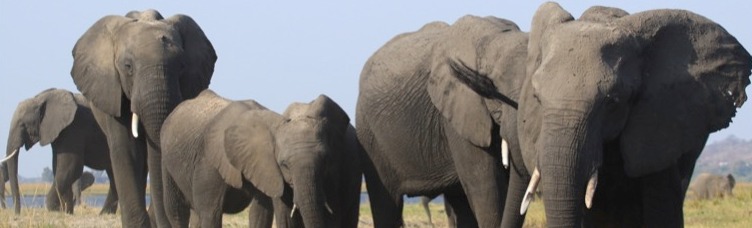
Namibia has a rich, diverse animal population due to government conservation measures. Native wildlife such as cheetahs, lions, rhinos, and elephants thrive in the dry climate. In the northern, arid region “desert-adapted” elephants can survive for days just on the moisture from the vegetation they eat. The coastal waters are home to a wide variety of marine life, including whales.1

Nonprofits Working in Namibia

Discover organizations making a difference in Namibia

Make Your Impact Today

Discover causes you care about and support the nonprofits making a difference in communities around the world.

Are you a nonprofit? Join Project World Impact for free

Join Us Free