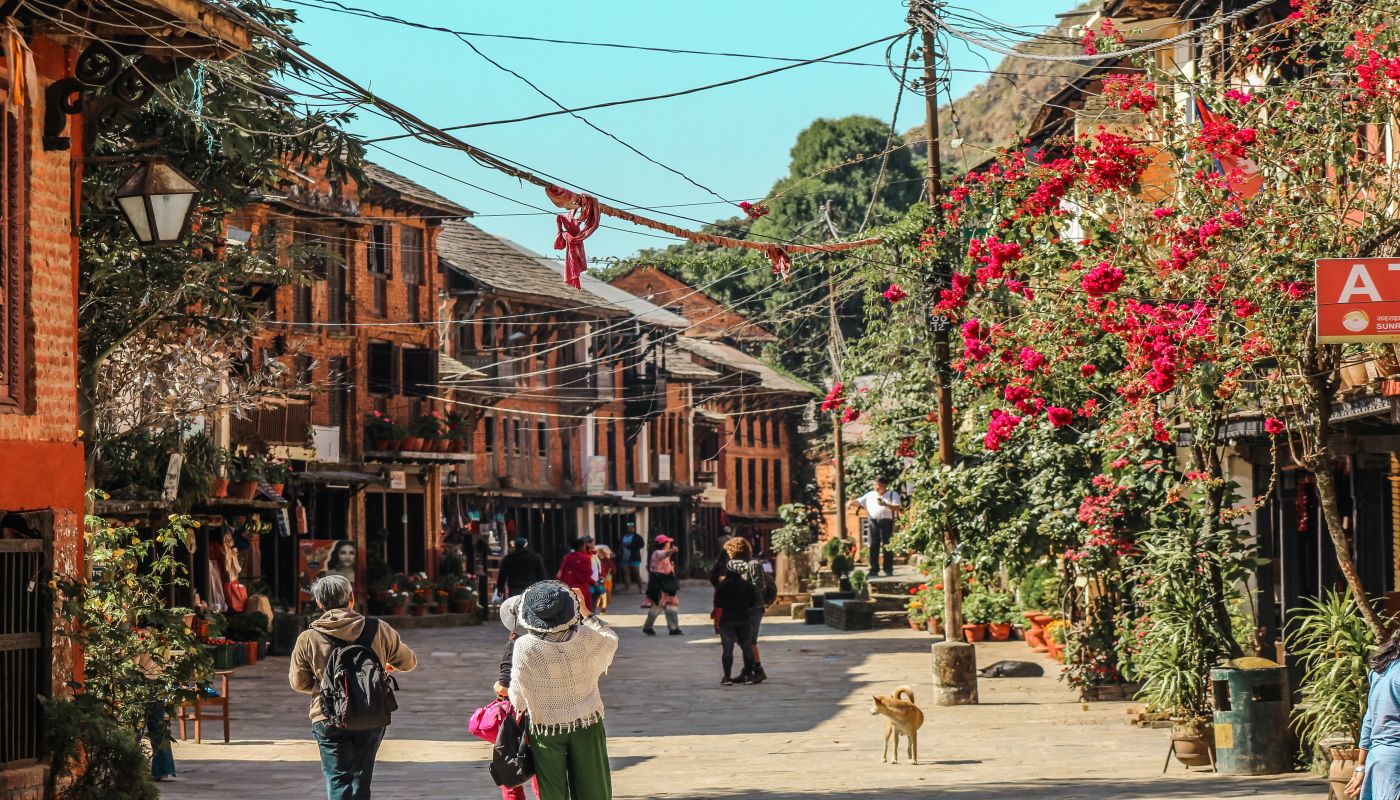
Landscape of Nepal
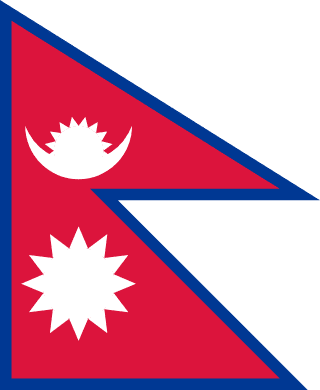
Flag of Nepal

Nepal

Asia

Nepal is crippled by poverty and political instability. It has the second highest poverty rate in South Asia, with over 25% of its citizens living at or below the poverty line.1 The last several decades have been characterized by political unrest, changing leadership, and new constitutions.2 Some of the biggest issues facing poverty-stricken citizens are the prevalence of preventable diseases, lack of education, and outdated social practices that discriminate women and minorities.3 1 https://www.adb.org/countries/nepal/poverty 2 http://www.britannica.com/EBchecked/topic/409152/Nepal 3 http://www.who.int/kobe_centre/measuring/urbanheart/nepal.pdf?ua=1&ua=1

What would you like to learn about in Nepal?

Select a section to explore the country where nonprofits are creating positive change.

About Nepal

In 1951, the Nepali monarch ended the century-old system of rule by hereditary premiers and instituted a cabinet system of government. Reforms in 1990 established a multiparty democracy within the framework of a constitutional monarchy. An insurgency led by Maoist extremists broke out in 1996. The ensuing 10-year civil war between insurgents and government forces witnessed the dissolution of the cabinet and parliament and assumption of absolute power by the king. Several weeks of mass protests in April 2006 were followed by several months of peace negotiations between the Maoists and government officials, and culminated in a November 2006 peace accord and the promulgation of an interim constitution. Following a nationwide election in April 2008, the newly formed Constituent Assembly (CA) declared Nepal a federal democratic republic and abolished the monarchy at its first meeting the following month. The CA elected the country's first president in July. Between 2008 and 2011 there have been four different coalition governments, led twice by the United Communist Party of Nepal-Maoist, which received a plurality of votes in the Constituent Assembly election, and twice by the Communist Party of Nepal-United Marxist-Leninist. In August 2011, Baburam BHATTARAI of the United Communist Party of Nepal (Maoist) became prime minister. After the CA failed to draft a constitution by the May 2012 deadline, BHATTARAI dissolved the CA and called for new elections. Months of negotiations failed to produce a new election date. Finally, in March 2013, the chief justice of Nepal's Supreme Court, Khil Raj REGMI, was sworn in as Chairman of the Interim Council of Ministers for Elections to lead an interim government and charged with holding Constituent Assembly elections by December 2013.

Quick Facts

Population
30,430,267 (July 2013 est.)
Area
147,181 sq km
ISO Code
NP
Continent
Asia
Government
federal democratic republic
Active Causes
12
View all countries in Asia

Geography & Environment

Climate

varies from cool summers and severe winters in north to subtropical summers and mild winters in south

Terrain

Tarai or flat river plain of the Ganges in south, central hill region, rugged Himalayas in north

Natural Resources

quartz, water, timber, hydropower, scenic beauty, small deposits of lignite, copper, cobalt, iron ore

Environmental Issues

deforestation (overuse of wood for fuel and lack of alternatives); contaminated water (with human and animal wastes, agricultural runoff, and industrial effluents); wildlife conservation; vehicular em...

People & Society

66.86 years
Avg. Life Expectancy
57.4%
Literacy Rate
17% of total population (2011)
Total Urban Population

Languages

Nepali (official) 47.8%, Maithali 12.1%, Bhojpuri 7.4%, Tharu (Dagaura/Rana) 5.8%, Tamang 5.1%, Newar 3.6%, Magar 3.3%, Awadhi 2.4%, other 10%, unspec...

Religions

Hindu 80.6%, Buddhist 10.7%, Muslim 4.2%, Kirant 3.6%, other 0.9% (2001 census)

Health Expenditure

5.5% of GDP (2010) of GDP

Education Expenditure

4.7% of GDP (2010) of GDP

Economy

$1,300
GDP per Capita (PPP)
46%
Unemployment Rate
25.2% (2011 est.)
Below Poverty Line

Economic Overview

Nepal is among the poorest and least developed countries in the world, with about one-quarter of its population living below the poverty line. Agriculture is the mainstay of the economy, providing a livelihood for three-fourths of the population and accounting for a little over one-third of GDP. Industrial activity mainly involves the processing of agricultural products, including pulses, jute, sugarcane, tobacco, and grain. Nepal has considerable scope for exploiting its potential in hydropower, with an estimated 42,000 MW of feasible capacity, but political instability hampers foreign invest...

Causes in Nepal

Environment

Air pollution is one of the biggest environmental concerns Nepal faces. It sits at the bottom of international environment performance indexes concerning air quality, and the significant level of pollution causes illness and death in the country every year. It is estimated that 75% of the Nepalese population suffers the effects of polluted air particles.1 Climate change in Nepal has also caused decreased water levels and increased temperatures, which negatively impacts farmers.2

Family

Gender ideals often relegate men to the agricultural sphere and women to the domestic sphere, but women still engage in dangerous, strenuous agricultural work in addition to their household duties. Additionally, women are often not registered as official workers and receive no compensation for their labor.1 Child labor is also a concern in Nepal, with 1.6 million children employed in the labor force.2 Nepal also has one of the highest rates of child marriage in the world, with 37% of girls married before the age of 18.3 Women are often abused and undermined by society. For example, in the western region of the country, women and girls are quarantined during menstruation. Reports have stated that they are placed in dark huts, without food and separate from the family, to avoid punishment by the gods. Though this practice is illegal, it still continues.4

Human Rights

Nepal’s human rights issues stem from its unstable political situation. Its most recent constitution was formatted in just one week and has led to protests and political tension, as well as failing to protect vulnerable citizens. The government has also struggled with corruption and injustice, especially concerning the treatment of political protestors in recent decades.1 Women are often mistreated and they, along with refugees and migrant workers, do not receive equal treatment. 1.6 million are engaged in illegal child labor, and 37% of girls are married before age 18.2

Education

Although Nepal wants to place a higher priority on education, the education system is deeply flawed and needs many improvements. The literacy rate in Nepal is one of the lowest in the world at 60%, and the rate is even lower in rural areas and among girls. Public schools have poor facilities, few resources, and lack trained teachers because they are underfunded. Many children cannot afford to attend private schools, which only increases the wealth gap between rich and poor.1 The gender education gap is also significant. 78% of school-aged males are enrolled, compared to 67% of females. Because education levels and resources in Nepal are lacking, approximately 1% of Nepalese students travel outside country to receive their education each year.2

Poverty

Nepal is still plagued by poverty because of its political instability. There is a great deal of inequality, lack of education, and poor infrastructure. More than a quarter of Nepal’s population lives at or below the poverty line.1 Demographics such as rural versus urban dwellings, gender, ethnicity, and caste determine the most severe levels of poverty.Additionally, women are unable to own property and less likely to receive education than men, so they are more prone to poverty.2 Nepal has the second highest poverty rate in South Asia, just behind Bangladesh.3

Religion

Nepal is the only country that has declared Hinduism as its state religion. Nepalese Hinduism is highly influenced by Tibet and is mixed with Buddhism. Hinduism in Nepal contributes is the rigidity of the caste system, which not only divides people along class lines, but also assigns societal status according to ethnic group.1 The religious population of Nepal is 81% Hindu, 9% Buddhist, 4.4% Muslim, 3% Kirant, and 1.4% Christian.2

Clean Water

As a landlocked country, Nepal struggles to provide clean and potable water for its citizens. Socially excluded caste groups, as well as the intensely rural poor are the sectors of the population that have the least access to clean water. Industrial waste and untreated sewage pollute the water, which leads to serious health complications throughout the country. In some areas, the groundwater contains traces of arsenic, a poison which makes drinking the water extremely dangerous. Unsanitary living conditions and polluted water leave citizens highly vulnerable to waterborne diseases, including diarrhea, dysentery, typhoid, cholera, and gastroenteritis.1 Approximately 92% of the country has access to clean water, but only 46% of the population has access to adequate sanitation infrastructure.2

Economy

Nepal is not rich in natural resources, so it has to import many basic goods.1 Because of its political instability, Nepal has a relatively weak economy. Most of Nepal’s economy depends mainly on its agriculture—specifically rice, corn, and wheat—and remittances sent from outside the country. There are few entrepreneurial opportunities within the economic framework, which contributes to the slow development progress and growth.2 The country was also hit by massive earthquakes in 2015 that destroyed many structures and stunted economic growth.3 Because of the overall unfavorable economic climate present, the international community is reluctant to engage in investment opportunities with Nepal.2 The unemployment rate is 3%, and 25% of the population lives below the poverty line.3

Government

Nepal, for much of its history, has been only a nominal a constitutional monarchy, and political parties were not allowed until the 1990s. At that point, it became more of an actual constitutional monarchy, with elected officials holding the power and the king existing as a figurehead. In the 1990s, an insurgency of Maoists protested the existence of a monarch and proposed a new constitution. After peace talks and negotiations, the monarchy was dissolved in 2008. Today, the constitution includes a legislature, president, and prime minister, and Nepal operates as a federal democratic republic.1

Health

One of the biggest threats to health in Nepal is the amount of citizens living in slums. 58% of the urban population live in slum conditions and lack access to health care. HIV/AIDS is still an issue, mainly in rural areas where people lack education on sexually transmitted diseases. With targeted intervention, however, Nepal is working to ensure that adult HIV is in decline.1 Noncommunicable diseases cause 60% of deaths in Nepal, and the government has no programs in place to discourage contributing lifestyle factors like tobacco and alcohol usage.2 The infant mortality rate in Nepal is 29 deaths per 1,000 live births, and the maternal mortality rate is 258 deaths per 100,000 live births.3

Children

Around one third of Nepal’s children live in abject poverty. The government has not been able to provide Nepalese children with the necessary resources to keep them from becoming severely malnourished or without education.1 High child labor rates are also a problem in Nepal. Thousands of children are employed in domestic services in order to provide more income for their families—they are deprived of education and forced to work long hours.2 1.6 million children are engaged in illegal child labor, and 37% of girls are married before age 18.3

Animals

A wide variety of animals were once found in Nepal because of its varying ecosystems. In the early 1900’s species such as rhinos were almost extinguished due to poaching. Today, more restrictions are in place to protect the wildlife. Other animals such as leopards and bears have become more scarce due to loss of their habitat through deforestation.1

Nonprofits Working in Nepal

Discover organizations making a difference in Nepal

Make Your Impact Today

Discover causes you care about and support the nonprofits making a difference in communities around the world.

Are you a nonprofit? Join Project World Impact for free

Join Us Free