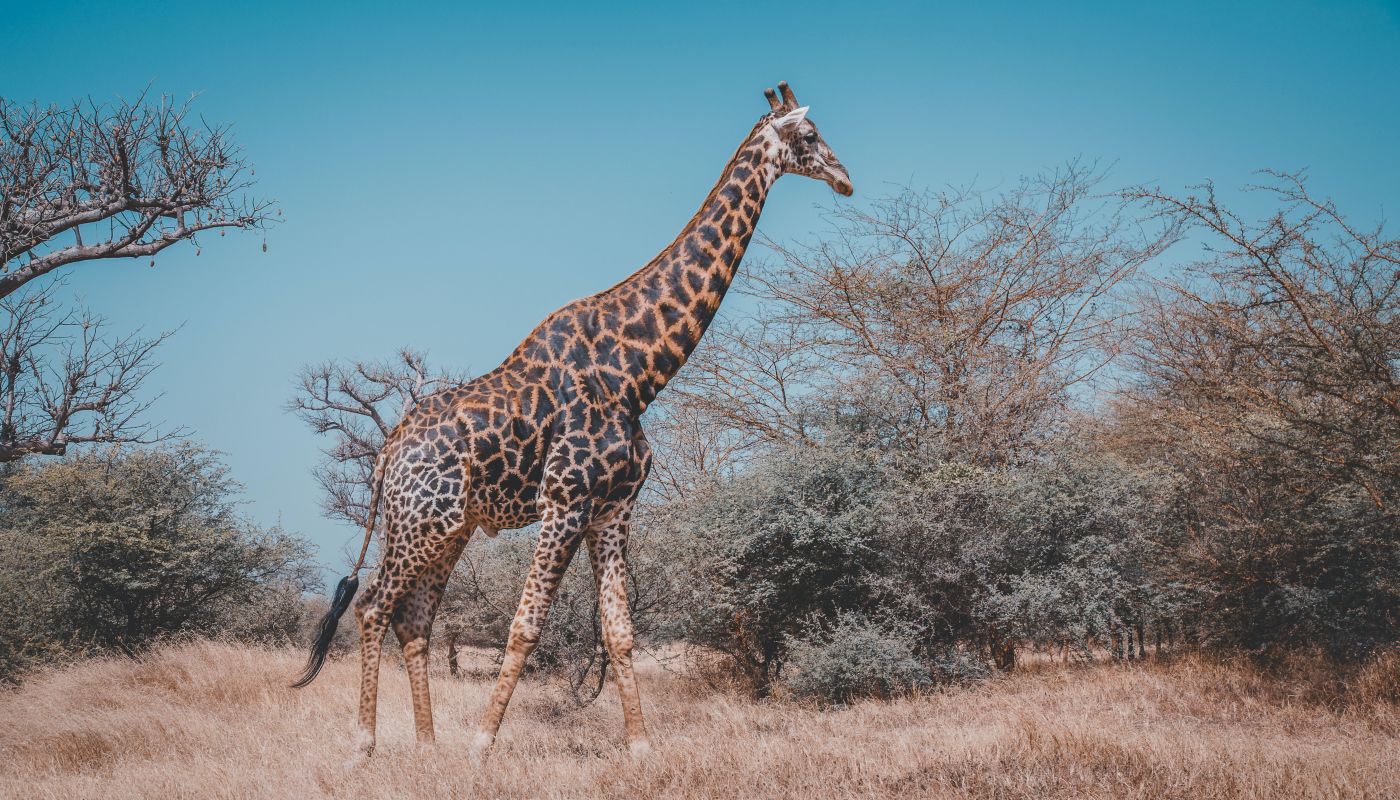
Landscape of Senegal
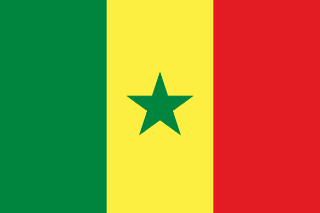
Flag of Senegal

Senegal

Africa

Senegal is historically one of the most stable democracies in Africa due to consistently peaceful transitions of power. The president seeks to balance the distribution of power and avoid authoritarian rule.1 47% of citizens live in poverty, and, as a result, struggle to receive access to education, health care, and economic opportunity.2 A patriarchal culture also leads to high rates of domestic abuse and low rates of conviction, as people believe that it is the right of a husband to beat his wife.3 1 https://www.cia.gov/library/publications/the-world-factbook/geos/sg.html 2 http://www.worldbank.org/en/country/senegal/overview 3 https://tradingeconomics.com/senegal/women-who-believe-a-husband-is-justified-in-beating-his-wife-any-of-five-reasons-percent-wb-data.html

What would you like to learn about in Senegal?

Select a section to explore the country where nonprofits are creating positive change.

About Senegal

The French colonies of Senegal and the French Sudan were merged in 1959 and granted their independence as the Mali Federation in 1960. The union broke up after only a few months. Senegal joined with The Gambia to form the nominal confederation of Senegambia in 1982. The envisaged integration of the two countries was never carried out, and the union was dissolved in 1989. The Movement of Democratic Forces in the Casamance (MFDC) has led a low-level separatist insurgency in southern Senegal since the 1980s, and several peace deals have failed to resolve the conflict. Nevertheless, Senegal remains one of the most stable democracies in Africa and has a long history of participating in international peacekeeping and regional mediation. Senegal was ruled by a Socialist Party for 40 years until Abdoulaye WADE was elected president in 2000. He was reelected in 2007 and during his two terms amended Senegal's constitution over a dozen times to increase executive power and to weaken the opposition. His decision to run for a third presidential term sparked a large public backlash that led to his defeat in a March 2012 runoff election with Macky SALL.

Quick Facts

Population
13,300,410 (July 2013 est.)
Area
196,722 sq km
ISO Code
SN
Continent
Africa
Government
republic
Active Causes
12
View all countries in Africa

Geography & Environment

Climate

tropical; hot, humid; rainy season (May to November) has strong southeast winds; dry season (December to April) dominated by hot, dry, harmattan wind

Terrain

generally low, rolling, plains rising to foothills in southeast

Natural Resources

fish, phosphates, iron ore

Environmental Issues

wildlife populations threatened by poaching; deforestation; overgrazing; soil erosion; desertification; overfishing

People & Society

60.57 years
Avg. Life Expectancy
49.7%
Literacy Rate
42.5% of total population (2011)
Total Urban Population

Languages

French (official), Wolof, Pulaar, Jola, Mandinka

Religions

Muslim 94%, Christian 5% (mostly Roman Catholic), indigenous beliefs 1%

Health Expenditure

5.7% of GDP (2010) of GDP

Education Expenditure

5.6% of GDP (2010) of GDP

Economy

$2,100
GDP per Capita (PPP)
48%
Unemployment Rate
54% (2001 est.)
Below Poverty Line

Economic Overview

Senegal relies heavily on donor assistance and foreign direct investment. The country's key export industries are phosphate mining, fertilizer production, and commercial fishing. The country is also working on iron ore and oil exploration projects. After seeing its economy contract by 2.1% in 1993, Senegal made an important turnaround, thanks to an economic reform program backed by the donor community, which led to real growth in GDP averaging over 5% annually during 1995-2007. Annual inflation was pushed down to the single digits. The global economic downturn reduced growth to 2.2% in 2009. T...

Causes in Senegal

Environment

The largest threats to the Senegalese environment stem from exhaustion of the nation’s natural resources. These threats include overfishing, overgrazing, and deforestation. Pollution and improper disposal of industrial waste constitute major a threat to the environment.1 Senegal has lost hundreds of thousands of hectares of forested land due to logging, hydroelectric projects, and other industries. This is also seen as a contributor to desertification and soil erosion.2 Currently, Senegal does not have adequate climate change legislation in place to help prevent the destruction caused by intense flooding during the rainy season. In poor communities, trash is used as a mechanism to block or soak up floodwaters.3

Family

Families in Senegal tend to be large as women seek to bear more potential contributors to the family income. The fertility rate in Senegal for 2015 was higher than previous years at 5 births per woman.1 The largest threat to family harmony in Senegal is domestic abuse. A patriarchal culture contributes to high levels of domestic abuse that often goes unreported.2 Over 50% of women report that they believe men have a right to beat their wives to punish them or bring about submission.3

Human Rights

The most severe threats to human rights in Senegal involve forced child begging, severe abuse of students in Quranic educational institutions, and the lack of transparency in law enforcement and the justice system. The government continues to restrict the right for people to speak out against the ruling party, and there are very low conviction rates for abusers and traffickers.1 It is also reported that Quranic boarding schools force children to beg on the streets and house their students in deplorable conditions. Corruption and lack of regulation pose obstacles to the resolution of these concerns.2

Education

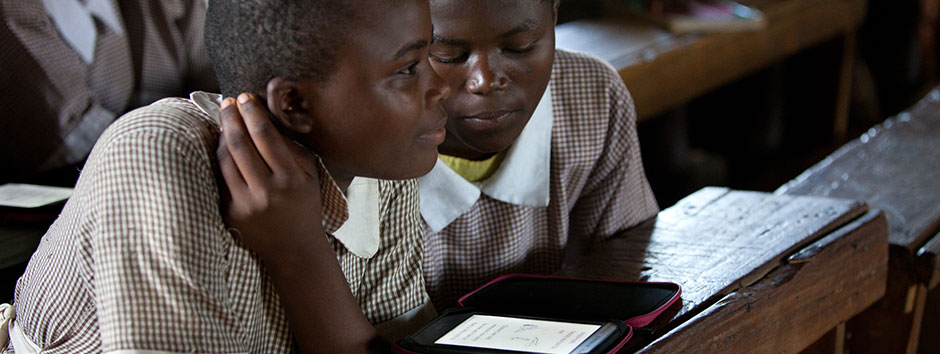
Education quality is severely constrained by a lack of trained teachers, a shortage of instructional resources, and a challenging school environment.1 As a result, many Senegalese children have insufficient skills for their grade level and the majority do not advance to secondary school. School desertion is a common problem, especially among young girls, as they are expected to leave their studies in order to contribute to the family income as soon as they are physically able. Culturally, it is seen as more acceptable to keep girls at home to do domestic work rather than receive an education.2 As a result, the national literacy rate is at 49%, with a male literacy rate of 62% and a female literacy rate of 38%.3 Many children are also sent to religious schools to study the Quran, and these schools are not subject to any government regulation. Over 50,000 children who attend these schools do not receive education and are instead forced by their instructors to beg in the streets.4

Poverty

47% of the population lives in poverty, 15% of which is classified as extreme poverty. Poverty influences people’s ability to obtain healthcare, participate in the economy, and achieve educational opportunities.1 As a result, many are trapped in cycles of chronic poverty.2 Poverty is unevenly distributed along ethnic and economic lines; 75% of rural citizens live in poverty, as opposed to only 25% in urban areas.3

Religion

The legal framework of Senegal officially provides for religious freedom. 95% of the population identify as Muslim, 4% identify as Christians, and the remaining either profess traditional African religions or do not adhere to a religion.1 The government does not allow religious violence or extremism, and the country is known for its tolerant Muslim population.2

Clean Water

In Senegal, 93% of the urban-dwelling population has access to clean water sources, but only 67% of the rural population has access. Only 47% of the country has access to improved sanitation.1 International aid organizations have attempted to improve water infrastructure, storage facilities, and help provide more immediate water access to rural communities so that people do not have to travel as far for their water supply.2

Economy

Senegal’s relatively peaceful political situation contributes to its economic stability. It is the second fastest growing economy in West Africa, with consistent yearly growth rates of around 6.5%.1 Agricultural production, exports, and services comprise the economy.2 More economic growth is limited by heavy reliance on capital-intensive exports which inhibits job creation, and the volatility of the agricultural market.1 The unemployment rate hovers around 16%, and 47% of the population lives in poverty. Poverty is concentrated more in rural areas, where the majority of citizens rely on agriculture, fishing, and mining for their livelihood.2

Government

Senegal has a history of being one of the most stable democracies in Africa, and the government is frequently involved in international peacekeeping operations.1 Although the government has made considerable efforts to limit the influence of corruption in Senegal in recent years, including the establishment of anti-corruption agencies, the judiciary and business sectors are still susceptible to corruption. The most common forms of corruption include bribery, embezzlement and graft.2 The most recent president passed a law that decreased presidential terms from seven years to five years and limited each ruler to two terms in an attempt to further reduce government corruption.3

Health

In 2012, Senegal initiated a universal healthcare program. Senegal’s previous health care system only benefitted civil servants and other employees in the formal sector, an estimated 20% of the population, leaving the majority of Senegalese to either go without medical insurance or find a local provider. For the 50% of the population living below the poverty line, health care was simply too expensive.1 Senegal now spends 4.7% of the national budget on healthcare.2 The leading causes of death in Senegal are stroke and respiratory conditions, followed by malaria. Malaria’s prevalence is due to lack of vaccination and education about how to prevent mosquitoes.3

Children

Child poverty, neglect, abuse, and violations of children’s rights remain pervasive in Senegalese society. Impoverished children are uniquely vulnerable to deprivation of their rights, as their desperation and lack of education allows others to take advantage of them. Due to a lack of vaccinations, diseases like polio and malaria are common. Malaria causes over 30% of child deaths and negatively affects pregnant mothers. 40% of Senegalese children do not attend school, and almost half as many girls as boys attend.1

Animals

The native population of Senegal’s larger animals has been eliminated by human population, although many, such as elephants, lions, panthers, and cheetahs, are preserved in the country’s famous Niokolo Koba National Park. Over one million birds are protected in the Djoudj National Bird Sanctuary. Smaller mammals still inhabit much of the countryside, and monkeys of all types congregate in noisy bands.1

Nonprofits Working in Senegal

Discover organizations making a difference in Senegal

GUTTMACHER INSTITUTE INC

GUTTMACHER INSTITUTE INC

Now in its fifth decade, the Guttmacher Institute remains committed to the mission and goals that led to its creation. The Guttmacher Institute was founded in 1968 as the Center for Family Planning Program Development. At the time, Presidents John F. Kennedy, Lyndon Johnson and Richard Nixon had begun to call the public's attention to the problem of unplanned and unwanted childbearing and its consequences for individual women and men, their children and their communities both at home and abroad. Concurrently, the United States Congress was taking its first steps toward the development of an international population assistance program, as well as a multifaceted, national program aimed at providing equitable access to modern methods of birth control in the United States. By integrating nonpartisan social science research, policy analysis and public education, the Center hoped to provide a factual basis for the development of sound governmental policies and for public consideration of the sensitive issues involved in the promotion of reproductive health and rights. This purpose and commitment continue today. The Center was originally housed within the corporate structure of Planned Parenthood Federation of America (PPFA). Its program, however, was independently developed and overseen by a National Advisory Council separate from the PPFA Board of Directors. Its early development was nurtured by Alan F. Guttmacher, an eminent obstetrician-gynecologist, teacher and writer who was PPFA's president for more than a decade until his death in 1974. The Center was renamed in Dr. Guttmacher's memory, and the Guttmacher Institute incorporated as an entirely independent nonprofit policy research institute with its own Board in 1977. The Guttmacher Institute maintains offices in New York and Washington. Its current staff of 81 comprises demographers, social scientists, public policy analysts, editors, writers, communications specialists, and financial and technical personnel. A few of its employees have been with the organization for most of its existence, and an affiliation that goes back 10 or 15 years is not unusual. The Institute's work is guided by a 39-member board made up of eminent professionals from a rich variety of disciplines, as well as civic leaders from across the United States and around the world. The Guttmacher Institute's annual budget of approximately $17 million is derived largely from private foundations, government agencies, multilateral organizations and individual contributions.

New York, New York

Make Your Impact Today

Discover causes you care about and support the nonprofits making a difference in communities around the world.

Are you a nonprofit? Join Project World Impact for free

Join Us Free