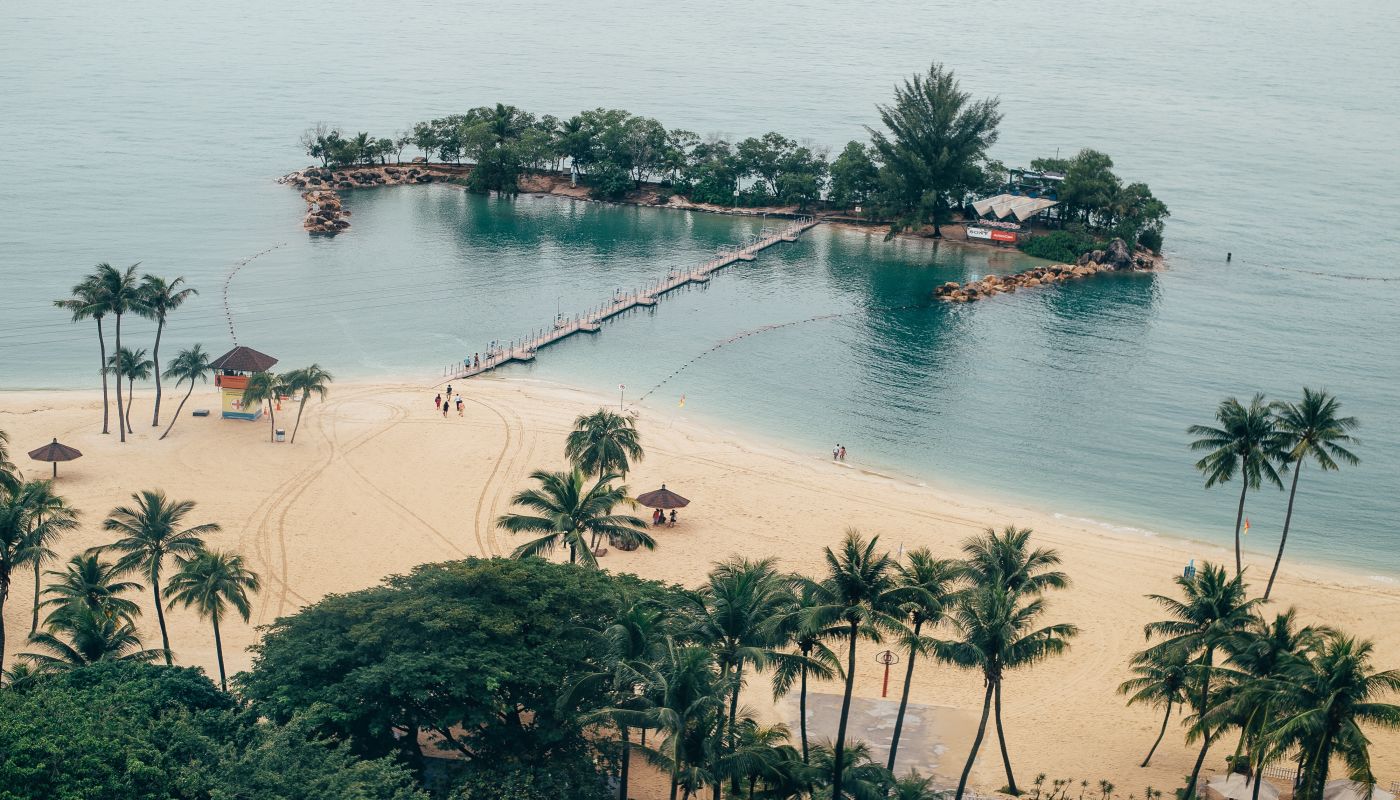
Landscape of Singapore
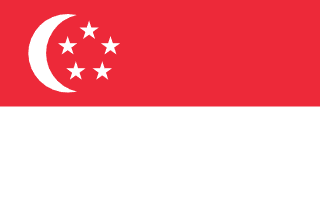
Flag of Singapore

Singapore

Asia

Singapore is small and thriving city-state on the southern tip of Southeast Asia. It is home to one the busiest ports in the world, and its per-capita GDP is similar to that of countries in Western Europe.1 Along with its economic success, Singapore also has strict and conservative local laws, and its business sector attracts a large number of immigrants each year.2 With Singapore’s extremely limited land resources, the country has begun to build man-made islands, but the changing environment threatens to destroy or damage much of this land.3 1 https://www.cia.gov/library/publications/the-world-factbook/geos/sn.html
2 http://www.bbc.com/news/world-asia-15961759
3 https://www.nytimes.com/2017/04/20/magazine/how-singapore-is-creating-more-land-for-itself.html

What would you like to learn about in Singapore?

Select a section to explore the country where nonprofits are creating positive change.

About Singapore

Singapore was founded as a British trading colony in 1819. It joined the Malaysian Federation in 1963 but separated two years later and became independent. Singapore subsequently became one of the world's most prosperous countries with strong international trading links (its port is one of the world's busiest in terms of tonnage handled) and with per capita GDP equal to that of the leading nations of Western Europe.

Quick Facts

Population
5,460,302 (July 2013 est.)
Area
697 sq km
ISO Code
SG
Continent
Asia
Government
parliamentary republic
Active Causes
12
View all countries in Asia

Geography & Environment

Climate

tropical; hot, humid, rainy; two distinct monsoon seasons - Northeastern monsoon (December to March) and Southwestern monsoon (June to September); inter-monsoon - frequent afternoon and early evening...

Terrain

lowland; gently undulating central plateau contains water catchment area and nature preserve

Natural Resources

fish, deepwater ports

Environmental Issues

industrial pollution; limited natural freshwater resources; limited land availability presents waste disposal problems; seasonal smoke/haze resulting from forest fires in Indonesia

People & Society

84.07 years
Avg. Life Expectancy
95.9%
Literacy Rate
100% of total population (2011)
Total Urban Population

Languages

Mandarin (official) 35%, English (official) 23%, Malay (official) 14.1%, Hokkien 11.4%, Cantonese 5.7%, Teochew 4.9%, Tamil (official) 3.2%, other Chi...

Religions

Buddhist 42.5%, Muslim 14.9%, Taoist 8.5%, Hindu 4%, Catholic 4.8%, other Christian 9.8%, other 0.7%, none 14.8% (2000 census)

Health Expenditure

4% of GDP (2010) of GDP

Education Expenditure

3.3% of GDP (2012) of GDP

Economy

$61,400
GDP per Capita (PPP)
1.9%
Unemployment Rate
NA%
Below Poverty Line

Economic Overview

Singapore has a highly developed and successful free-market economy. It enjoys a remarkably open and corruption-free environment, stable prices, and a per capita GDP higher than that of most developed countries. The economy depends heavily on exports, particularly in consumer electronics, information technology products, pharmaceuticals, and on a growing financial services sector. Real GDP growth averaged 8.6% between 2004 and 2007. The economy contracted 0.8% in 2009 as a result of the global financial crisis, but rebounded 14.8% in 2010, on the strength of renewed exports, before slowing to...

Causes in Singapore

Environment

The goal of the government’s environmental policy is to reduce the amount of emissions in all sectors as well as adopting green growth opportunities.1 Singapore is particularly vulnerable to the global effects of climate change as over 90% of the country's food supply is imported, and their location and rapid industrialization make it difficult to keep air pollution levels low.2

Family

Families are typically very small with less than one child born on average to every woman in her lifetime.1 Spousal abuse is common and highly stigmatized in Singapore. In 2015, there were nearly 3,000 requests for legal protection from spouses because of violent acts, and over 75% of these requests were filed by women.1

Human Rights

There are laws in place that restrict freedom of speech, association, and assembly. Recently, the government has been criticized for imposing harsh sanctions on online news forums and blogs that criticise the government.1 Permits are required for peaceful demonstrations to take place, and any type of movie or television production must be pre-screened by the government in order to be distributed.1 Those who publish any sort of negative comments online towards groups are at risk for being arrested or penalized.2

Education

Singapore has a thriving education sector that is highly developed. There are over 360 primary, secondary, and postsecondary schools in Singapore. There is no shortage of highly trained and educated teachers.1 Education takes up 3% of the nation’s GDP, and there is an emphasis placed on further advancing the education system.2 The literacy rate in Singapore is at 97%.3

Poverty

The Singaporean government does not calculate statistical data on poverty nor has it set a national poverty line.1 However, it is known that wealth inequalities are growing rapidly and the number of working poor is increasing. There is a large number of elderly people living in poverty.1

Religion

Singapore is a very religiously diverse country with a religious demographic that is 34% Buddhist, 18% Christian, 14% Muslim, 5% Hindu, 11% Taoist, and 16% non-religious. The constitution of Singapore protects religious freedom, and reports of religious discrimination and intolerance are very rare.3

Clean Water

100% of Singapore’s population has access to sanitation infrastructure and clean water.1

Economy

Singapore’s free-market economy is highly developed and operates in a transparent open market. The country boasts stable market prices and a very high GDP per capita. Exportation is the driving force behind the economy, and Singapore thrives on exporting consumer electronics, technology, pharmaceuticals and financial services.1 Singapore’s unemployment rate is low at just 3%.2

Health

The public healthcare system in Singapore is excellent and health insurance is mandatory for every citizen. The Ministry of Health is committed to providing affordable and quality care to all citizens, and the health network operates with primary public health care facilities and private healthcare providers.1 The leading causes of death are noncommunicable diseases such as heart disease and cancer. The life expectancy is 76 years of age.2

Children

Singapore has one of the lowest infant mortality rates in the world at only two deaths per 1,000 live births.1 Childhood is Singapore is generally well protected, and there are low levels of child labor as the laws against it are enforced rigorously.2

Government

Formerly a British trading colony, Singapore is a parliamentary republic with both a president and a prime minister.1 The judiciary is swift, efficient and very independent from government bribery and meddling. Government policies are transparent and effective, and this has helped the country has enjoyed a very high standard of living and prosperity.2 Singapore has very low levels of corruption, and compared to other countries in Southeast Asia, it has the most transparent governmental system.3

Animals

Because of Singapore’s location and size, there is little natural area besides preservations for wildlife to live in. There are few animals larger than reptiles and birds, but fish and coral reefs are abundant off the coastline.1

Nonprofits Working in Singapore

Discover organizations making a difference in Singapore

Make Your Impact Today

Discover causes you care about and support the nonprofits making a difference in communities around the world.

Are you a nonprofit? Join Project World Impact for free

Join Us Free