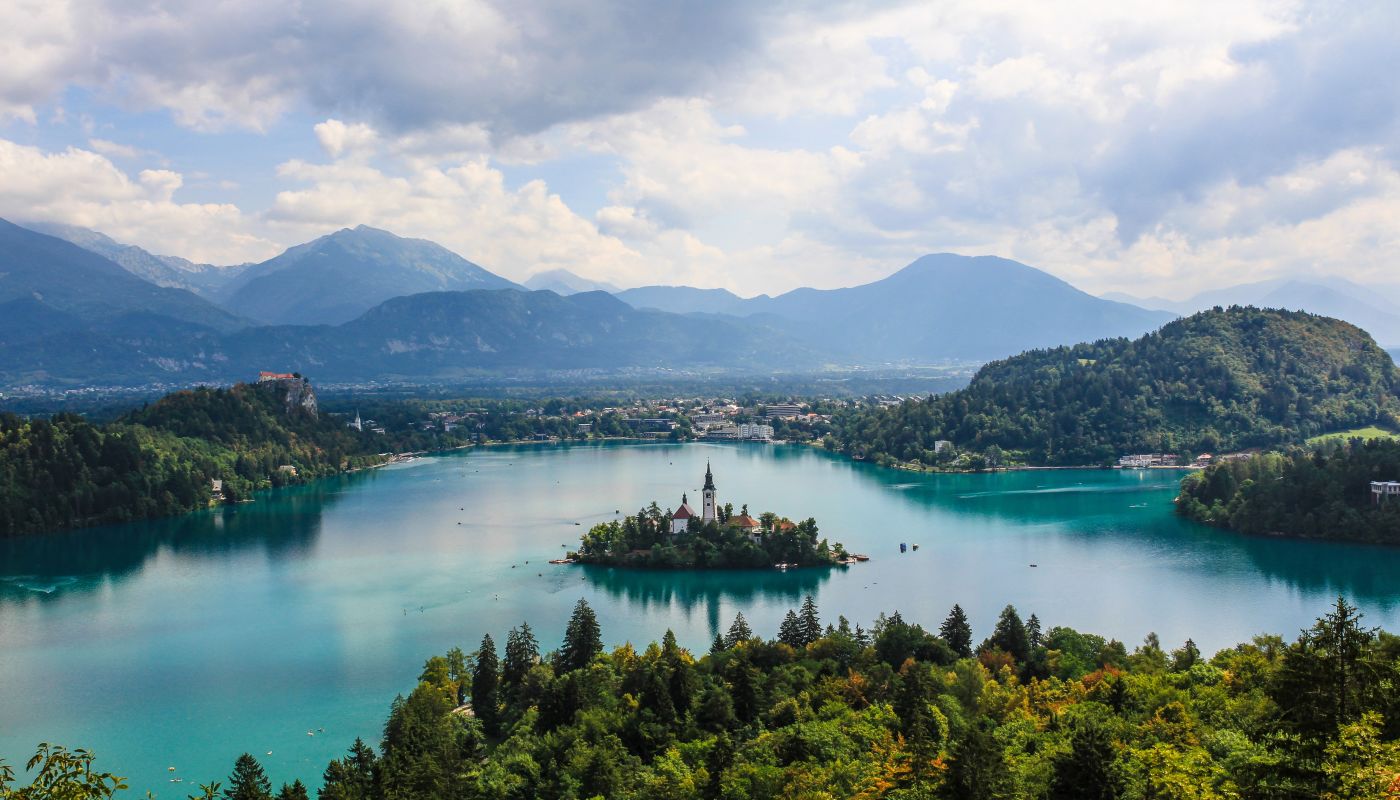
Landscape of Slovenia
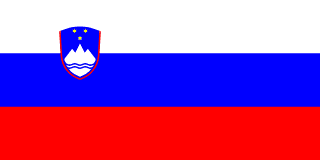
Flag of Slovenia

Slovenia

Europe

Slovenia, a former part of communist Yugoslavia, gained independence in 1991, and since then has successfully transitioned into a free market economy and a parliamentary republic. Slovenia has more western European practices than its other former Yugoslavia neighbors, and it is said to be one of the most successful newer European Union states.1 Slovenia has a thriving education system and health network, but its economy is struggling to grow to the size of other EU nations.2 1 http://www.bbc.com/news/world-europe-17846376
2 https://www.cia.gov/library/publications/the-world-factbook/geos/si.html

What would you like to learn about in Slovenia?

Select a section to explore the country where nonprofits are creating positive change.

About Slovenia

The Slovene lands were part of the Austro-Hungarian Empire until the latter's dissolution at the end of World War I. In 1918, the Slovenes joined the Serbs and Croats in forming a new multinational state, which was named Yugoslavia in 1929. After World War II, Slovenia became a republic of the renewed Yugoslavia, which though communist, distanced itself from Moscow's rule. Dissatisfied with the exercise of power by the majority Serbs, the Slovenes succeeded in establishing their independence in 1991 after a short 10-day war. Historical ties to Western Europe, a strong economy, and a stable democracy have assisted in Slovenia's transformation to a modern state. Slovenia acceded to both NATO and the EU in the spring of 2004; it joined the eurozone in 2007.

Quick Facts

Population
1,992,690 (July 2013 est.)
Area
20,273 sq km
ISO Code
SI
Continent
Europe
Government
parliamentary republic
Active Causes
12
View all countries in Europe

Geography & Environment

Climate

Mediterranean climate on the coast, continental climate with mild to hot summers and cold winters in the plateaus and valleys to the east

Terrain

a short coastal strip on the Adriatic, an alpine mountain region adjacent to Italy and Austria, mixed mountains and valleys with numerous rivers to the east

Natural Resources

lignite coal, lead, zinc, building stone, hydropower, forests

Environmental Issues

Sava River polluted with domestic and industrial waste; pollution of coastal waters with heavy metals and toxic chemicals; forest damage near Koper from air pollution (originating at metallurgical and...

People & Society

77.66 years
Avg. Life Expectancy
99.7%
Literacy Rate
50% of total population (2010)
Total Urban Population

Languages

Slovenian (official) 91.1%, Serbo-Croatian 4.5%, other or unspecified 4.4%, Italian (official, only in municipalities where Italian national communiti...

Religions

Catholic 57.8%, Muslim 2.4%, Orthodox 2.3%, other Christian 0.9%, unaffiliated 3.5%, other or unspecified 23%, none 10.1% (2002 census)

Health Expenditure

9.4% of GDP (2010) of GDP

Education Expenditure

5.7% of GDP (2009) of GDP

Economy

$28,700
GDP per Capita (PPP)
12%
Unemployment Rate
13.6% (2011)
Below Poverty Line

Economic Overview

Slovenia became the first 2004 European Union entrant to adopt the euro (on 1 January 2007) and has experienced one of the most stable political and economic transitions in Central and Southeastern Europe. With the highest per capita GDP in Central Europe, Slovenia has excellent infrastructure, a well-educated work force, and a strategic location between the Balkans and Western Europe. Privatization has lagged since 2002, and the economy has one of the highest levels of state control in the EU. Structural reforms to improve the business environment have allowed for somewhat greater foreign par...

Causes in Slovenia

Environment

Over the past decade, the average annual temperatures in Slovenia have increased and the amount of precipitation has decreased. The Slovenian Environmental Agency is tasked with preserving natural resources, the environment, and creating sustainable development projects.1 Air, water, and soil have all been negatively impacted by harmful emissions caused by increased industrial and human activity.

Family

Slovenia has one of the highest rates of mother employment and the narrowest gender pay gap in the European Union. There is generous parental leave in order to support the reintegration of parents with young children into the labor market, and 72% of mothers with small children are employed.1 Families are generally small with an average of less than two children.2

Human Rights

Current human rights violations in Slovenia include discrimination against migrants, societal violence against women, discrimination against Roma people, discrimination against LGBT individuals, and human trafficking.1

Education

Slovenia has a nearly 100% primary school enrollment rate, and 86% of adults have completed upper secondary school. The literacy rate is 99%, and the average citizen will be in schooling for almost 19 years of their life.1

Poverty

Around 14% of the population lives below the poverty line in Slovenia.1

Religion

The largest religion in Slovenia is Christianity, accounting for 57% of the population. 2.4% of the population is Muslim and 2.3% are Orthodox.1

Clean Water

Slovenia has an abundance of clean water resources and is considered one of the most water-rich countries in Europe. On average, the amount of water per person is about four times the European average.1 Approximately 99% of the population has access to clean drinking water and 100% of the population has access to adequate sanitation infrastructures.2

Economy

Slovenia has consistently proven to have the strongest economy of all of the former Yugoslav states. Additionally, Slovenia has a very favorable geographical location between Western Europe and the Balkans, a highly educated workforce, and excellent infrastructure.1 However, their economic improvements are slow because of the delay of privatizations and an indebted banking sector. Institutional weaknesses and government corruption make it difficult for Slovenia to progress its economy further. The unemployment rate is near 10%, and their biggest industries are metals, lead smelting, electronics, and automobile manufacturing.2

Government

The former Socialist Republic of Slovenia changed into a parliamentary republic in 1991 with both a president and a prime minister. Slovenia's transition between the two governmental systems was bloodless and relatively smooth.1 Corruption is not as prevalent in Slovenia as it is in many of its Baltic neighbors, but bribes and broken contracts are still not unusual.2

Health

Slovenia has a policy of compulsory health insurance, and preventive care is available to everyone for free. One major health concern in Slovenia, however, is the high rate of alcohol consumption per person. There has been increased rates of alcohol abuse among adolescents, with children as young as 10 experimenting with alcohol. Additionally, one-third of all men in Slovenia are chronic drinkers, and binge drinking is growing in popularity.1 The life expectancy is 80.2

Children

In 2017, Slovenia was ranked as one the best places to raise children in the world because of its low rates of child marriage, premature deaths, child labor, and armed conflicts within the country.1

Animals

Deer, brown bears, lynx, and other small game animals are common. There are also many different species of fish living off the coast in the Adriatic sea.1

Nonprofits Working in Slovenia

Discover organizations making a difference in Slovenia

Make Your Impact Today

Discover causes you care about and support the nonprofits making a difference in communities around the world.

Are you a nonprofit? Join Project World Impact for free

Join Us Free