Landscape of Sri Lanka
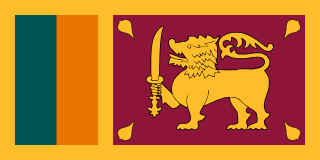
Flag of Sri Lanka

Sri Lanka

Asia

After emerging from a civil war in 2009, Sri Lanka continued to struggle with widespread corruption. UN mandates in 2015 forced the government to re-draft its constitution and work to amend war crimes against many of its citizens.1 Since then, the country has experienced economic growth, but it still maintains a low standard of living and a high percentage of its population lives on less than $5 a day.2 1 https://www.hrw.org/world-report/2017/country-chapters/sri-lanka 2 http://www.worldbank.org/en/news/feature/2017/03/02/part1-understanding-poverty-sri-lanka

What would you like to learn about in Sri Lanka?

Select a section to explore the country where nonprofits are creating positive change.

About Sri Lanka

The first Sinhalese arrived in Sri Lanka late in the 6th century B.C., probably from northern India. Buddhism was introduced in about the mid-third century B.C., and a great civilization developed at the cities of Anuradhapura (kingdom from circa 200 B.C. to circa A.D. 1000) and Polonnaruwa (from about 1070 to 1200). In the 14th century, a south Indian dynasty established a Tamil kingdom in northern Sri Lanka. The coastal areas of the island were controlled by the Portuguese in the 16th century and by the Dutch in the 17th century. The island was ceded to the British in 1796, became a crown colony in 1802, and was formally united under British rule by 1815. As Ceylon, it became independent in 1948; its name was changed to Sri Lanka in 1972. Tensions between the Sinhalese majority and Tamil separatists erupted into war in 1983. After two decades of fighting, the government and Liberation Tigers of Tamil Eelam (LTTE) formalized a cease-fire in February 2002 with Norway brokering peace negotiations. Violence between the LTTE and government forces intensified in 2006, but the government regained control of the Eastern Province in 2007. By May 2009, the government announced that its military had defeated the remnants of the LTTE. Since the end of the conflict, the government has enacted an ambitious program of economic development projects, many of which are financed by loans from the Government of China. In addition to efforts to reconstruct its economy, the government has resettled more than 95% of those civilians who were displaced during the final phase of the conflict and released the vast majority of former LTTE combatants captured by Government Security Forces. At the same time, there has been little progress on more contentious and politically difficult issues such as reaching a political settlement with Tamil elected representatives and holding accountable those alleged to have been involved in human rights violations at the end of the war.

Quick Facts

Population
21,675,648 (July 2013 est.)
Area
65,610 sq km
ISO Code
LK
Continent
Asia
Government
republic
Active Causes
12
View all countries in Asia

Geography & Environment

Climate

tropical monsoon; northeast monsoon (December to March); southwest monsoon (June to October)

Terrain

mostly low, flat to rolling plain; mountains in south-central interior

Natural Resources

limestone, graphite, mineral sands, gems, phosphates, clay, hydropower

Environmental Issues

deforestation; soil erosion; wildlife populations threatened by poaching and urbanization; coastal degradation from mining activities and increased pollution; freshwater resources being polluted by in...

People & Society

76.15 years
Avg. Life Expectancy
91.2%
Literacy Rate
15.1% of total population (2011)
Total Urban Population

Languages

Sinhala (official and national language) 74%, Tamil (national language) 18%, other 8%

Religions

Buddhist (official) 69.1%, Muslim 7.6%, Hindu 7.1%, Christian 6.2%, unspecified 10% (2001 census provisional data)

Health Expenditure

3% of GDP (2010) of GDP

Education Expenditure

2% of GDP (2010) of GDP

Economy

$6,200
GDP per Capita (PPP)
5.2%
Unemployment Rate
8.9% (2010 est.)
Below Poverty Line

Economic Overview

Sri Lanka continues to experience strong economic growth following the end of the 26-year conflict with the Liberation Tigers of Tamil Eelam (LTTE). The government has been pursuing large-scale reconstruction and development projects in its efforts to spur growth in war-torn and disadvantaged areas, develop small and medium enterprises and increase agricultural productivity. The government's high debt payments and bloated civil service have contributed to historically high budget deficits, but fiscal consolidation efforts and strong GDP growth in recent years have helped bring down the governm...

Causes in Sri Lanka

Environment

Some environmental issues that face Sri Lanka are freshwater pollution, deforestation, wildlife poaching, and soil erosion.1 Climate change has increased the amount of extreme weather events like droughts and flooding. The majority of the country’s citizens live in low-lying coastal areas, which are the regions most affected by flooding and natural disasters.2 A lack of effective environmental policies coupled with land degradation creates a need for more action to preserve the environment.3

Family

Family planning services are active in Sri Lanka with educational centers and health clinics. These clinics provide both rural and urban areas with contraceptive options and reproductive health education programs. There are also easily accessible STI and HIV screenings throughout the country.1 Additionally, there are high levels of domestic violence in Sri Lanka and the issue is exacerbated by the fact that many women are unaware of their rights and afraid to seek help. Implementation of consequences is weak, and there are no support systems in place for women who escape abusive situations.2

Human Rights

During the country’s 26 year long civil war, the Tamir Tigers rebel group and government forces committed many human rights offenses. Citizens experienced violence and torture at the hands of military forces, freedom of speech was repressed, and thousands of people were forcibly displaced from their homes.1 In 2015, the government took its first steps towards restoring justice to victims of war crimes and reducing corruption. This involved judicial reforms in an attempt to increase efficiency and reform of constitutional laws to increase government transparency. There are still many ways in which the state of human rights is unsatisfactory. Women are not given equal opportunities for employment or proper representation in the courts. Police are known to use torture and carry out arbitrary arrests.2

Education

School in Sri Lanka is free and compulsory through age 16, and enrollment rates are high at 97%. There is also a high dropout rate in Sri Lanka, so it is rare to see students complete education beyond the halfway point of secondary education. Dropout rates are around 50% for children in rural or low-income areas. Quality is another concern, as 62% of teachers have not received formal training, which results in low educational standards standards.1 There is a lack of resources, updated curriculum, and limited educational opportunities for children with disabilities.2

Poverty

Living standards in Sri Lanka are low, and 45% of the population live on less than $5 per day. Poverty rates in some districts are as high as 28% and is most common among young, unemployed, and rural citizens.1 After the civil war, around 800,000 people were displaced throughout the country and lost both their jobs and homes. 40% of all Sri Lanka’s rural poor are small farmers that work in agriculture. Agricultural production is hindered by natural disasters, over farming, and lack of resources for farmers.2

Religion

Approximately 70% of Sri Lankans identify as Buddhist, with Muslims, Hindus and Christians accounting for the rest of the population. While there is no official state religion, the government provides protection and preference for Buddhists. Other religious groups have reported attacks against their members and churches at the hands of an extremist Buddhist group, called Bodu Bala Sena (BBS). The group is outspoken about its dislike for other religions, especially Islam.1

Clean Water

Almost all Sri Lankans have access to adequate drinking water and sanitation, with the exception of some in rural areas.1 Industrial pollution has contaminated many of the rivers, and natural disasters like floods and tsunamis pollute water sources.2 Government programs are working to improve infrastructure and provide piping and rainwater tanks to rural areas in hopes to reduce water borne diseases.3

Economy

Since 2012, Sri Lanka’s economy has expanded by an average of 6% per year. In 2015, a new ruling party reduced corruption and improved management of public finance. The government is still heavily involved, thus distorting the economy with large subsidies and overinvolvement in the labor market. Despite economic growth, public debt is still equivalent to 74% of GDP.1 Services are responsible for 60% of GDP, industry is 31%, and agriculture is 9%.2

Government

Sri Lanka, formally known as the Democratic Socialist Republic of Sri Lanka, is a constitutional republic. After a 26 year civil war between the government and the Tamil Tigers, a rebel militant group, the government finally obtained victory in 2009 amid much controversy. In the last days of the conflict, the government slaughtered thousands of innocent civilians after herding them into no-fire zones.1 In 2015, the government underwent major reforms mandated by the UN. These involved reducing public debt, increasing constitutional law and the efficiency of the judicial system, and providing justice to victims of the civil war violence.2

Health

The government provides free basic healthcare to all citizens. Since the instatement of universal healthcare, life expectancy has increased and the prevalence of preventable diseases has been reduced. While most people have access to primary care, specialty and curative care, which are the responsibility of the private sector, are more difficult to find and afford. A growing elderly population also puts more demand on the health sector, which is currently geared towards caring for mothers and children.1 The rate of noncommunicable diseases has risen substantially in the past few years and 70% of deaths in the country are now attributed to cancer, heart diseases, and diabetes.2

Children

Following the end of the decades long clash between the Tamil Tigers (a rebel militant group) and Sri Lankan government forces, thousands of families in Sri Lanka have been internally displaced. Sri Lanka has signed the U.N. Convention on the Rights of the Child, but despite this, the actual state of children’s rights leaves much to be desired.1 9.2% of children aged 5 to 14 are engaged in some form of child labor, mainly in agriculture and domestic services. There are no laws that prevent children from working in third-party households, so they are often employed as domestic workers.2 Furthermore, around 340,000 children in Sri Lanka grow up as orphans because their impoverished parents cannot afford to raise them. These children are vulnerable to sexual abuse and often are not able to attend school.1 Malnutrition is a significant concern, and 14% of children under the age of five have had their growth stunted due to a lack of nutrients.3

Animals

Sri Lanka ranks among the top five countries in the world for biodiversity. The small island nation is home to over 80 species of mammals and over 400 species of birds and amphibians.1 The Sri Lankan elephant was once commonly found all over the island, but due to human population and poaching its presence has decreased by 65% in the last century.2

Nonprofits Working in Sri Lanka

Discover organizations making a difference in Sri Lanka

Make Your Impact Today

Discover causes you care about and support the nonprofits making a difference in communities around the world.

Are you a nonprofit? Join Project World Impact for free

Join Us Free