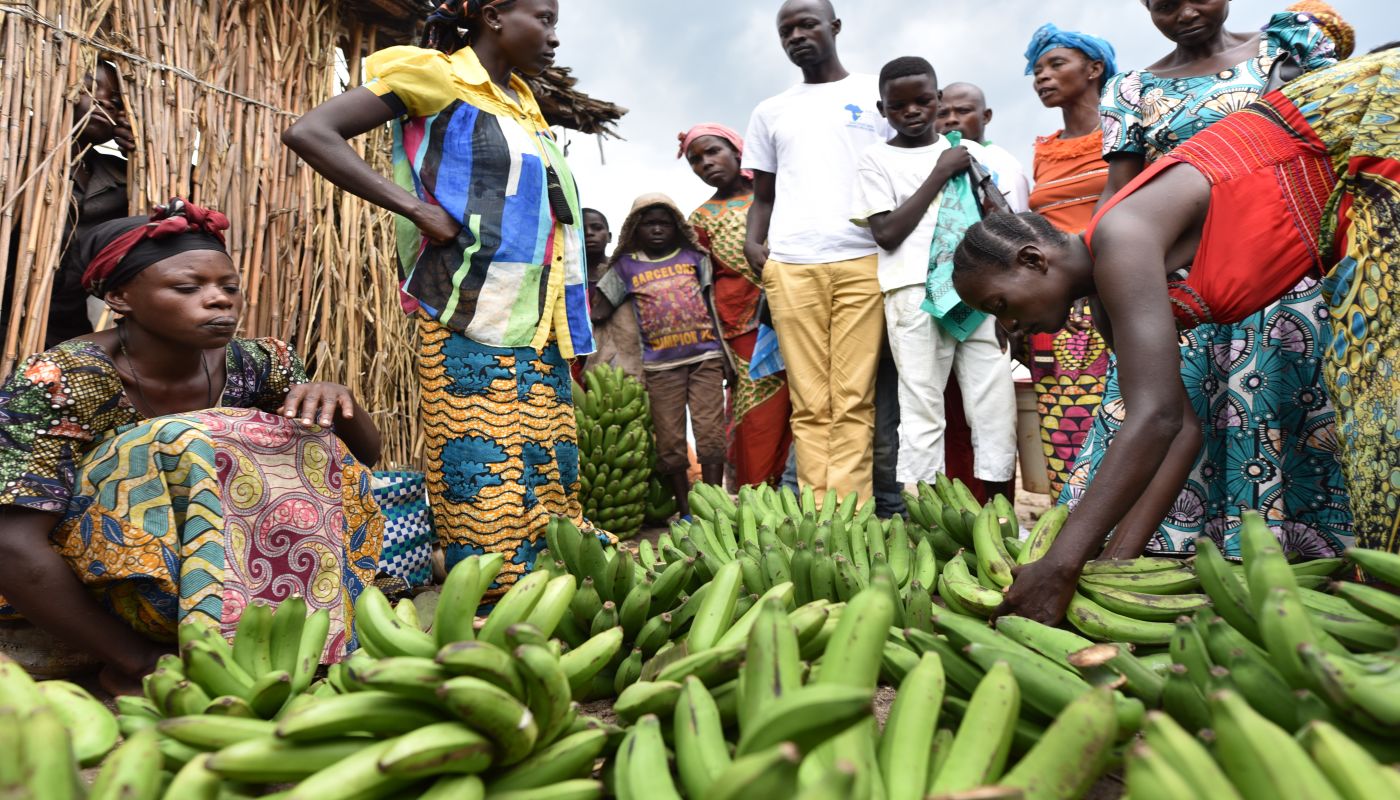
Landscape of The Republic of South Sudan
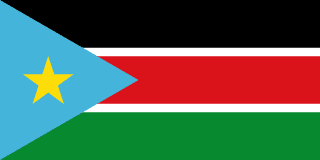
Flag of The Republic of South Sudan

The Republic of South Sudan

Africa

Plagued by a tumultuous past of war and broken peace agreements, South Sudan only gained independence in 2011, making it one of the youngest countries in the world. It is known for its rich biodiversity, large oil reserves, and vast humanitarian needs. In 2017, the country faced the worst humanitarian crisis since 1945 with over 30% of the population at risk of starvation and over 50% in desperate need of aid.1 1 https://www.britannica.com/place/South-Sudan#toc1779607main

What would you like to learn about in The Republic of South Sudan?

Select a section to explore the country where nonprofits are creating positive change.

About The Republic of South Sudan

Egypt attempted to colonize the region of southern Sudan by establishing the province of Equatoria in the 1870s. Islamic Mahdist revolutionaries overran the region in 1885, but in 1898 a British force was able to overthrow the Mahdist regime. An Anglo-Egyptian Sudan was established the following year with Equatoria being the southernmost of its eight provinces. The isolated region was largely left to itself over the following decades, but Christian missionaries converted much of the population and facilitated the spread of English. When Sudan gained its independence in 1956, it was with the understanding that the southerners would be able to participate fully in the political system. When the Arab Khartoum government reneged on its promises, a mutiny began that led to two prolonged periods of conflict (1955-1972 and 1983-2005) in which perhaps 2.5 million people died - mostly civilians - due to starvation and drought. Ongoing peace talks finally resulted in a Comprehensive Peace Agreement, signed in January 2005. As part of this agreement the south was granted a six-year period of autonomy to be followed by a referendum on final status. The result of this referendum, held in January 2011, was a vote of 98% in favor of secession. Independence was attained on 9 July 2011. Since independence South Sudan has struggled with good governance and nation building and has attempted to control rebel militia groups operating in its territory. Economic conditions have deteriorated since January 2012 when the government decided to shut down oil production following bilateral disagreements with Sudan.

Quick Facts

Population
11,090,104 (July 2013 est.)
Area
644,329 sq km
ISO Code
SS
Continent
Africa
Government
republic
Active Causes
12
View all countries in Africa

Geography & Environment

Climate

hot with seasonal rainfall influenced by the annual shift of the Inter-Tropical Convergence Zone; rainfall is heaviest in the upland areas of the south and diminishes to the north

Terrain

the terrain gradually rises from plains in the north and center to southern highlands along the border with Uganda and Kenya; the White Nile, flowing north out of the uplands of Central Africa, is the...

Natural Resources

hydropower, fertile agricultural land, gold, diamonds, petroleum, hardwoods, limestone, iron ore, copper, chromium ore, zinc, tungsten, mica, silver

People & Society

27%
Literacy Rate
18% of total population (2011)
Total Urban Population

Languages

English (official), Arabic (includes Juba and Sudanese variants) (official), regional languages include Dinka, Nuer, Bari, Zande, Shilluk

Religions

animist, Christian

Economy

$1,000
GDP per Capita (PPP)
50.6% (2009)
Below Poverty Line

Economic Overview

Industry and infrastructure in landlocked South Sudan are severely underdeveloped and poverty is widespread, following several decades of civil war with Sudan. Subsistence agriculture provides a living for the vast majority of the population. Property rights are tentative and price signals are missing because markets are not well organized. South Sudan has little infrastructure - just 60 km of paved roads. Electricity is produced mostly by costly diesel generators and running water is scarce. The government spends large sums of money to maintain a big army; delays in paying salaries have perio...

Causes in The Republic of South Sudan

Environment

South Sudan faces many environmental concerns in light of sustained conflict and desperation within the nation. The largest threats to the health of the environment include soil degradation due to irresponsible agricultural practices and pollution from the oil industry.1 With an economy dependent on oil revenues and a populace dependent on agriculture for jobs and nutritional sustenance, South Sudan is particularly vulnerable to these types of environmental hazards.1

Family

Because of violent conflict, in 2017 there were over 2 million people internally displaced in South Sudan and another 1 million who were living in refugee camps in surrounding nations.1 The war has also caused many families to be separated, and there are a large number of orphans and abandoned children.2 Only 4% of women have access to contraceptives, which this contributes to large family sizes. Every woman gives birth to an average of five children.3

Education

Nearly 75% of children are out of school, and this, combined with poor education funding, makes South Sudan among one of the worst places in the world for a child to receive an education. Only 10% of the population completes primary school which makes for an adult literacy rate of 27%.1 There are also gender discrepancies regarding access to education with only 33% of those in school being girls.1 The large amount of displaced and refugee children make it difficult for all to receive education, and there is also a severe lack of qualified teachers. Religious bodies are often instrumental in educating children, but even this is limited because of continued conflict.2

Poverty

Approximately 50% of South Sudan’s population, or 6 million people, live below the poverty line.1 Corruption and conflict stop the government from providing the most basic needs to its citizens, and this leaves many families without adequate food or water supplies and safe living conditions.2 Humanitarian aid is desperately needed in South Sudan to curb the effects starvation could cause, but many international workers are barred from entering the nation.3

Religion

Most residents of South Sudan practice traditional tribal religions, but a minority identify with Christianity. Traditional religions, which approximately 85% of South Sudanese citizens practice, typically involve multiple gods of different hierarchical standings.1 Although freedom of religion is promised in the constitution, there are reports of religious persecution with many militant groups targeting places of worship.2

Clean Water

Limited access to clean water and sanitation services is a pressing problem in South Sudan. 32% of the population does not have access to drinking water.1 This has serious implications for the health and development of the citizens of South Sudan, particularly children. Only 15% of South Sudanese people are able to obtain sanitary latrines.2 After decades of war, the internal infrastructures of South Sudan were destroyed, making it extremely difficult to provide access to clean water and adequate sanitation.

Economy

Years of civil conflict have devastated South Sudan’s economy. Plagued with high inflation, widespread poverty, and dramatic income disparity, the South Sudanese government has many obstacles to overcome.1 South Sudan is the most oil-dependent economy in the world. In fact, oil comprises roughly 60% of the country’s GDP. Despite the large oil revenues, 80% of the workforce is employed in the agricultural sector, mostly in subsistence farming.2 High levels of political instability continually undermine economic growth and the development of a functional infrastructure that promotes business.3

Government

South Sudan is one of the youngest countries in the world, and independence was obtained in 2011 from Sudan through an internationally brokered peace agreement.1 This ended one of the longest civil wars in African history, which claimed 1.5 million lives. However, this did not end the war for South Sudan, as it then plunged into an ongoing civil war.2 This conflict has made it difficult for the government to provide services, stay clear of corruption, and remain functional. There is no accountability, little voter participation, and government officials are known to embezzle money.3

Health

Faced with widespread poverty, a relatively new government without a strong foundation, and a populace struggling to meet their own most basic needs, health conditions are considered among the worst in the world.1 In 2017, the country faced one of the worst famines in modern times with over one-third of the population experiencing severe hunger. This food shortage was exacerbated because some humanitarian aid organizations were not allowed into the country and there was poor control of where resources went.2 There is high prevalence of cholera and HIV/AIDS, and the life expectancy is only 58 years.3

Children

South Sudan is one of the worst countries in the world for children to live in. Because of prolonged conflict, over 1 million children have fled the country and another million have been internally displaced.1 Children are most susceptible to food insecurity—and hundreds of thousands of children had severe acute malnutrition in 2017. Boys are at risk for becoming child soldiers, and girls are often raped, forced into marriages, or abused.2 Over 50% of girls are married before age 18.3 Hunger, poverty, and poor health facilities are so widespread throughout the nation that South Sudan has one of the highest child mortality rates in the world with 160 out of every 1,000 children dying before age 5.4

Human Rights

Freedom of the press is not protected, and many people speaking out in opposition to the government are subject to arrest or violence.1 Although the transitional constitution provides for freedom of association and assembly, this is not upheld. Those who speak out against the government or violent opposition groups can be unfairly harassed. The government is also hostile towards humanitarian workers, and in 2015, dozens of international aid workers went missing or were killed.1 Prison conditions are poor, with little food or sanitation structures for inmates who are often not given fair trials. Violence against women and girls is common, and often, they are raped based on their ethnicity.2

Animals

South Sudan is home to magnificent animals and safari lands. However, many of these animals live on land that is not protected and are therefore susceptible to poachers and the effects of urbanization. The new government is struggling to create sustainable policies to protect animals.1 Giraffes, hippopotamuses, warthogs, buffalo, and zebras are common, but elephants are dwindling in numbers.2

Nonprofits Working in The Republic of South Sudan

Discover organizations making a difference in The Republic of South Sudan

Make Your Impact Today

Discover causes you care about and support the nonprofits making a difference in communities around the world.

Are you a nonprofit? Join Project World Impact for free

Join Us Free