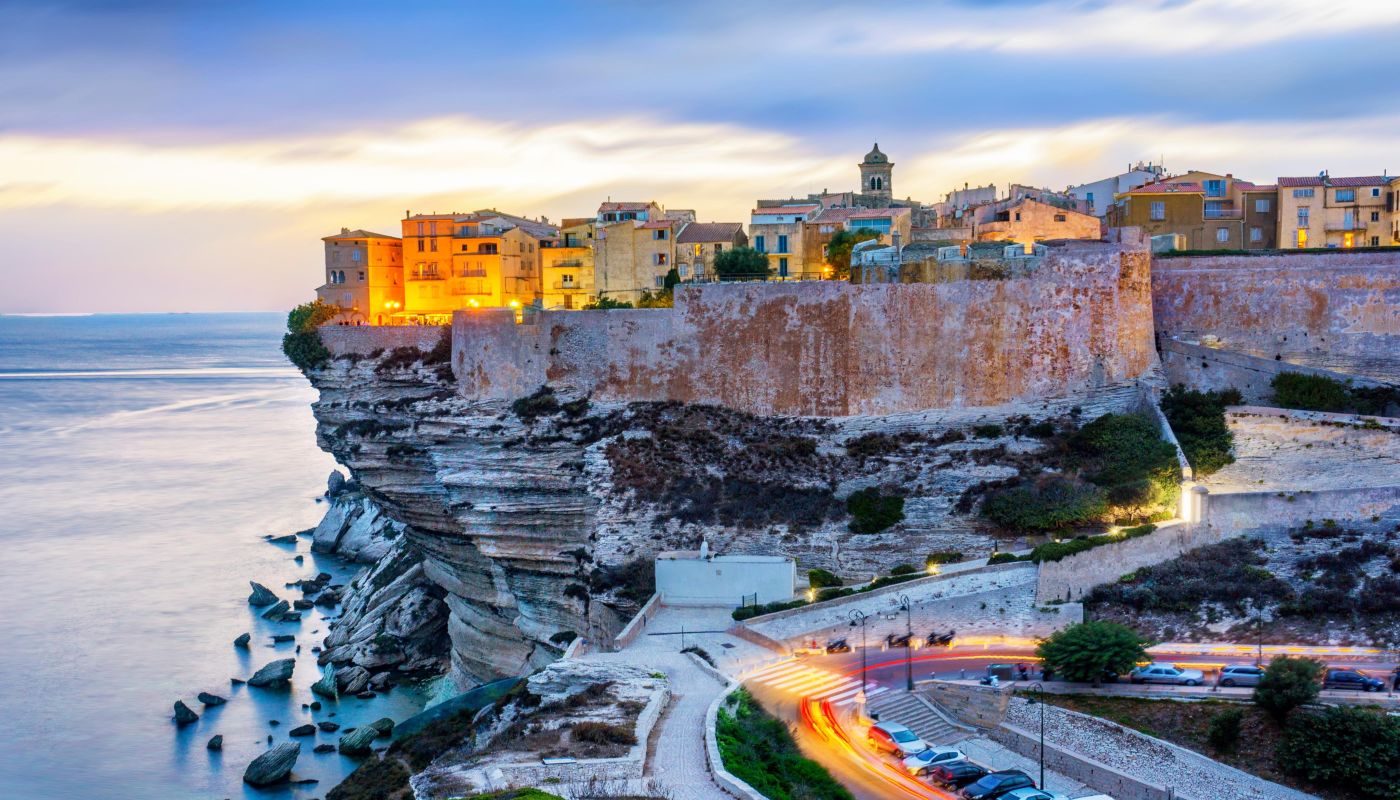
Landscape of France
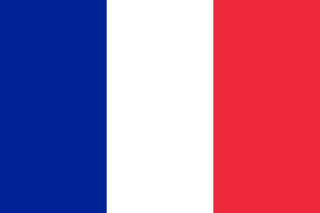
Flag of France

France

Europe

France has a thriving tourism industry that accounts for a great deal of its GDP,1 and the nation plays a major role in several international organizations, including the United Nations and NATO.2 The French healthcare system is known to supply high-quality care via the nation’s social security system; France has the highest life expectancy in Europe at 82 years.3 Children are protected under French social services, and families can be given court-ordered counseling, or financial assistance, if deemed appropriate by the courts.4 The influx of refugees, asylum-seekers and migrants has caused a growth in the Muslim population in France, bringing with it social and political debate.5 1 https://www.statista.com/statistics/644772/direct-travel-and-tourism-gdp-contribution-france/ 2 https://www.cia.gov/library/publications/the-world-factbook/geos/fr.html 3 http://www.euro.who.int/__data/assets/pdf_file/0003/355980/Health-Profile-France-Eng.pdf?ua=1 4 https://www.loc.gov/law/help/child-rights/france.php 5 http://www.pewresearch.org/fact-tank/2017/11/29/5-facts-about-the-muslim-population-in-europe/

What would you like to learn about in France?

Select a section to explore the country where nonprofits are creating positive change.

About France

France today is one of the most modern countries in the world and is a leader among European nations. It plays an influential global role as a permanent member of the United Nations Security Council, NATO, the G-8, the G-20, the EU and other multilateral organizations. France rejoined NATO's integrated military command structure in 2009, reversing de Gaulle's 1966 decision to take French forces out of NATO. Since 1958, it has constructed a hybrid presidential-parliamentary governing system resistant to the instabilities experienced in earlier, more purely parliamentary administrations. In recent decades, its reconciliation and cooperation with Germany have proved central to the economic integration of Europe, including the introduction of a common currency, the euro, in January 1999. In the early 21st century, five French overseas entities - French Guiana, Guadeloupe, Martinique, Mayotte, and Reunion - became French regions and were made part of France proper.

Quick Facts

Population
65,951,611 (July 2013 est.)
Area
643,801 sq km; 551,500 sq km (metropolitan France)
ISO Code
FR
Continent
Europe
Government
republic
Active Causes
12
View all countries in Europe

Geography & Environment

Environmental Issues

some forest damage from acid rain; air pollution from industrial and vehicle emissions; water pollution from urban wastes, agricultural runoff

People & Society

81.56 years
Avg. Life Expectancy
99%
Literacy Rate
85% of total population (2010)
Total Urban Population

Languages

French (official) 100%, rapidly declining regional dialects and languages (Provencal, Breton, Alsatian, Corsican, Catalan, Basque, Flemish)

Religions

Roman Catholic 83%-88%, Protestant 2%, Jewish 1%, Muslim 5%-10%, unaffiliated 4%

Health Expenditure

11.9% of GDP (2010) of GDP

Education Expenditure

5.9% of GDP (2009) of GDP

Economy

$36,100
GDP per Capita (PPP)
10.3%
Unemployment Rate
7.8% (2010)
Below Poverty Line

Economic Overview

The French economy is diversified across all sectors. The government has partially or fully privatized many large companies, including Air France, France Telecom, Renault, and Thales. However, the government maintains a strong presence in some sectors, particularly power, public transport, and defense industries. With at least 79 million foreign tourists per year, France is the most visited country in the world and maintains the third largest income in the world from tourism. France's leaders remain committed to a capitalism in which they maintain social equity by means of laws, tax policies,...

Causes in France

Environment

As the country’s economy has turned more toward service industry rather than industrial production, greenhouse gas emissions and other forms of industrial pollution have lessened since 2008.1 However, as a result of urban areas becoming more and more populated, emissions from transportation have not lessened.2 Waste per capita has increased by 25% since the late 1990s.3 Forests in France have suffered some damage from acid rain.4

Family

Married couples in France account for 43.8 percent of the population while 40.6 percent are single, the remaining portion of the population is divorced or widowed.1 French social services offer financial allowances for families with one or more children.2 In addition to such allowances, all women are entitled to maternity leave before and after the birth of the child.3 The length of the mother’s leave is extended in accordance to their second and third children, and their position is held until their return.4 During the maternity leave the mother receives benefits to supplement the loss of income, and often receives additional financial support from her employer.5

Human Rights

France introduced counterterrorism policies following the terrorist attacks in November of 2015.1 In 2017, the national state of emergency officially ended, but some policies from the former state of emergency protocol remained. Remaining policies include police-run anti-terrorism identity checks; studies performed by France’s Human Rights Consultative Commission showed that young males from visible minority groups are 20 percent more likely to be pulled aside for identity checks.2 The Human Rights Watch recommends that France implement “stop forms” to monitor and document the search process as a safeguard.3 Other reported human rights violations in France include violence against religious and sexual minorities.4

Education

The French school system is divided into three levels: primary school, secondary school and high school.1 The first two stages are free and compulsory between the ages of 6 and 16.2 5.5 percent of the nation’s GDP is spent on education annually.3 2.3 million people attend a post-secondary institution at a cost of a few hundred euros annually.4 The higher education system encompasses several tracks, including university, post-graduate and vocational.5

Poverty

Nearly 25 percent of young people ages 15–24 are unemployed, and an estimated 14 percent of the population lives below the poverty line, making less than 60 percent of the national median income.1 14 percent of the population falls below the poverty line.2

Religion

In 1978, the collection of data pertaining to a person’s race, religion or political stance became prohibited.1 As a result, data on religious affiliation is difficult to come by. A majority of the French population identifies as Roman Catholic — 63–66 percent. The remaining population identifies as Jewish, Buddhist, Other or Muslim, which accounts for 7–9 percent of the population.2 The growth of the Muslim faith in France, due to the influx of refugees and migrants, in part, is a source of political and social conflict in the nation.3

Clean Water

According to the Central Intelligence Agency’s World Factbook, 100% of French citizens have access to a clean water supply.1

Economy

After the 2008 global financial crisis, the French budget deficit went from 3.3 percent of the GDP to 7.5 percent, today it sits at 2.6 percent, and the public debt is 96.1 percent of the GDP.1 Recently, France’s president released a number of reforms to improve the nation’s market and stimulate economic growth, one of which expedited the process by which employers are able to hire and fire employees.2 In contrast to other economically comparable nations, France has a high unemployment rate of 9.5 percent, ranking the nation at 135th in the world.3 France’s incredibly lucrative tourism industry buoys the economy. It is the most visited country in the world, with 83 million tourists visiting annually, greatly contributing to the nation’s GDP4

Government

France is a constitutional republic with both a president and a presidentially appointed prime minister, and plays a leading role in many international organizations such as the United Nations and NATO.1 There are three branches of government: executive, legislative, and judicial.2 France is also responsible for five overseas entities including French Guiana, Reunion, Guadeloupe, Mayotte and Martinique.3 The government is extremely centralized and employs 21% of the French population.4The French government enjoys low levels of corruption, and Transparency International ranks France in the 89th percentile for their control of corruption, and gives them a score of 70 out of 100 for government transparency.5

Health

French healthcare is governed primarily by the social security system. This system provides family allowances for children and people with disabilities — with no stipulation of employment — as well as retirement benefits and unemployment allowances.1 Medical expenses and hospital stays are largely covered by the national health system, as are some medications.2 Overall, the system is known to readily supply high-quality healthcare, and the nation has the highest life expectancy in the European Union — 82 years.3 The two most common causes of death are cancer (28 percent) and cardiovascular disease (25) percent.4

Children

As a member of the United Nations, France ascribes to all UN policies protecting children’s rights, resulting in a relatively safe and secure social climate for the country’s youth.1 All French children are under a series of preventative health services including regular check ups, vaccinations, health education and examinations. Social workers are sent to the homes of families who do not bring their children to the mandatory appointments, but after a child turns six, the schools are responsible for ensuring the child meets subsequent benchmarks.2 In addition to social services for children in poor living situations, courts may order family counseling, or ascribe financial aid, per the family unit’s specific needs.3 Despite numerous assurances for children who are French citizens, the same benefits are not typically afforded to asylum-seeking minors.4

Animals

As a member of the European Union, France has legislation in place for the protection of animals.1 The World Animal Protection Agency rates France as a C level nation in terms of efforts to prevent animal abuse, as the nation has implemented policies yet not all are strictly enforced and tracked.2 The World Organization for Animal Health is headquartered in Paris.3

Nonprofits Working in France

Discover organizations making a difference in France

Make Your Impact Today

Discover causes you care about and support the nonprofits making a difference in communities around the world.

Are you a nonprofit? Join Project World Impact for free

Join Us Free