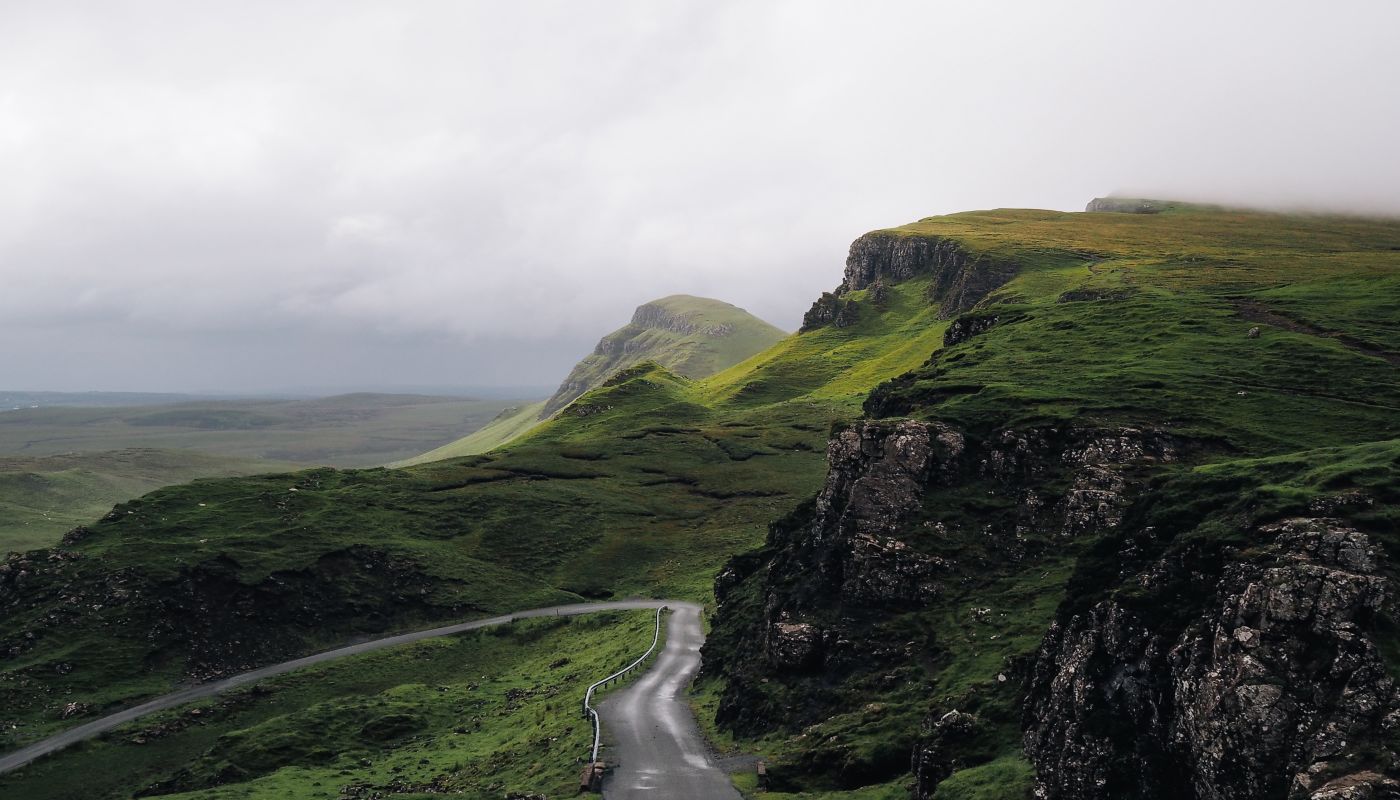
Landscape of Ireland
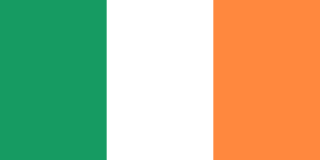
Flag of Ireland

Ireland

Europe

The Irish economic and social systems are still recovering from the global economic crash in 2007. The economy has rebounded fairly well, due to flexible trade laws and competitive tax policy. Domestic violence and alcoholism are salient issues in Irish culture, but both are difficult to collect accurate data on due to the stigma related to each. Poverty and unemployment remain high for a developed country, but continue to decrease since their peak in 2008.1 1 https://www.cia.gov/library/publications/the-world-factbook/geos/ei.html

What would you like to learn about in Ireland?

Select a section to explore the country where nonprofits are creating positive change.

About Ireland

Celtic tribes arrived on the island between 600 and 150 B.C. Invasions by Norsemen that began in the late 8th century were finally ended when King Brian BORU defeated the Danes in 1014. English invasions began in the 12th century and set off more than seven centuries of Anglo-Irish struggle marked by fierce rebellions and harsh repressions. A failed 1916 Easter Monday Rebellion touched off several years of guerrilla warfare that in 1921 resulted in independence from the UK for 26 southern counties; six northern (Ulster) counties remained part of the UK. In 1949, Ireland withdrew from the British Commonwealth; it joined the European Community in 1973. Irish governments have sought the peaceful unification of Ireland and have cooperated with Britain against terrorist groups. A peace settlement for Northern Ireland is gradually being implemented despite some difficulties. In 2006, the Irish and British governments developed and began to implement the St. Andrews Agreement, building on the Good Friday Agreement approved in 1998.

Quick Facts

Population
4,775,982 (July 2013 est.)
Area
70,273 sq km
ISO Code
IE
Continent
Europe
Government
republic, parliamentary democracy
Active Causes
12
View all countries in Europe

Geography & Environment

Climate

temperate maritime; modified by North Atlantic Current; mild winters, cool summers; consistently humid; overcast about half the time

Terrain

mostly level to rolling interior plain surrounded by rugged hills and low mountains; sea cliffs on west coast

Natural Resources

natural gas, peat, copper, lead, zinc, silver, barite, gypsum, limestone, dolomite

Environmental Issues

water pollution, especially of lakes, from agricultural runoff

People & Society

80.44 years
Avg. Life Expectancy
99%
Literacy Rate
62% of total population (2010)
Total Urban Population

Languages

English (official, the language generally used), Irish (Gaelic or Gaeilge) (official, spoken mainly in areas along the western coast)

Religions

Roman Catholic 87.4%, Church of Ireland 2.9%, other Christian 1.9%, other 2.1%, unspecified 1.5%, none 4.2% (2006 census)

Health Expenditure

9.2% of GDP (2010) of GDP

Education Expenditure

6.5% of GDP (2009) of GDP

Economy

$42,600
GDP per Capita (PPP)
14.7%
Unemployment Rate
5.5% (2009)
Below Poverty Line

Economic Overview

Ireland is a small, modern, trade-dependent economy. Ireland was among the initial group of 12 EU nations that began circulating the euro on 1 January 2002. GDP growth averaged 6% in 1995-2007, but economic activity has dropped sharply since the onset of the world financial crisis, with GDP falling by over 3% in 2008, nearly 7% in 2009, and less than 1% in 2010. Ireland entered into a recession in 2008 for the first time in more than a decade, with the subsequent collapse of its domestic property and construction markets. Property prices rose more rapidly in Ireland in the decade up to 2007 th...

Causes in Ireland

Environment

Ireland enjoys rich natural water resources and considerably better air quality than its EU neighbors.1 However, Ireland continues to experience the effects of climate change, such as a reduction in the number of frost days and the length of frost season.3 Additionally, Ireland has seen a decrease in annual rainfall in Northern and Western regions of the country along with a growing annual temperature. Six of the ten warmest years in Ireland’s history have occurred since 1990.2 The government is supporting the EU initiative to ban certain chemicals used in agriculture that have been proven to harm the bee population.3

Family

Domestic abuse and child abuse are serious concerns in Ireland. The UN has identified Irish policy on domestic violence as inadequate and ineffective in the protection of those affected by domestic abuse.1 Violence against women is also a prevalent problem in Ireland; around 17,000 women called the Women’s Aid hotline in 2016 and reported abuse, and a further 3,800 cases of child abuse were reported to the company.2 Alcoholism also negatively affected many children and families in Ireland. An estimated 1.35 million Irish are harmful drinkers, and about 75% of alcohol consumption is binge drinking.3

Human Rights

Primary human rights concerns in Ireland include poor prison conditions, gender inequality in the workplace, discrimination towards immigrants, domestic abuse, and homelessness. The US Department of State also reports discrimination against minority communities such as Traveller and Romani.1 Violence against women is also a prevalent problem in Ireland, and 1 in 4 women has experienced sexual assault in her lifetime. Women’s Aid has expanded their hotline services due to high demand.2 While most prisons in the country meet international standards, some prisons were found to be without proper sanitation facilities, resulting in the use of chamber pots by the prisoners and detainees. In recent years, there have also been several reports of societal discrimination and violence against immigrants and ethnic minorities, particularly the country’s African and indigenous populations.3

Education

Ireland’s primary school enrollment rate is currently at 95%1 and the adult literacy rate is at 99%.2 Ireland attracts more international students than most other countries; 14% of all master’s and 23% of all doctorate students are international. The government is working to decrease the disparity between men and women in education — specifically in science, technology, engineering, and mathematics. In 2014, 22% of men studied science compared to only 11% of women.3

Poverty

Approximately 8.2% of Ireland’s population lives below the poverty line, and the country’s unemployment rate is at 8%.1 Over 750,000 people in Ireland are currently living in poverty, 220,000 of which are children. 18% of the adults living in poverty are employed. One in five children live in households with incomes below the poverty line. The poverty income is 60% of the median income.2

Religion

Ireland’s religious population is largely Roman Catholic, and 78% of the population belongs to the Catholic church. Other religions represented in Ireland include the Church of Ireland (2.7%), other Christian denominations (2.7%), and Islam (1.1%).1 Ireland’s constitution and other laws protect the right to religious freedom. However, in recent years there have been some reports of societal religious discrimination, such as frustration with the wording of religious questions on the census.2

Clean Water

Approximately 98% of Ireland’s population has access to clean drinking water and around 90% have improved sanitation infrastructure.1 An estimated 40% of Ireland’s water supply leaks out of delivery pipes, resulting in expensive water waste that damages Ireland’s long-term water sustainability.2 Several counties in Ireland have received boil water notices recently, meaning that their tap water must be boiled before it is safe to drink. Citizens are calling for Irish Water, the country’s water supply company, to improve their water management and purification methods.3 The Environmental Protection Agency has pushed for Irish Water to inform its consumers of the potentially carcinogenic qualities of their water due to exposure to chemicals in transport, but they have refused. An estimated 400,000 people are drinking the contaminated water.4

Economy

Ireland has a modern, trade-dependent economy. The once-dominant agricultural sector has now been overtaken by industry and service. Ireland exports mainly to the US, the UK, and Belgium, and imports from the UK, US, and France. The unemployment rate is currently 8%, and 8.2% of the population live below the poverty line.1 Ireland has few barriers to international trade and investment and the labor market remains flexible. Ireland’s efficient business regulations and strict anti-corruption laws have served to stimulate the country’s economic growth despite the 2007 recession.2 Transparency International ranks Ireland 19th out of 176 countries for corruption in the government, and Ireland’s own people score their government 73 of 100 for perceived corruption.3

Government

Ireland is a parliamentary republic. Ireland gained its independence from the United Kingdom in 1921 and the country’s legal system is largely based on the English model, with some modifications. Suffrage is universal for anyone over 18.1 Ireland is a member of the Eurozone and is highly trade-dependent.2 Ireland’s government has strict anti-corruption laws and Transparency International ranks the Irish government 19th out of 176 countries for the government’s effective handling and elimination of corruption.3

Health

The average life expectancy in Ireland is 81 years of age.1 The country’s under 5 mortality rate is low at 3.6 deaths per 1,000 live births, as is the country's maternal mortality rate at 8 deaths per 100,000 births. Raised blood pressure, obesity, and tobacco use are all health risk factors for adults in the country.2 Alcohol abuse is also a significant health concern in Ireland. 88 deaths each month are attributed to alcohol, as well as over 1,200 cases of cancer each year.3 Ireland has a public government-funded healthcare system.4

Children

Child abuse is a significant concern in Ireland, and 7% of child abuse cases in the country involve victims under the age of 4. More than 55% of the sexual and physical abuse against young girls is perpetrated by family members.1 In 2017, Irish policymakers implemented a mandatory reporting law for suspected child abuse.2 Education is compulsory for children in Ireland from age 6 to age 16,3 and the primary school enrollment rate is currently at 95%.4 Ireland’s under five mortality rate is very low at just 3.6 deaths per 1,000 live births.5

Animals

Ireland’s government has set aside multiple protected habitats and reserves in order to protect the native mink, voles, ducks, geese and 190 other types of waterfowl. Ireland also boasts three “Global Geoparks,” parks recognized by UNESCO for geological and historical value.1 The National Parks and Wildlife Service is also involved in the protection of the grasslands and marshes crucial to the variety of birds living in the country.2

Nonprofits Working in Ireland

Discover organizations making a difference in Ireland

Make Your Impact Today

Discover causes you care about and support the nonprofits making a difference in communities around the world.

Are you a nonprofit? Join Project World Impact for free

Join Us Free