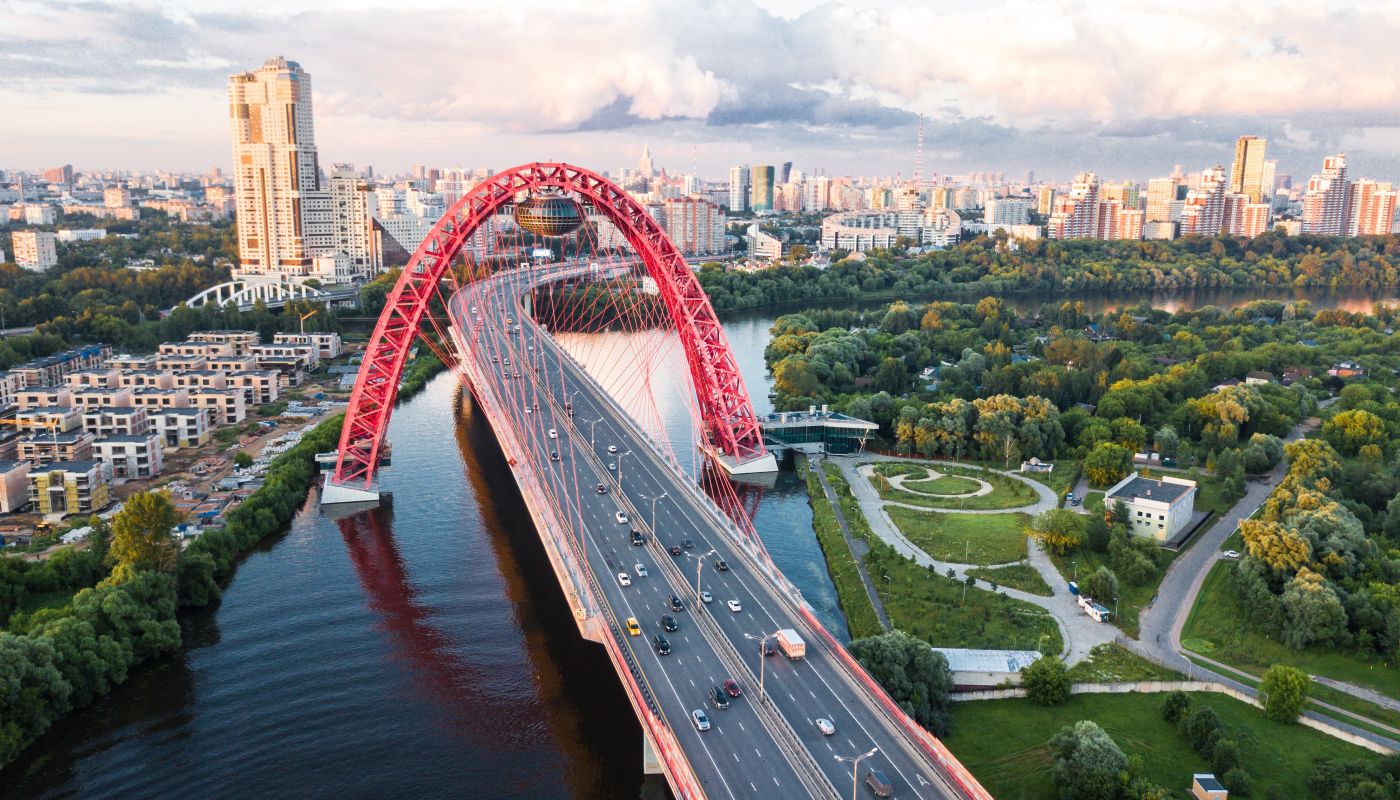
Landscape of Russia
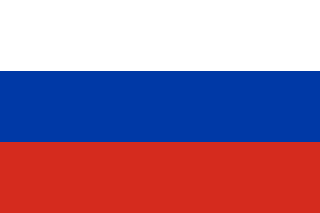
Flag of Russia

Russia

Asia

Russia emerged as a federation after the collapse of the Soviet Union in 1991. Under the tenure of President Vladimir Putin, the country has experienced widespread corruption and increased government restrictions.1 Citizens do not enjoy basic rights like freedom of speech, religion, or assembly, and the country’s vulnerable population of poor and disabled citizens do not receive proper government aid.2 The country has experienced economic decline since 2015 due to fluctuating market prices on its main exports of oil, metals, and agricultural products.1 1 https://www.cia.gov/library/publications/resources/the-world-factbook/geos/rs.html 2 https://www.hrw.org/world-report/2017/country-chapters/russia

What would you like to learn about in Russia?

Select a section to explore the country where nonprofits are creating positive change.

About Russia

Founded in the 12th century, the Principality of Muscovy, was able to emerge from over 200 years of Mongol domination (13th-15th centuries) and to gradually conquer and absorb surrounding principalities. In the early 17th century, a new Romanov Dynasty continued this policy of expansion across Siberia to the Pacific. Under PETER I (ruled 1682-1725), hegemony was extended to the Baltic Sea and the country was renamed the Russian Empire. During the 19th century, more territorial acquisitions were made in Europe and Asia. Defeat in the Russo-Japanese War of 1904-05 contributed to the Revolution of 1905, which resulted in the formation of a parliament and other reforms. Repeated devastating defeats of the Russian army in World War I led to widespread rioting in the major cities of the Russian Empire and to the overthrow in 1917 of the imperial household. The communists under Vladimir LENIN seized power soon after and formed the USSR. The brutal rule of Iosif STALIN (1928-53) strengthened communist rule and Russian dominance of the Soviet Union at a cost of tens of millions of lives. The Soviet economy and society stagnated in the following decades until General Secretary Mikhail GORBACHEV (1985-91) introduced glasnost (openness) and perestroika (restructuring) in an attempt to modernize communism, but his initiatives inadvertently released forces that by December 1991 splintered the USSR into Russia and 14 other independent republics. Since then, Russia has shifted its post-Soviet democratic ambitions in favor of a centralized semi-authoritarian state in which the leadership seeks to legitimize its rule through managed national elections, populist appeals by President PUTIN, and continued economic growth. Russia has severely disabled a Chechen rebel movement, although violence still occurs throughout the North Caucasus.

Quick Facts

Population
142,500,482 (July 2013 est.)
Area
17,098,242 sq km
ISO Code
RU
Continent
Asia
Government
federation
Active Causes
12
View all countries in Asia

Geography & Environment

Climate

ranges from steppes in the south through humid continental in much of European Russia; subarctic in Siberia to tundra climate in the polar north; winters vary from cool along Black Sea coast to frigid...

Terrain

broad plain with low hills west of Urals; vast coniferous forest and tundra in Siberia; uplands and mountains along southern border regions

Natural Resources

wide natural resource base including major deposits of oil, natural gas, coal, and many strategic minerals, reserves of rare earth elements, timber

Environmental Issues

air pollution from heavy industry, emissions of coal-fired electric plants, and transportation in major cities; industrial, municipal, and agricultural pollution of inland waterways and seacoasts; def...

People & Society

69.85 years
Avg. Life Expectancy
99.7%
Literacy Rate
73.8% of total population (2011)
Total Urban Population

Languages

Russian (official), many minority languages

Religions

Russian Orthodox 15-20%, Muslim 10-15%, other Christian 2% (2006 est.)

Health Expenditure

5.1% of GDP (2010) of GDP

Education Expenditure

4.1% of GDP (2008) of GDP

Economy

$18,000
GDP per Capita (PPP)
5.7%
Unemployment Rate
12.7% (2011)
Below Poverty Line

Economic Overview

Russia has undergone significant changes since the collapse of the Soviet Union, moving from a globally-isolated, centrally-planned economy to a more market-based and globally-integrated economy. Economic reforms in the 1990s privatized most industry, with notable exceptions in the energy and defense-related sectors. The protection of property rights is still weak and the private sector remains subject to heavy state interference. In 2011, Russia became the world's leading oil producer, surpassing Saudi Arabia; Russia is the second-largest producer of natural gas; Russia holds the world's larg...

Causes in Russia

Environment

Rising temperatures have caused drought and wildfires, damaging agricultural production in western Russia. In the far north, melting permafrost could alter river flows and divert water sources from several regions. Russia’s location near the Arctic Circle leaves it especially vulnerable to rising sea levels—it is reported to lose 468 square kilometers of land each year. Despite these noticeable effects, Russia’s leaders are hesitant to acknowledge the reality of climate change or contribute to world efforts to reduce carbon emissions.1

Family

Domestic abuse is a major problem in Russia, and over 600,000 women face abuse at home each year. Additionally, approximately 40 women die each day from injuries inflicted by husbands or domestic partners.1 In 2017, Parliament passed a law decriminalizing domestic abuse. Under the new law, abusers can only face criminal prosecution if they are repeat offenders.2

Human Rights

Freedom of speech and expression are often repressed in Russia, and any media that opposes the government is restricted. Human rights defenders, social activists, and anti-corruption proponents—as well as supporters of LGBT organizations—have faced prosecution and prison from the government.1 Domestic abuse is also a rampant problem throughout the country, especially since President Putin signed into law an act decriminalizing abuse.2 People with disabilities are treated poorly across society. Parents are encouraged to place disabled children into orphanages, and there are insufficient resources in place to provide special education for the disabled.1

Education

Russia’s education system is run by the state in an effort to ensure that education is free and available for all. General education is compulsory for all Russian children and takes 9 years to complete.1 Russia’s primary school enrollment rate is at 95%2 and the country’s adult literacy rate is at 99%.3 However, there is still inconsistency in the quality of education children receive based on whether they live in rural or urban areas, receive enough government funding, or have qualified teachers.1

Poverty

Due to an economic downturn, Russia saw an increase in poverty in 2016. 25% of companies cut salaries, dropping the average monthly salary by 8%. In turn, the country’s poverty rate rose to 15%. The central government has increased the amount of money it demands through taxation while decreasing the amount they give back out in aid to the population.1 Russia’s low minimum wage contributes to a large amount of working poor in the country—meaning families where at least one family member is employed but unable to make a livable wage. Impoverished families are also more likely to have multiple children, and 1 in 5 families living in poverty receives no assistance.2

Religion

Russia’s religious population is approximately 15-20% Russian Orthodox, 10-15% Muslim, and 2% non-Orthodox Christian, with the rest of the population not adhering to any religion.1 While Russia’s constitution technically protects the right to religious freedom, other laws and policies in the country undermine this right. Some religious groups are denied legal status in the country, and Jehovah's Witnesses have had their religious literature banned and have faced barriers in registering for legal status in the country. The government has prosecuted individuals in possession of banned literature or associated with illegal religious groups. Russia has also increased its oppression of some Muslims, especially in the recently annexed region of Crimea.2

Clean Water

Approximately 97% of Russia’s population has access to clean drinking water and 72% of the population has access to improved sanitation infrastructure.1 Russia’s water resources are equal to almost one-fourth of the globe’s resources. However, the the remote location of many water sources and outdated infrastructure make it difficult to transport to other areas of the country, leaving nearly 11 million people with substandard water access.2

Economy

Russia is one of the world’s top producers of oil and gas and a leading exporter of steel and aluminium. The country experienced economic downturns in 2014, 2015, and 2016 because of its dependence on fluctuating world commodity prices.1 The European Union has imposed damaging economic sanctions on Russia as a consequence of violating their ceasefire agreement with Ukraine.2 Corruption is pervasive at all levels of government, and economic growth is hindered by extreme government encroachment in the private sector.3 The country’s unemployment rate is currently at 5.3%.1

Government

Russia’s government is constitutionally a federation, with a civil law system and judicial review of legislative acts. In actuality, it is an authoritarian government with the majority of the power in the hands of President Vladimir Putin.1 Corruption is present at all levels of government. Political repression is common and oppositional politicians have been forcibly exiled.2 Legislation and the judiciary are subject to corruption, and officials reportedly coerced voters to keep the ruling United Russia party in power.3 The Russian government’s culture of corruption has discouraged international investment.4

Health

The average life expectancy in Russia is 70 years of age.1 Russia has over 20,000 deaths per year due to tuberculosis, and drug-resistant strains of TB are becoming more prevalent.2 Heart disease remains the leading causes of death in Russia, although noncommunicable diseases such as alcohol abuse, tobacco usage, and unhealthy diet are all significant threats to the population as well.3 Heavy drinking causes 25% of premature deaths in men under age 55 either through alcohol poisoning, liver damage, or fights.4 Estimates state that the amount of people in Russia living with HIV/AIDS could be anywhere from 850,000 to 1.5 million, and the rate continues to grow every year. The majority of people contract the disease through injecting drugs.5 While medical care in Russia is free for all citizens, the overall quality of their health care system is much lower than other developed countries. Russia’s healthcare system is in need of serious reform, and hospitals and healthcare facilities often provide substandard levels of care due to lack of funding, lack of technical and medical equipment, and inefficient organization.6

Children

Children’s rights on issues like health, education, labor exploitation, trafficking, and juvenile delinquency, remain crucial issues for legislators, governmental organizations, and NGOs in Russia. Child abuse continues to be a widespread problem in Russia, and there is little legislation to address this.1 A wide range of abuse is common in orphanages, especially for disabled children. 30% of all children born with disabilities are placed in orphanages as social workers pressure parents to surrender their care to the state. Parents are told that they will not be able to properly care for their disabled children, when in reality these children experience stunted development due to neglect in orphanages.2 In 2013, Russia banned U.S. adoption of Russian children, a controversial decision that halted the process of over 1,000 adoptions.3 Approximately 600,000 children live in Russian orphanages, although many of them actually have at least one living parent. Advocates are pushing for a shift in the way that children are treated, with the goal of giving parents resources and aid to care for their disabled children rather than placing them in orphanages.4

Animals

Russia is home to a wide variety of animals because its landscape changes drastically across the country. There are desert, arctic, and woodland regions that have a range of animals from foxes, bears, elk, antelope, and many species of birds.1 Several of the world’s rarest species live in east Russia, and the government has taken steps to conserve animals such as Amur tigers and leopards.2

Nonprofits Working in Russia

Discover organizations making a difference in Russia

Make Your Impact Today

Discover causes you care about and support the nonprofits making a difference in communities around the world.

Are you a nonprofit? Join Project World Impact for free

Join Us Free