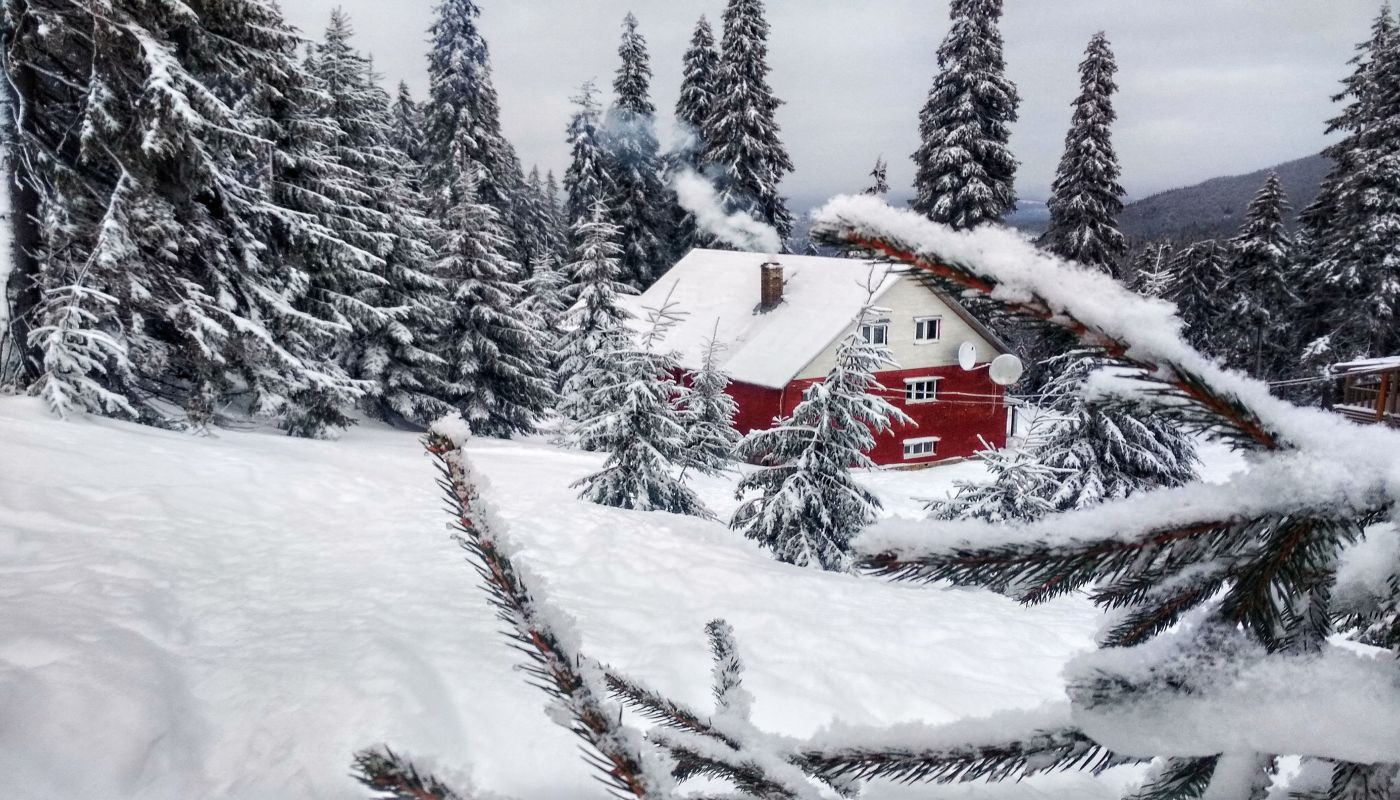
Landscape of Ukraine
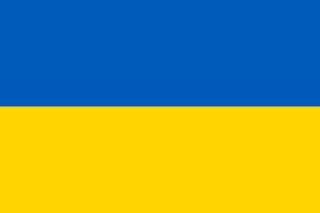
Flag of Ukraine

Ukraine

Europe

Since 1991, Ukraine’s movements towards independence since 1991 have been hindered by government corruption and conflict with neighboring Russia. Government sanctions affect basic freedoms like speech and religion, and bribes pervade social programs and health care.1 Since 2014, violent conflict with Russia has displaced over 1 million Ukrainians and killed or injured thousands of others.2 Government corruption and unstable infrastructure inhibit economic growth.3 1 https://www.theguardian.com/news/2015/feb/04/welcome-to-the-most-corrupt-nation-in-europe-ukraine 2 https://www.hrw.org/world-report/2017/country-chapters/ukraine 3 http://www.borgenmagazine.com/poverty-in-ukraine/

What would you like to learn about in Ukraine?

Select a section to explore the country where nonprofits are creating positive change.

About Ukraine

Ukraine was the center of the first eastern Slavic state, Kyivan Rus, which during the 10th and 11th centuries was the largest and most powerful state in Europe. Weakened by internecine quarrels and Mongol invasions, Kyivan Rus was incorporated into the Grand Duchy of Lithuania and eventually into the Polish-Lithuanian Commonwealth. The cultural and religious legacy of Kyivan Rus laid the foundation for Ukrainian nationalism through subsequent centuries. A new Ukrainian state, the Cossack Hetmanate, was established during the mid-17th century after an uprising against the Poles. Despite continuous Muscovite pressure, the Hetmanate managed to remain autonomous for well over 100 years. During the latter part of the 18th century, most Ukrainian ethnographic territory was absorbed by the Russian Empire. Following the collapse of czarist Russia in 1917, Ukraine was able to achieve a short-lived period of independence (1917-20), but was reconquered and forced to endure a brutal Soviet rule that engineered two forced famines (1921-22 and 1932-33) in which over 8 million died. In World War II, German and Soviet armies were responsible for some 7 to 8 million more deaths. Although final independence for Ukraine was achieved in 1991 with the dissolution of the USSR, democracy and prosperity remained elusive as the legacy of state control and endemic corruption stalled efforts at economic reform, privatization, and civil liberties. A peaceful mass protest "Orange Revolution" in the closing months of 2004 forced the authorities to overturn a rigged presidential election and to allow a new internationally monitored vote that swept into power a reformist slate under Viktor YUSHCHENKO. Subsequent internal squabbles in the YUSHCHENKO camp allowed his rival Viktor YANUKOVYCH to stage a comeback in parliamentary elections and become prime minister in August of 2006. An early legislative election, brought on by a political crisis in the spring of 2007, saw Yuliya TYMOSHENKO, as head of an "Orange" coalition, installed as a new prime minister in December 2007. Viktor YANUKOVUYCH was elected president in a February 2010 run-off election that observers assessed as meeting most international standards. The following month, Ukraine's parliament, the Rada, approved a vote of no-confidence prompting Yuliya TYMOSHENKO to resign from her post as prime minister. In October 2012, Ukraine held Rada elections, widely criticized by Western observers as flawed due to use of government resources to favor ruling party candidates, interference with media access, and harassment of opposition candidates.

Quick Facts

Population
44,573,205 (July 2013 est.)
Area
603,550 sq km
ISO Code
UA
Continent
Europe
Government
republic
Active Causes
12
View all countries in Europe

Geography & Environment

Climate

temperate continental; Mediterranean only on the southern Crimean coast; precipitation disproportionately distributed, highest in west and north, lesser in east and southeast; winters vary from cool a...

Terrain

most of Ukraine consists of fertile plains (steppes) and plateaus, mountains being found only in the west (the Carpathians), and in the Crimean Peninsula in the extreme south

Natural Resources

iron ore, coal, manganese, natural gas, oil, salt, sulfur, graphite, titanium, magnesium, kaolin, nickel, mercury, timber, arable land

Environmental Issues

inadequate supplies of potable water; air and water pollution; deforestation; radiation contamination in the northeast from 1986 accident at Chornobyl' Nuclear Power Plant

People & Society

68.93 years
Avg. Life Expectancy
99.7%
Literacy Rate
68.9% of total population (2011)
Total Urban Population

Languages

Ukrainian (official) 67%, Russian 24%, other (includes small Romanian-, Polish-, and Hungarian-speaking minorities) 9%

Religions

Ukrainian Orthodox - Kyiv Patriarchate 50.4%, Ukrainian Orthodox - Moscow Patriarchate 26.1%, Ukrainian Greek Catholic 8%, Ukrainian Autocephalous Ort...

Health Expenditure

7.7% of GDP (2010) of GDP

Education Expenditure

5.3% of GDP (2007) of GDP

Economy

$7,500
GDP per Capita (PPP)
7.5%
Unemployment Rate
24.1% (2010)
Below Poverty Line

Economic Overview

After Russia, the Ukrainian republic was the most important economic component of the former Soviet Union, producing about four times the output of the next-ranking republic. Its fertile black soil generated more than one-fourth of Soviet agricultural output, and its farms provided substantial quantities of meat, milk, grain, and vegetables to other republics. Likewise, its diversified heavy industry supplied the unique equipment (for example, large diameter pipes) and raw materials to industrial and mining sites (vertical drilling apparatus) in other regions of the former USSR. Shortly after...

Causes in Ukraine

Environment

Pollution is one of the biggest threats to Ukraine’s environment. Industrial manufacturing plants and inefficient automobiles cause widespread air pollution—chemical fertilizers and improper disposal of waste contaminate major rivers. The Chernobyl nuclear accident of 1986 made Ukraine one of the most contaminated areas in the world, with radiation affecting over one-tenth of Ukraine’s land area.1 Some 5.5 million people have been affected by the radiation, with over 1 million people exposed through the consumption of polluted food. Agricultural land will be unsafe to farm for thousands of years, although some of it is still in use. Only 1.6% of Ukraine’s land area is preserved for animal life.2

Family

42% of all marriages in Ukraine end in divorce, often citing financial strain or alcoholism as a cause. Half of these divorces occur in families with children, increasing the number of single-parent families.1 The majority of people who abuse alcohol and drugs indicated that they first struggled with substance abuse between the ages of 12 and 16.2

Human Rights

Since Russia’s takeover of Ukrainian territory in 2014, the human rights climate and political situation in Ukraine has deteriorated. Residents of the Crimea peninsula were forced to apply for Russian citizenship in order to work or receive any government benefits. Government restrictions make it difficult for anyone without a Russian passport to even enter the region.1 Intense fighting and oppression has forced many people from their homes, mainly in the Russian occupied eastern region of Donbas. The amount of internally displaced persons from the conflict had risen to 1.6 million at the end of 2016.2 The Ukrainian government increased sanctions against the media in response to Russian anti-Ukraine propaganda. Ukrainian citizens have also suffered power outages at the hands of Russian hackers, signaling what could be the start of digital warfare.3 Finally, rocket and artillery attacks from the Ukrainian/Russian conflict have killed over 9,000 people and injured 21,000 more in eastern Ukraine between 2014 and 2016.4

Education

Education is compulsory from ages 6-15 and the national literacy rate is 99%.1 Bribery, nepotism, and other forms of corruption are common in many institutions of higher education.2 The most recent developments in the educational sector have been reforms to the higher education and university sectors. The reforms have been approved by the Ministry of Education in an attempt to promote transparency, accept foreign degrees, decentralize the administration system, and provide for the expansion of student autonomy. The government has hopes that the reforms will increase the overall quality of the high education system.3 Rebel forces in Crimea and the Donbas region have created their own institutions for higher learning in order to promote their ideals. Students who attend these schools receive degrees that are not recognized as legitimate by the Ukrainian government.2

Poverty

Decreased wages coupled with increased inflation have contributed to approximately 25% of the population living in moderate to severe poverty. The conflict with Russia costs the government approximately 5 million dollars per day, taking valuable resources that could be used for social assistance. In addition, poor infrastructure has led to bad allocation of pension and government aid, so many people in need are not receiving adequate assistance. The average monthly salary of $197 is equal to the cost of renting a one-bedroom apartment, and leaves people without enough to buy other necessities.1

Religion

Ukraine is home to several types of Orthodox church denominations, but two-thirds of Ukrainians profess to be Orthodox Christians of an unspecified branch. Followers of Islam and Judaism only account for less than 1% of the population, and the Ukrainian Greek Catholic Church accounts for 8-10% of the population.1 Religious conflict in the country comes largely from the Orthodox Church disagreeing with Orthodox leaders. Only one of the three branches of the Orthodox Church is under control of Russian clergy and canonically recognized by the whole Eastern Orthodox communion.2

Clean Water

Approximately 95% of the population has regular access to clean water and 97% of the population has access to improved sanitation infrastructure.1 3 million people in eastern Ukraine rely on water pipelines and filtration centers that are in the direct line of fire from Russian military strikes. Recently several pipelines have been hit, leaving hundreds of thousands people without water.2

Economy

Ukraine’s rich natural resources, like iron and and titanium, and manufacturing industry are the backbone of its economy.1 Since gaining independence from the USSR, the Ukrainian economy has fared relatively well, despite the persisting need of significant structural reforms. Russia’s 2014 invasion of Crimea and the eastern Donbas territory created a major loss of industry for Ukraine and caused the economy to shrink for several consecutive years.2 Rule of law in the economy is incredibly weak and pervasive corruption is seen as a major issue from the public.This corruption serves as a major deterrent to foreign investors. A new anti corruption bureau has met resistance from a variety of state officials who benefit from the corrupt system.3 The unemployment rate in Ukraine is approximately 10%.1

Government

Ukraine gained its independence from the Soviet Union in 1991 and has since been a semi-presidential republic with three branches of government: executive, judicial, and legislative. Throughout the country, there are 24 individual provinces and one autonomous republic, Crimea.1 In 2014, Russia illegally annexed Crimea and invaded the Russian-speaking eastern territory of Ukraine called Donbas, sparking an unofficial war between the two countries.2 A significant challenge for elected officials is the entrenched and accepted legacy of corruption. The high levels of corruption have caused the Ukrainian public to have very little faith in the government system and political process.3

Health

Ukrainians, on average, live eleven years less than people in other European nations. This is due in part to deficiencies in human and fiscal resources, as well as a lack of education about healthy lifestyles. Tobacco and alcohol addiction are major problems, and leading causes of death are cardiovascular disease and cancer.1 HIV/AIDS is another major health risk, and rates of cancer have exponentially increased since the Chernobyl accident in 1986.2 Corruption is also rampant in the healthcare industry. Only 3.5% of government spending is allocated to health care, far below the 7% needed in order to keep the system running. The rest of the health care funding comes from bribes that citizens must pay in order to receive treatment and maintain equipment.3 The infant mortality rate in Ukraine is 8 deaths per 1,000 live births.2

Children

Lack of education and an outdated health care system result in major health concerns for children in Ukraine. The number of HIV-positive pregnant women is among the highest in Europe, but less than 15% of children are tested for the disease in their lifetime. Treatment for HIV/AIDS is poor, resulting in many HIV-positive mothers placing their children in orphanages.1 Furthermore, over 96,000 of the country’s children live in state-run institutions, orphanages, or shelters. Sexual abuse and child labor are common at many facilities; children with disabilities are treated especially poorly.2 Ukraine is also afflicted by high rates of human trafficking, and many young women and children are kidnapped for sexual exploitation and forced labor. Ukrainian children are continually being exploited for labor in the agricultural sector as well as in prostitution and pornography. It has been found that children as young as 10 are involved in the sex industry, and Ukraine contributes a large amount of child pornography each year.3

Animals

Ukraine is home to hundreds of different species of mammals, birds, and fish. Common predators are foxes, wolves, and wildcats. There are also several nature reserves dedicated to protecting animals in various habitats in the country.1

Nonprofits Working in Ukraine

Discover organizations making a difference in Ukraine

Make Your Impact Today

Discover causes you care about and support the nonprofits making a difference in communities around the world.

Are you a nonprofit? Join Project World Impact for free

Join Us Free