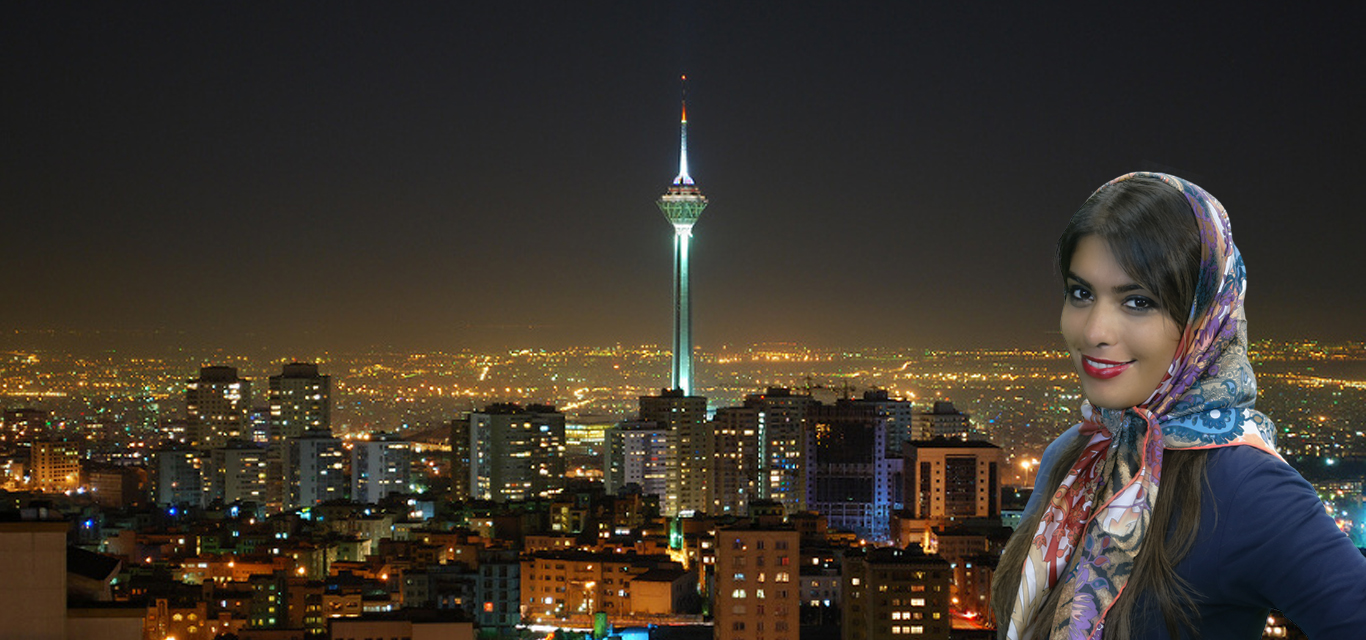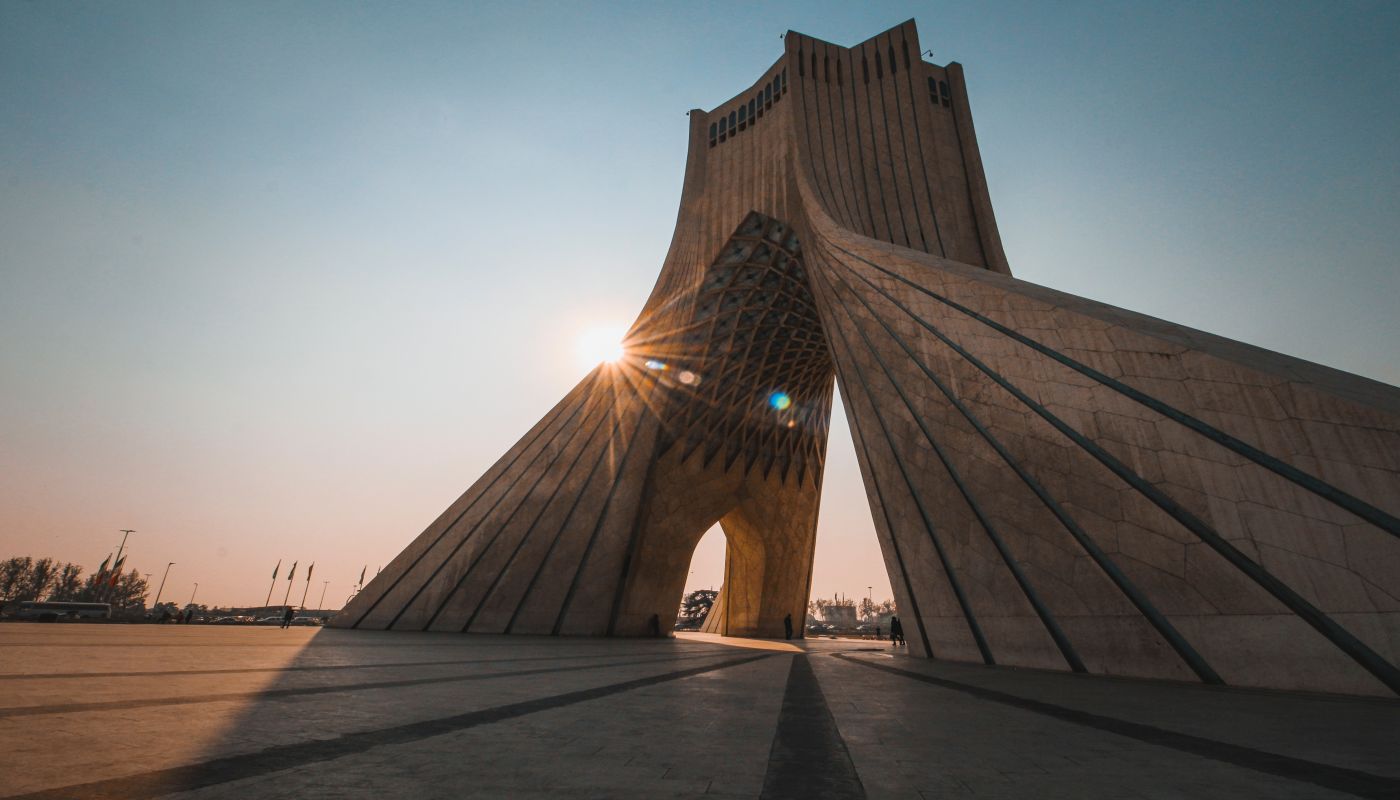
Landscape of Iran
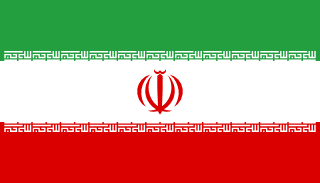
Flag of Iran

Iran

Asia

Historically known as Persia, Iran was renamed in 1935. The government’s history is plagued with corruption and tensions, especially involving the country’s lucrative oil industry. In 2015 Iran agreed to international monitoring of its nuclear programs in exchange for relief from nuclear proliferation prevention sanctions. Iran’s economy struggles beneath restrictive policies and inefficient programs. The government acknowledges the need for a more diverse economy, but the income discrepancy between oil markets and other sectors provides little incentive for diversification.1 1 https://www.cia.gov/library/publications/the-world-factbook/geos/ir.html

What would you like to learn about in Iran?

Select a section to explore the country where nonprofits are creating positive change.

About Iran

Known as Persia until 1935, Iran became an Islamic republic in 1979 after the ruling monarchy was overthrown and Shah Mohammad Reza PAHLAVI was forced into exile. Conservative clerical forces led by Ayatollah Ruhollah KHOMEINI established a theocratic system of government with ultimate political authority vested in a learned religious scholar referred to commonly as the Supreme Leader who, according to the constitution, is accountable only to the Assembly of Experts - a popularly elected 86-member body of clerics. US-Iranian relations became strained when a group of Iranian students seized the US Embassy in Tehran in November 1979 and held embassy personnel hostages until mid-January 1981. The US cut off diplomatic relations with Iran in April 1980. During the period 1980-88, Iran fought a bloody, indecisive war with Iraq that eventually expanded into the Persian Gulf and led to clashes between US Navy and Iranian military forces. Iran has been designated a state sponsor of terrorism for its activities in Lebanon and elsewhere in the world and remains subject to US, UN, and EU economic sanctions and export controls because of its continued involvement in terrorism and its nuclear weapons ambitions. Following the election of reformer Hojjat ol-Eslam Mohammad KHATAMI as president in 1997 and a reformist Majles (legislature) in 2000, a campaign to foster political reform in response to popular dissatisfaction was initiated. The movement floundered as conservative politicians, through control of unelected institutions, prevented reform measures from being enacted and increased repressive measures. Starting with nationwide municipal elections in 2003 and continuing through Majles elections in 2004, conservatives reestablished control over Iran's elected government institutions, which culminated with the August 2005 inauguration of hardliner Mahmud AHMADI-NEJAD as president. His controversial reelection in June 2009 sparked nationwide protests over allegations of electoral fraud. The UN Security Council has passed a number of resolutions calling for Iran to suspend its uranium enrichment and reprocessing activities and comply with its IAEA obligations and responsibilities. In mid-February 2011, opposition activists conducted the largest antiregime rallies since December 2009, spurred by the success of uprisings in Tunisia and Egypt. Protester turnout probably was at most tens of thousands and security forces were deployed to disperse protesters. Additional protests in March 2011 failed to elicit significant participation largely because of the robust security response, although discontent still smolders. Deteriorating economic conditions due primarily to government mismanagement and international sanctions prompted at least two major economically based protests in July and October 2012.

Quick Facts

Population
79,853,900 (July 2013 est.)
Area
1,648,195 sq km
ISO Code
IR
Continent
Asia
Government
theocratic republic
Active Causes
12
View all countries in Asia

Geography & Environment

Climate

mostly arid or semiarid, subtropical along Caspian coast

Terrain

rugged, mountainous rim; high, central basin with deserts, mountains; small, discontinuous plains along both coasts

Natural Resources

petroleum, natural gas, coal, chromium, copper, iron ore, lead, manganese, zinc, sulfur

Environmental Issues

air pollution, especially in urban areas, from vehicle emissions, refinery operations, and industrial effluents; deforestation; overgrazing; desertification; oil pollution in the Persian Gulf; wetland...

People & Society

70.62 years
Avg. Life Expectancy
85%
Literacy Rate
69.1% of total population (2011)
Total Urban Population

Languages

Persian (official) 53%, Azeri Turkic and Turkic dialects 18%, Kurdish 10%, Gilaki and Mazandarani 7%, Luri 6%, Balochi 2%, Arabic 2%, other 2%

Religions

Muslim (official) 98% (Shia 89%, Sunni 9%), other (includes Zoroastrian, Jewish, Christian, and Baha'i) 2%

Health Expenditure

5.6% of GDP (2010) of GDP

Education Expenditure

4.7% of GDP (2010) of GDP

Economy

$13,300
GDP per Capita (PPP)
15.5%
Unemployment Rate
18.7% (2007 est.)
Below Poverty Line

Economic Overview

Iran's economy is marked by statist policies and an inefficient state sector, which create major distortions throughout the system, and reliance on oil, which provides a large share of government revenues. Price controls, subsidies, and other rigidities weigh down the economy, undermining the potential for private-sector-led growth. Private sector activity is typically limited to small-scale workshops, farming, some manufacturing, and services. Significant informal market activity flourishes and corruption is widespread. Tehran since the early 1990s has recognized the need to reduce these inef...

Causes in Iran

Environment

A large threat to Iran’s success as a country is global warming and a deteriorating environment. Water scarcity, climate change, and land degradation are Iran’s three largest environmental concerns. Currently, environmental issues constitute 5-10% of the nation's GDP.1 While absorbing the costs of sanctions from the UN, the government was forced to take drastic steps to compensate for the loss of imports, and left behind environmental policy in the process. For example, Iranian oil refineries were built rapidly with low regulation in this period..2 With climate change comes an increase in the annual mean temperatures in Iran, which leads to water scarcity and longer periods of drought.3

Family

Sharia law largely establishes the primacy of men within the familial structure.1 Currently, the legal age of consent for marriage for females in Iran is 13 and for males it is 15 years of age.2 Men are well-represented in government, but women and youth both suffer from a lack of representation.3 Divorce remains the right of only the husband. There have been developments to this law to lengthen the procedure, but there is still an inherent inequality in the amount of power of men and women have within marriage.4

Human Rights

Social activists, citizens affiliated with political opposition parties, and labor unions remain imprisoned on minor charges, without access to legal counsel. Religious minorities are persecuted for practicing their faiths. Women and ethnic minorities suffer from discrimination in the areas of employment, marriage, inheritance, and the right to political office.1 Crimes punishable by death include murder, rape, drug trafficking, robbery, espionage, sodomy, adultery, and apostasy. People on death row are prevented from being informed of their rights. Capital punishment is permissible after puberty, which Iran defines as age 9 for girls and 15 for boys.2 In 2016 there were 78 minors on death row.3

Education

After the Iranian revolution, the entire school system became Islamized. The lack of quality higher education available has caused more than 40,000 students to study abroad to obtain their post-secondary degree, though lower levels of education are compulsory and free.1 The adult literacy rate is 84.6%, and school enrollment and retention is extremely high, especially in comparison to regional averages; around 89% of students continue on to secondary education.x The largest challenge in higher education is hiring professors that possess proper credentials in their field, rather than only hiring professors who declare allegiance to the Islamic Republic.3

Poverty

18.7% of Iranians are living below that national poverty line. Women are most susceptible to unemployment in Iran. 46% of females between the ages of 15-24 are unemployed and 12% of Iranian women are the main breadwinners for their families.1 One issue contributing to poverty is high medical costs. Annually, medical costs force 7.5% of the ill into poverty. Urbanization and the depletion of natural resources are also forcing Iranians into poverty. People live in cramped urban conditions and diseases are easily spread.2 Unemployment is now at 12.5%.3

Religion

The Iranian constitution mandates Shi’a Islam the official religion of Iran. 90% of Iranians align with Shi’a Islam and the remaining 10% are Sunni.1 Religious minorities are Baha’is, Hindus, Zoroastrians, Jews, and Christians.2 There have been many reports of religious persecution including the Baha’i faith being rejected, unequal rights of non-Muslims, and forbidding conversion from Islam to other religions. There are reports of harassment, intimidation, discrimination and murder based on religious affiliation. There are statutes within the law that mandate different and harsher punishments for non-Muslims.3

Clean Water

In Iran, 98% of households in urban areas have access to water and 90% of households in rural areas have access to clean water.1 Despite these seemingly high percentages, official reports suggest the water supply is becoming unsustainable. Because 90% of the country is arid, Iran relies heavily on rainfall to replenish water sources, but in the last 50 years the country has experienced 10 droughts.2 As a result, Iran is exploiting underground water sources and the increasing population is straining the supply. If the rate of overuse continues, it is estimated that 12 of Iran’s 31 provinces will have no water supply in the next 50 years. The water scarcity is threatening the agricultural sector of the national economy, which employs 25% of the labor force.3

Economy

One of the challenges that Iran faces is a high level of state intervention in the private economy; the economic environment is marked by stifling of innovation and a suppression of anything contrary to the status quo.1 Iran’s non-oil sectors of the economy are suffering, and this has led to a lack of economic growth. The main four industries are petroleum, petrochemicals, gas, and fertilizers. 80% of exports are petroleum products. Past sanctions employed by the West have resulted in Iran’s main export partners being China and India, while their highest amount of imports come from the UAE. Unemployment is 12.5%, and it is estimated that 18.7% of the population lives below the poverty line.2

Government

The Islamic Republic of Iran is a theocratic republic predicated on Shia Islam. The Iranian government has an elected president, but the Supreme Leader, who is the chief of state, holds political and ideological power. He has over 2,000 representatives in the government. The current constitution was created in in December of 1979. Citizenship is strictly reserved for those whose father was Iranian.1 Transparency International ranks Iranian public scores their government 29 out of 100 for perceived corruption.2 The judicial system and government are linked, and historically the government has been corrupt. There continues to be cases of public officials misusing money and suppressing human rights activists with force.3

Health

Life expectancy in Iran is 74 years old. Heart and lung diseases are the leading causes of death, along with road injuries.1 25.8% of adults are obese, and 4% of children under 5 are underweight. The maternal mortality rate is 25 deaths per 100,000 births, and infant mortality is 15.9 deaths per 1,000 live births.2 Due to high amounts of intravenous drug usage, the number of citizens who have contracted HIV has risen in recent years..3

Children

The legal working age in Iran is 15 years old.1 Iran passed a law that made it legal for a man to marry an adopted daughter, provided that she is at least 13 years of age.2 17% of children are married by the time they are 18. Girls below 13 and boys below 15 can be married with permission from their father or the courts.3 Iran does not have a youth policy or a council designated to represent the rights of children in government.4 There are multiple reports by the United Nations and Amnesty International of Iranian children being held on death row, convicted as adults for crimes committed as children. Iranian authorities deny these reports.5

Animals

The majority of central and eastern Iran consists of rolling hills and low mountains. The climate is arid-temperate, allowing species like the cheetah, chinkara gazelle, wolf, and common fox. Cultivation, overgrazing, and fuelwood harvesting threatens the habitats of these species. In more mountainous regions the exploitation of forest resources causes wind and rain erosion to destroy entire sections of forest.1

Nonprofits Working in Iran

Discover organizations making a difference in Iran

Make Your Impact Today

Discover causes you care about and support the nonprofits making a difference in communities around the world.

Are you a nonprofit? Join Project World Impact for free

Join Us Free